Get Full Government Meeting Transcripts, Videos, & Alerts Forever!
Get email alerts on the Urban Core Redevelopment topic
No spam. Unsubscribe anytime.
Pensacola urban core board reviews project list, Hollis T. Williams vision and plan updates
Summary
The Pensacola Urban Core Redevelopment Board received updates on the project and implementation list, including a 30% vision plan for Hollis T. Williams Park, affordable-housing activity, street projects and required plan revisions tied to pending state legislation.
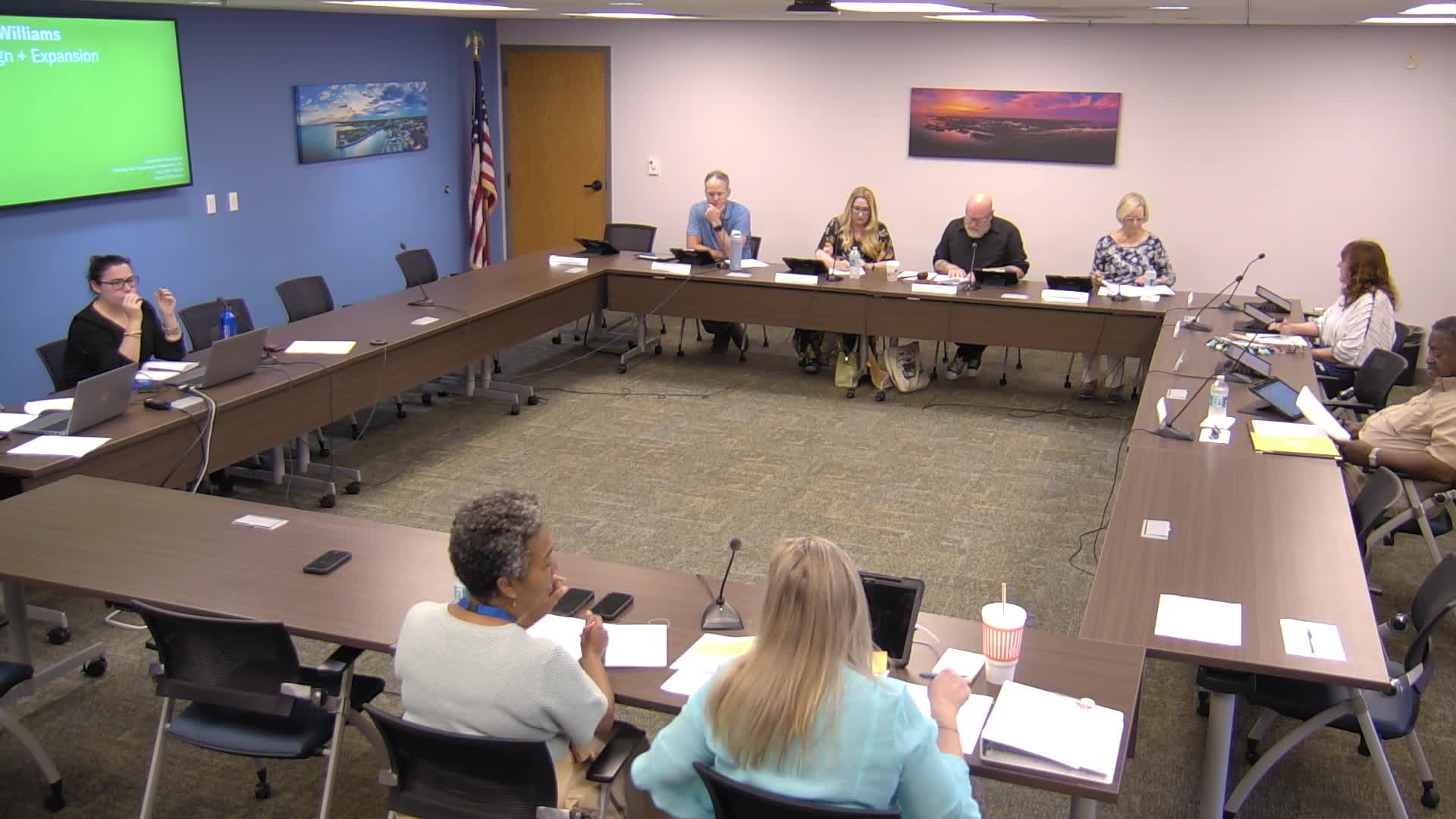
The Pensacola Community Redevelopment Agency Urban Core Redevelopment Board on a June meeting reviewed its project and implementation list and heard a 30% design vision for Hollis T. Williams Park, staff said.
The update covered affordable-housing initiatives, the residential property improvement program (RPIP), Bruce Beach Park phases and a proposed cultural building, a two-way conversion study for Martin Luther King and Davis streets tied to an interlocal agreement with Escambia County, and plan language changes required to meet state statutory requirements. Rachel, the CRA urban design planner, presented the Hollis T. Williams 30% vision and described the public-engagement process behind it: "This project is on a very tight timeline due to our grant restraints. So we're moving quickly," she said.
Why it matters: the board must finalize the urban core redevelopment plan and its implementation materials before state legislative changes take effect, staff warned. The updated plan must include required appendices and a statutory compliance table; staff said consultants are finalizing cost estimates and a project-priority list so the CRA can publish the final plan in advance of potential new state limits on CRA authority.
What the board heard
Affordable housing and RPIP: Staff reported affordable-housing initiatives remain the board's top priority. According to Shirley Cromley, the RPIP lead, the urban core currently has 10 RPIP projects under review; three applicants were invited to complete full applications, one project is pending bidding, and four total projects are in active progress. Cromley also said that since February 2019, 15 RPIP projects have been completed. She described ongoing partnership work with the Community Land Trust and plans to launch an incentive program for small-scale affordable rental developments later this year.
Hollis T. Williams Park vision: Rachel presented a 30% conceptual plan covering the park's 1.3-mile stretch and the adjoining Long Hollow Pond. The design emphasizes cohesion across the park, new walking and bike paths, reworked street connections, native Florida ecologies and stormwater improvements that expand Long Hollow Pond and add temporary storage areas elsewhere in the park footprint. Rachel said consultants and staff have held three public meetings, 23 stakeholder meetings and gathered visual-preference data points from surveys and display boards; two more public-engagement events are planned this summer. She described a phased approach intended to span roughly 20 years, with the first phase targeted for completion in 2027. The presentation noted the project relies on multiple funding sources, including Community Development Block Grant (CDBG) funds, a $5,000,000 Reconnecting Communities grant, and transportation alternatives grants.
Streets, parks and other projects: Staff reported that Bruce Beach Park phases 1 and 2 are complete and that a phase 3 cultural building remains in the plan but will require separate funding. The West Main Street/Main Street corridor plans will go to the CRA board on July 14, staff said, and a continuous waterfront-trail design is expected to reach 100% design before the CRA board in July. City engineering continues sidewalk work funded annually in the district.
Two-way conversion and interlocal agreements: Staff reminded the board that an interlocal agreement with the county cleared the way for a two-way conversion of Martin Luther King and Davis streets; staff said the project returns to detailed design after the county agreement addressed jurisdictional ownership at the streets' northern ends.
Plan-update changes and state legislation: Staff summarized edits to the urban core plan's executive summary, added activities and a date-certain sunset provision; they also said consultant attorneys required edits to review-district language, land-use and zoning references and an equitable-development framework. Staff warned the board the state legislature is considering bills that could limit CRA actions beginning in October; the staff presentation referenced "House Bill 991 and Senate bill" with a comment that the senate number had changed and was thought to be "1012 now." Staff encouraged members to review the bills and contact legislators.
Downtown district initiative and TIF: Staff said the Downtown Improvement Board (DIB) is now exempt from the TIF process as of February; that change gives the DIB greater flexibility in how it uses funds because it no longer receives disbursements routed through the CRA with prior restrictions.
Process, funding and next steps: Staff said consultants are finalizing the implementation plan and required appendices. The CRA agenda with an updated urban core plan will publish later this week for the CRA meeting scheduled next week, staff said. Board members were asked to monitor the CRA agenda and the Hollis T. Williams website for engagement dates and materials.
Votes at a glance
The board approved minutes from a special meeting dated March 24 after a motion, second and a verbal roll call of "all in favor; anyone opposed?" No formal recorded roll-call vote was provided in the transcript.
Meeting context and public input
Board members welcomed new members and noted the board had lacked a quorum for more than a year before this meeting. There were no public comments submitted for this session, staff said.
Ending
Staff closed the presentation by asking members to stay engaged with the Hollis T. Williams public meetings and monitor upcoming CRA agenda publications for final plan materials and design updates.