Get Full Government Meeting Transcripts, Videos, & Alerts Forever!
Get email alerts on the Human Relations topic
No spam. Unsubscribe anytime.
Pensacola human relations director outlines caseload, outreach and plans to expand fair-housing training
Summary
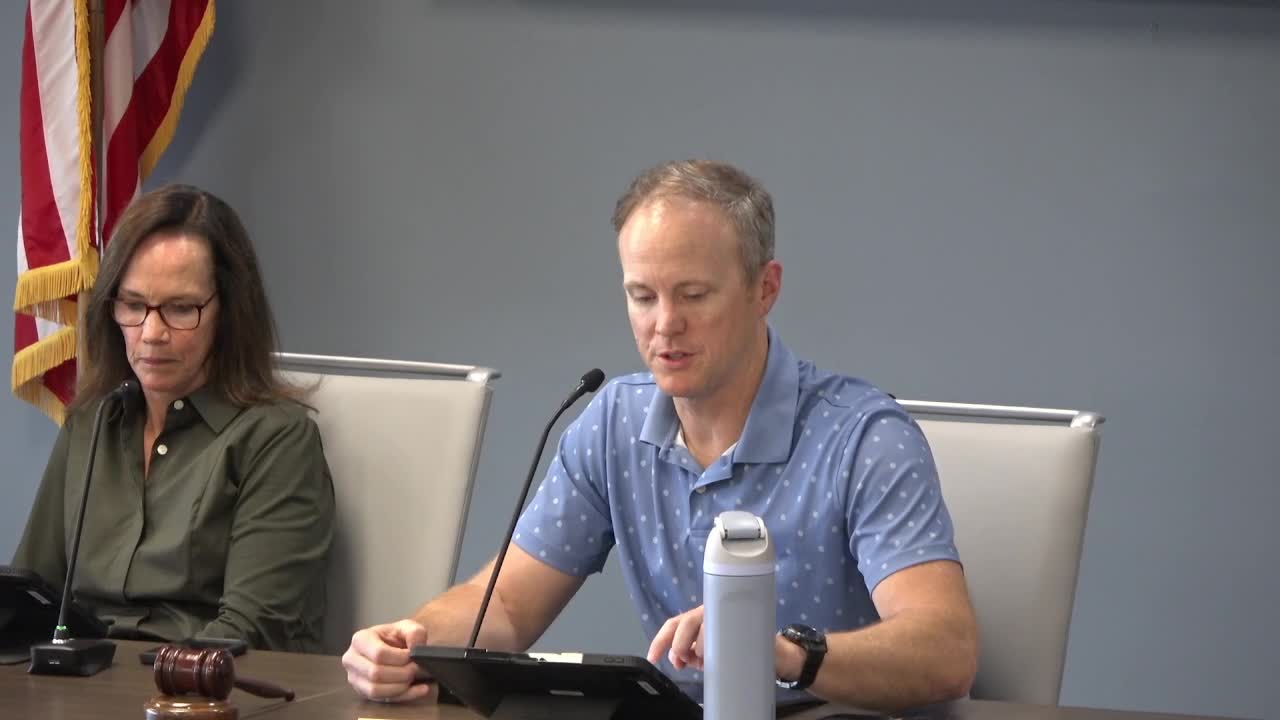
Al Henderson, executive director of the Pensacola Human Relations Commission, told the Pensacola City Council at a workshop that his office handled 97 families (388 individuals) last year and has expanded outreach and casework since adding staff.
Al Henderson, executive director of the Pensacola Human Relations Commission, told the Pensacola City Council at a workshop that his office handled 97 families (388 individuals) last year and has expanded outreach and casework since adding staff.
Henderson said the commission now has three full-time staff and one part-time staff member and that the office tracks incoming calls, complaints and outcomes to measure impact. He told council members that last year 20 complaints rose to the level of discrimination; the commission referred 16 of those cases to partner agencies such as the Florida Commission on Human Relations and HUD and handled four in-house. For employment-related matters he reported 20 complaints this year, referring 11 and resolving six in-house.
Those figures form part of a quarterly report Henderson said he will share with council members by email. "We track how many families we've served," Henderson said. "Last year we had 97 families we serve. That equates to 388 actual individuals or family members." He added the office has seen a rise in calls after outreach events and that bringing an outreach staff member increased contacts and case referrals.
Why it matters: Council members pressed for how the commission coordinates with homelessness and housing partners and how the office stretches a modest budget. Henderson said the commission receives $120,500 annually from city and county funding and that delays in county and city funding agreements slowed work earlier this year. He framed the commission's activities as a local entry point for residents with housing or employment concerns who may then be referred to state or federal agencies for deeper investigation.
Henderson described concrete results he said demonstrate a return on that local investment: a fair-housing specialist intervened in a case where a property manager was taking residents' Medicare funds to pay rent; Henderson said the intervention produced a monthly savings of about $3,300 for a group of 13 individuals and that the cases he could document added to roughly $40,000 in savings for those residents. He also described an accessibility fix — changing locks to improve usability for a resident with limited hand strength — that affected 88 assisted-living units.
Henderson outlined next steps the commission plans to take. Those include a "visibility" phase of communications (social media, a newsletter and discussion of a podcast), a series of one-hour virtual fair-housing trainings for practitioners, deeper outreach with legal services to encourage tenants to keep and renew leases, and coordination with mental-health providers to address frequent crisis calls. He said the virtual trainings respond to practitioners' requests for “a little bit deeper dive into specifics of fair housing.”
On coordination, Henderson said the commission acts as a local intake point and refers cases to partners capable of deeper enforcement. "The Florida Commission was the first organization I reached out to," he said. "They have been very open with assisting us and ... we can refer those clients into them." He also said the commission has relationships with HUD and legal services and that it is pursuing quarterly conversations with other human-relations organizations across the state to share practices.
Council Vice President Patton asked specifically how the commission engages with the homelessness Continuum of Care and whether its work emphasizes housing retention. Henderson said his staff maintains an updated list of available units and works with partners to connect residents to openings; he also referenced prior involvement in the Johnson Lakes housing issue and coordination with county code and legal services when cases exceeded the commission’s capacity.
Henderson said he also serves as an informal hearing officer with a local group (Meredith Reeves Group) and that role has reinforced the commission's awareness of residents in urgent need of assistance. He emphasized the need for better follow-up and feedback between referral agencies so that clients are not simply passed from one organization to another without results.
No formal council action or vote was taken at the workshop. Henderson committed to provide the council the commission’s second-quarter report by email and offered to meet individually with council members to discuss area-specific issues.
The council did not adopt any ordinance or direct staff to take formal action at the conclusion of the presentation.