Get Full Government Meeting Transcripts, Videos, & Alerts Forever!
Get email alerts on the Civil Rights Board topic
No spam. Unsubscribe anytime.
Civil Rights Board advances nominee, debates enforcement and appointments process
Summary
Kalamazoo City Civil Rights Board voted to forward a nomination to the city commission while members pressed for clearer appointment communication, an education subcommittee and stronger enforcement of the city's Fair Housing ordinance passed in February 2020.
The Kalamazoo City Civil Rights Board on Wednesday voted to forward a nominee to the city commission for the mayor's approval while devoting much of its meeting to disputes over board appointments, enforcement of the city's Fair Housing ordinance and plans for an education subcommittee.
The board moved unanimously to forward Ursula Moore Doyle's nomination to the city commission for the mayor's approval after a motion by Vice Chair Lukeman and a second by Director Kyle DeRonde. The board recorded verbal "Aye" votes; members did not read a roll-call tally at the meeting.
The vote came amid extended discussion about whether the board's rules and the city's ordinance permit the Civil Rights Board to enforce the Fair Housing ordinance locally or whether complaints must be referred to state agencies. Commissioner Hoffman urged the board to highlight the board's role and the ordinance's influence at the state level. "I just would like to lift up that the original ordinance that was passed unanimously, I really feel like Kalamazoo, the city of Kalamazoo had a lot of influence at the state level," Commissioner Hoffman said.
Board members also discussed creating or activating an education subcommittee to teach residents how to file complaints and how the ordinance operates. "I would like to head up the education," Vice Chair Lukeman said, asking the board to recruit volunteers and community members to help public education efforts.
Board members pressed the city attorney's office and staff on appointment procedures after one nominee, Attorney Lewis Smith, withdrew his application earlier in April. Board members said they received little formal notice of the mayor's decision not to move Smith's nomination forward and described the communication gap as a recurring problem. "I think this is one of the glitches here is that the communication. It was not communicated to this board that the denial happened," Commissioner Hoffman said.
The board sought clarity about where appointment decisions and notices are routed. City Attorney Jones told the board that the city manager's office handles communication to nominees and that the attorney's office could not speak to the standard notification practice. "That is, would be through the city manager's office and not my office," Attorney Jones said.
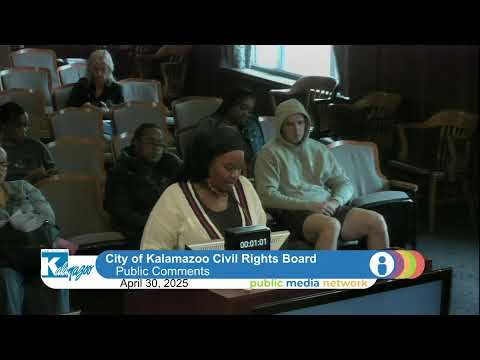
Public commenters who attended the meeting urged better transparency and fuller staffing of the board. Ashante Collins, executive director of the Campaign for Criminal Justice Transparency and an ISAAC task-force leader, said the ordinance was intended to be enforceable and urged the city to back the board with appointments and clarity. "This ordinance passed unanimously by the city commission and mayor," Collins said, adding that without a populated, supported board enforcement becomes largely symbolic.
Several speakers asked the board to adopt a clear rubric for nominations and to require that the Civil Rights Board receive written notice when a nomination is not advanced. Board members reported that some city appointments have taken unusually long; one timeline cited in discussion described a 58-day gap where the typical timeframe was described as 12 to 20 days.
The board also reviewed its meeting cadence. Members agreed to keep the current every-other-month schedule for now and revisit whether to return to monthly meetings at their next session, currently scheduled for June 4.
Action items and next steps the board recorded included scheduling interviews for three current applicants within the next two weeks, forming or activating an education subcommittee, and asking the city manager's office to clarify the written notification process for nominees and denials. Board members said they will continue public outreach to recruit Kalamazoo residents for open seats.
Votes at a glance: The board moved, seconded and voted to forward the nomination of Ursula Moore Doyle to the city commission for the mayor's consideration.
Why it matters: Board members and advocates told the panel that a populated Civil Rights Board, clearer appointment procedures and public education about complaint filing are necessary for the Fair Housing ordinance to be effective in practice rather than only on paper.
The board left public comment open and scheduled interviews with three applicants in the coming weeks; it will revisit meeting frequency and any bylaw language the board may want amended after new members are seated.