Get Full Government Meeting Transcripts, Videos, & Alerts Forever!
Get email alerts on the Food Security Funding topic
No spam. Unsubscribe anytime.
Food Gatherers warns Ann Arbor Council federal cuts will force local funding gap of $2.5 million
Summary
Food Gatherers told the council the organization lost half of a USDA food source and a local food-purchasing grant is ending in September, creating a $2.5 million gap to sustain current distribution levels serving Washtenaw County; staff requested city consideration of local funding supports.
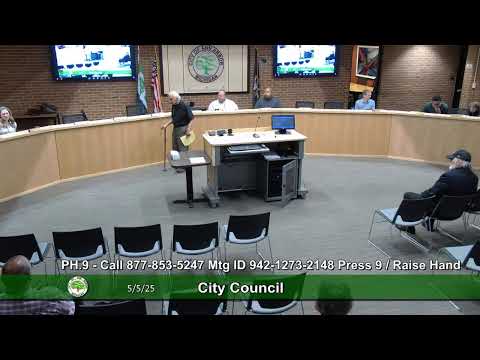
Food Gatherers, the regional food bank serving Washtenaw County, told the Ann Arbor City Council on May 5 that recent federal funding changes have removed a significant portion of its donated food supply and that local support will be needed to maintain distribution.
Eileen Spring, speaking for Food Gatherers, said the organization delivered 9,900,000 pounds of food to 60,000 different people in fiscal year 2024 and recorded approximately 1,000,000 visits across the network. She said the USDA abruptly canceled half of a previously reliable food source in March, a supply that represented about 15% of Food Gatherers' total distribution and the equivalent of more than 1,200,000 meals.
Spring said a separate local food-purchasing grant that allowed Food Gatherers to buy from nearby farmers within 200 miles will end in September and will not be renewed. Food Gatherers has also seen federal Emergency Food and Shelter Program funding pause, she said, and the organization has been using reserves to maintain service levels.
"We are actively advocating for the restoration of federal resources as well as seeking important support from local government entities and private philanthropy," Spring said. She asked the city of Ann Arbor to consider allocating funds to the local food safety net and estimated it would cost an additional $2,500,000 to replace the lost federal food sources.
Spring said Food Gatherers is surveying partners about prioritization—unhoused people, food-insecure households, children, veterans—and invited council input on which programs to scale back if replacement funds cannot be found.
Council members did not take a vote on funding at the May 5 meeting; the remarks were made in public comment to inform budget deliberations.