Get Full Government Meeting Transcripts, Videos, & Alerts Forever!
Get email alerts on the Natural Features And Comprehensive Plan topic
No spam. Unsubscribe anytime.
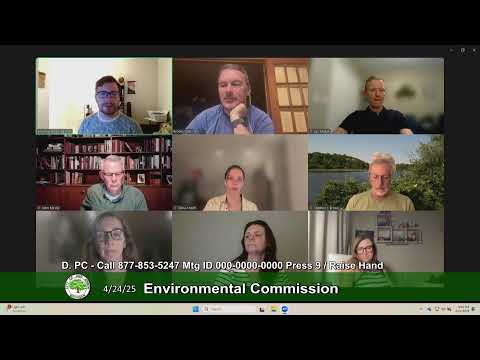
Ann Arbor residents and commissioners press to embed natural-features protections in comprehensive plan
Summary
Public commenters and members of the Environmental Commission urged Ann Arbor leaders to preserve the city’s natural features protections and to strengthen floodplain and biodiversity language in the draft comprehensive land use plan.
Public commenters and members of the Environmental Commission urged Ann Arbor leaders to preserve the city’s natural features protections and to strengthen floodplain and biodiversity language in the draft comprehensive land use plan.
The resolution before the commission would direct staff and the planning commission to treat natural features and biodiversity as priorities in the city’s comprehensive planning process. Kathy Boris, a Fifth Ward resident, called in to “support agenda item 250633” and asked the city to “incorporate the 2004 Natural Features Master Plan into the comprehensive plan” and to “elevate natural features to a priority in the sustainability program.”
The resolution matters because the comprehensive land use plan provides the policy framework that guides later zoning and code decisions. Supporters warned that without explicit protections, important trees, wetlands and other urban natural features could be lost as the city plans for growth. Anne Bannister, a resident who spoke during public comment, said the draft “mentions flood plains in passing, but it doesn't emphasize its importance enough,” and recommended stronger language to avoid building on remaining open floodplain land.
Commissioners and several council members discussed how the draft plan currently treats existing subplans. Council member Jane Cornell (first reference: Council member Jane Cornell) said the draft comp plan as written will replace, not incorporate, some existing subplans: “The natural features master plan is listed in the comprehensive land use plan is being replaced by the comprehensive plan and not being used going forward.” That distinction prompted multiple commissioners to call for clarity on which protections will carry forward.
Staff asked for more-specific direction. Sean Reynolds, staff liaison, said OSI already includes biodiversity strategies in the city’s A2.0 Living Carbon Neutrality Plan and requested “more specific recommendations on actions that you would like to recommend that council perhaps direct us to take.” Commissioners and members of the biodiversity working group accepted that request and agreed to meet with planning staff and OSI before the next meeting to draft clearer, actionable language.
Speakers at the meeting repeatedly raised three related concerns: (1) retain protections in the 2004 Natural Features Master Plan rather than allowing them to lapse; (2) add explicit restrictions or strong guidance on developing within floodplains; and (3) create measurable biodiversity metrics to track gains and losses over time. Commissioner Daniel Graham said the commission should extend natural-features protections “from just applying to large tract site plans to all properties and all projects in the city,” noting recent clearings in established neighborhoods. Commissioner John Mirsky (first reference: Commissioner John Mirsky) and others urged work on biodiversity metrics, pointing to the UK’s Environment Act 2021 as an example of legislation that mandates a statutory biodiversity net gain (as described by a commissioner during the meeting) that is legally secured for 30 years and requires a 10% net gain — a model some speakers cited for guidance, not wholesale adoption.
Public commenters from across wards supported the measure. James Demore (Third Ward), Tom Stalberg, Ken Garber, Martha Manaldi and John Godfrey each urged the commission to adopt the resolution or strengthen it to ensure natural features are prioritized in the final comprehensive plan. Ken Garber said the draft comp plan’s language “hints at weakening our current natural features protections, in the name of encouraging more development,” and urged compatibility between housing development and ecological protection.
Commissioners also debated the appropriate venue for detailed implementation. Several commissioners and council members recommended that staff (planning and OSI) be engaged earlier and that the commission and the biodiversity working group meet with planning staff before the next reading so that technical and cost implications can be clarified. Council member Cornell said staff input “should have happened first” and asked that the resolution be coordinated with OSI and planning leadership.
The commission did not take a formal vote on the resolution at this meeting. Members indicated intent to revise the document with clearer, actionable items (metrics suggestions, floodplain language, and specific staff tasks) and to hold follow-up meetings with planning staff and OSI ahead of a second reading expected next month.
Several callers also described local impacts and places they said deserve special protection, including Thurston Nature Center (public school property outside city zoning authority), parts of Northeast Ann Arbor, the area adjacent to Clay School, North Burns Park and sections near the University of Michigan’s North Campus research property. Speakers emphasized that public and private open spaces provide stormwater management, cooling, air filtration and habitat services that contribute to citywide resilience.
The discussion concluded with staff and commissioners agreeing to schedule technical meetings with planning staff and OSI and to return with revised language at the next commission meeting.