Get Full Government Meeting Transcripts, Videos, & Alerts Forever!
Get email alerts on the Local Infrastructure topic
No spam. Unsubscribe anytime.
City staff propose investing $5 million UBP payment for grant matches and urge voter millage to fund local streets
Summary
DPW staff proposed investing the $5 million payment from United Bridge Partners into a dedicated infrastructure fund to leverage grant matches, and suggested asking voters for a local road millage (1–2 mills) to create a steady local-street funding stream.
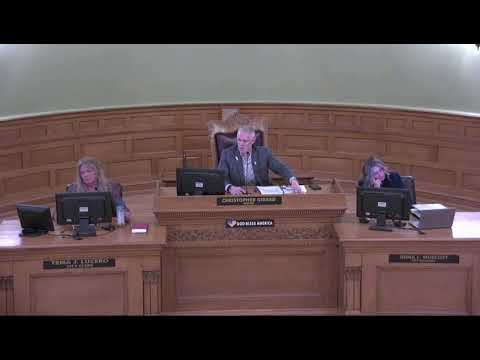
DPW staff presented a two‑part plan to the Bay City Commission on May 5, 2025: invest the $5,000,000 payment the city received from United Bridge Partners (UBP) into a separate fund to be used as grant match money, and ask voters to approve a local road millage to supply ongoing local‑street funding.
"The $5,000,000 payment from UBP... is sitting in an account," Mr. Dion, DPW presenter, told the commission. He proposed using that money as grant match to increase the city's competitiveness for major road grants and to set up a separate invested fund that would yield annual interest for smaller pedestrian or sidewalk programs.
Under the plan described to commissioners, a common federal/state minimum match is 20 percent; Mr. Dion said $5,000,000 in match could unlock roughly $25,000,000 in grant opportunities. He proposed holding a minimum balance of $2.5 million in the invested account to generate interest income — using his assumption of approximately $50,000 per $1,000,000 invested — which he estimated would yield about $125,000 per year to support sidewalks and pedestrian improvements outside low‑to‑moderate income programs.
Mr. Dion also proposed asking voters to approve a dedicated local street millage. He presented estimates that 1 mill would generate about $675,000 annually (costing a homeowner about $50 per $100,000 of taxable value), while 2 mills would generate roughly $1.3 million. He said paving costs vary widely — from about $270,000 to $2,000,000 per mile depending on conditions — and that program management should prioritize projects using PASER scores, traffic counts and underground infrastructure needs.
Commissioners asked for more detail and timeline estimates. Commissioner Billicker asked whether PASER overlays could be provided for the map of proposed blue/purple project areas; Mr. Dion said project selection would be scored and handled by a proposed infrastructure committee of commissioners, the city manager, DPW staff and citizens.
Commissioners raised concerns about timing and implementation. Commissioner Copley asked about timelines to complete projects; Mr. Dion said it would likely be at least a year or two before grant-funded or millage-funded projects could begin in earnest because of grant application and award cycles and the time to accumulate millage revenues. Commissioner Tenney asked about hiring a grant writer; the city manager responded that a grant writer position was already included in the budget Mr. Martini presented and staff would provide the annual cost separately.
Public and commissioner speakers emphasized priorities for heavily traveled streets in multiple wards. Commissioners discussed possible election timing; staff said it would be difficult to place a millage on the 2025 tax roll and that the earliest realistic collection would be on the 2026 tax roll if the commission moves forward with authorization and an election plan.
Ending: The commission engaged in discussion and requested more detailed timelines, maps with PASER scoring, cost estimates and an implementation plan to return to a future meeting; no formal vote was taken on the plan at this session.