Get Full Government Meeting Transcripts, Videos, & Alerts Forever!
Get email alerts on the City Budget topic
No spam. Unsubscribe anytime.
Bay City staff present balanced FY 2025–26 general fund proposal; expenditures about $28.7 million
Summary
City staff presented the proposed FY 2025–26 general fund budget to the Bay City Commission, showing a roughly 3% increase over FY24–25, continuing a string of balanced budgets and reporting progress on retiree liabilities and targeted transfers to capital projects.
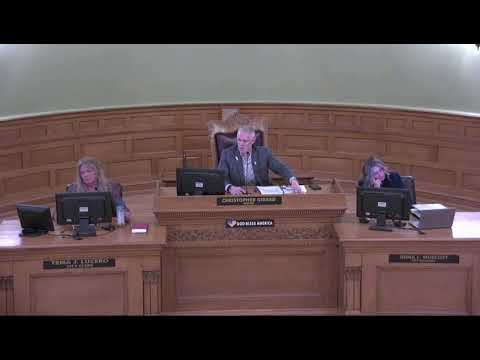
City staff presented the proposed fiscal year 2025–26 general fund budget to the Bay City Commission on May 5, 2025, showing total general fund expenditures around $28.7 million and describing the plan as a balanced budget.
The proposal, delivered by Mr. Martini, budget presenter, emphasized the city’s 12th consecutive balanced budget and projected a roughly 3% increase in the general fund compared with FY 2024–25. "It is a balanced budget, again, for the twelfth consecutive year in a row," Mr. Martini said.
The budget presentation laid out revenues, personnel changes and the city's long-term liabilities. Assessed value in the city exceeded $1,000,000,000, staff said, noting that taxable value growth remains limited by state rules. Personnel counts in the general fund rose from 127 to 135, with new positions in city hall, public safety, neighborhood and planning, engineering and parks. Health insurance costs rose, while the city reported large strides funding retiree liabilities.
Mr. Martini provided figures for the city's retirement-related trusts and liabilities: the speaker said the city's MERS defined benefit plan showed roughly $65 million in assets against a $72 million liability at the last valuation, leaving about $7 million unfunded; other defined benefit and retiree health liabilities were disclosed as well. He said investment returns had materially reduced required contributions and allowed the city to lower the planned contribution to retiree health by about $638,000 for the coming year, while still contributing above actuarial requirements.
The presentation outlined departmental budgets and program-level changes: the city commission budget rose modestly from approximately $101,000 to $103,000; city hall and grounds consolidated cleaning into in-house staff, increasing full-time equivalents for building maintenance from one to three; parks and recreation presented roughly $2.2 million in proposed capital outlays, including an $800,000 Miracle Field funded by donations and other projects supported by grants and donor funds. The appropriations/contingencies line now includes a $150,000 allocation for a homeless drop‑in center, with $84,779 left as unallocated contingency.
On funding strategy, Mr. Martini described the city’s practice of transferring excess general fund balance into the public improvement fund to pay for fire station repairs and other capital projects, rather than drawing on unearned future revenues. He summarized the city's overall fiscal position as operating surpluses in recent years while using planned transfers to fund capital work.
Commissioners asked clarifying questions about federal grant line items and state-balanced-budget rules. Commissioner DeWitt pressed staff on a roughly $188,000 decrease in federal intergovernmental revenue; Mr. Martini said he would research that figure and follow up. Commissioner Shalawa asked whether state law requires a balanced budget; staff explained the city may present a budget balanced by reserves but that doing so is legal though not customary.
The presentation concluded with staff offering to provide follow-up materials and to meet with commissioners on department-level or fund-specific questions.
Ending: The commission received the presentation and opened the floor to questions; no adoption vote on the full citywide budget occurred at that meeting and many department- and fund-level items will be resolved in subsequent hearings and votes.