Get Full Government Meeting Transcripts, Videos, & Alerts Forever!
Get email alerts on the Naloxone Funding topic
No spam. Unsubscribe anytime.
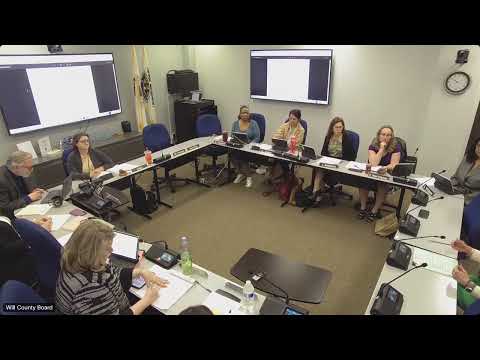
Will County health staff warn Narcan supplies at risk after state federal grant changes
Summary
Health department officials said federal funding that had supplied naloxone is being cut; the department will use limited IDPH harm‑reduction funds, prioritize red‑box naloxone placements, and explore alternate funding options.
Dr. Burke, who directs the county’s substance use initiatives office, told the Board of Health that a federal grant which provided naloxone to Will County programs has been cut and the department is preparing to purchase kits with remaining state harm‑reduction funds.
Dr. Burke said the department historically distributed about 15,000 Narcan boxes a year and that each box costs roughly $30. The state previously provided naloxone under a federal grant at no cost to the county; that source was cut, she said, forcing the department to plan purchases. "Those boxes of Narcan, are at least $30 a box," Dr. Burke said.
She said staff usually order 3,000 boxes at a time but placed a smaller 1,000‑box order to avoid stockpiling. The department runs 10 community “red boxes” stocked with naloxone and will prioritize refilling those units. Dr. Burke said the department also has some 8‑milligram injectable naloxone (Evzio/Cloxado) obtained through a prior grant and will use that supply as a buffer.
Dr. Burke said her office and a colleague, Connie De Waal, are funded through a SOAR 2 grant and that other pop‑up community services are funded from opioid settlement dollars in the health department budget. She said the department is grateful for opioid settlement funds, which help maintain programming.
Board members asked about manufacturing and effectiveness. Member Mitchell said Narcan is manufactured in Massachusetts, Michigan or Canada; Dr. Burke said she would provide manufacturer details. A board member asked whether naloxone works on fentanyl; Dr. Burke answered, "Fentanyl is an opioid," and said naloxone works on opioid overdoses, including fentanyl, while noting drug mixes complicate overdoses.
Member Hickey suggested exploring a private fiscal sponsor or foundation for donations; Dr. Burke said the health department is open to exploring options but would need a fiscal sponsor because the health department is not a nonprofit.
No formal board action was taken during the update. Dr. Burke said the department will prioritize resources and target distribution to hotspots and critical public access points while they seek longer‑term funding solutions.