Get Full Government Meeting Transcripts, Videos, & Alerts Forever!
Get email alerts on the Charter Amendment topic
No spam. Unsubscribe anytime.
Council sets public hearings for charter amendments after Charter Commission clerical requests
Summary
The council acknowledged receipt of two resolutions from the Charter Commission proposing administrative edits to charter language and set public hearings for June 2, 2025; council approved the receipt motion 7‑0.
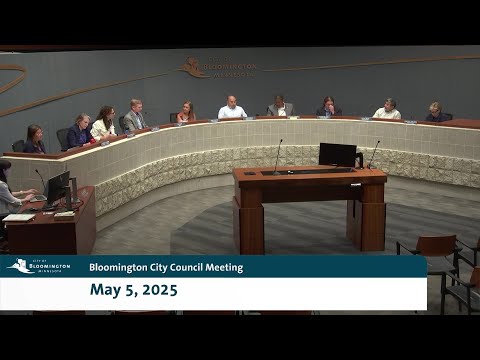
The Bloomington City Council on Monday acknowledged two resolutions from the Charter Commission seeking administrative amendments to the city charter and set public hearings for June 2, 2025.
The Charter Commission requested two ordinance‑style charter amendments: (1) clerical and process clarifications in chapter 5 related to petition, initiative, referendum and recall forms — including adding email and phone contact information for petition filers to assist time‑sensitive communications — and (2) replacing the title “assistant city manager” with “deputy city manager” in chapter 6 to reflect current practice.
City Attorney (charter counsel) explained the recommended process: the council may adopt charter amendments by ordinance after a public hearing and, for charter amendments, adoption requires a unanimous vote of the council; there is a 90‑day waiting period following publication during which the community can seek to overturn the change. Counsel recommended scheduling hearings on June 2 so any approved changes could be effective before year‑end if no referendum activity intervenes.
Action: Council member Muir moved to acknowledge receipt of the Charter Commission resolutions and to set public hearings for the proposed ordinances on June 2, 2025; Council member Lohmann seconded. The council voted 7–0 to acknowledge the resolutions and set the hearings.
Why it matters: The amendments are administrative and intended to clarify petition procedures and titles; because charter changes require unanimous council adoption and a 90‑day post‑publication window, the council scheduled hearings to provide public notice and preserve timelines for implementation within 2025.
What’s next: The hearings will be publicly noticed, and staff said they will time any related administrative edits in the city code (for example, compensation plan references) to coincide with charter amendments if adopted.