Get Full Government Meeting Transcripts, Videos, & Alerts Forever!
Get email alerts on the West Nile Surveillance topic
No spam. Unsubscribe anytime.
Will County outlines West Nile virus surveillance plan, reports 2024 positives and prevention tips
Summary
Environmental health staff described the county's West Nile mosquito surveillance program, listing trap locations, 2024 testing results (282 pools, 52 positives), and public prevention steps; IDPH suspended bird collection statewide in 2025 due to avian flu.
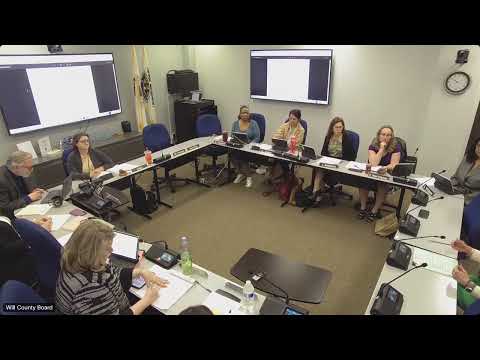
Kyle Moy, program coordinator for environmental health in Joliet, briefed the Will County Board of Health on the county’s West Nile virus surveillance program, describing trap operations, 2024 results and public outreach.
Moy said the program deploys 14 traps across the county and runs two collection routes from Joliet and Bolingbrook. Trap locations cited in the meeting included Shorewood, Plainfield, Homer Glen, Lockport, Bolingbrook, New Lenox, Mokena, Frankfort, Crete, Monee, Manhattan and Joliet.
Moy described the trap method: a water bin with fermenting bait and a fan that draws mosquitoes into nets; staff service traps twice a week, freeze collections overnight, sort for Culex mosquitoes (testing only female mosquitoes), and run samples on a RAMP test kit. He said last year the county tested 282 mosquito pools and 52 were positive; the county collected five birds last year, two of which tested positive (from Peotone and Crest Hill).
Moy told the board the Illinois Department of Public Health directed counties to discontinue bird collection in 2025 because of an uptick in avian influenza; as a result, Will County did not conduct bird collection this year. He said all trapping results — positive or negative — are uploaded to the IDPH web portal and go live there when entered.
Moy described other controls and outreach: larvicide training for staff and distribution of Altosid larvicide to municipalities, public outreach at events such as the county fair, and a partnership with Will County Land Use for tire collections (3,954 tires collected last year). He stressed household prevention steps, such as using DEET repellents, wearing long sleeves at dusk and dawn, and emptying standing water every seven days.
Board members asked about reporting dead or sick birds; Moy said the department is keeping a dead bird hotline active and posted guidance for safe handling (gloves, double bag, discard) and will direct larger die‑off events to the Illinois Department of Natural Resources.
No board vote was associated with the briefing. The department asked municipal partners to consider additional abatement (spraying, larviciding) when traps show positives.