Get Full Government Meeting Transcripts, Videos, & Alerts Forever!
Get email alerts on the Land Use Office Conversions topic
No spam. Unsubscribe anytime.
Bloomington council reviews study on converting vacant offices to other uses, staff urged to ‘hang out the shingle’
Summary
City planning staff presented a study on office vacancy and barriers to office-to-residential and other conversions; council generally supported allowing multifamily in more office districts, directing staff to prepare resources and outreach rather than immediate, large-scale code overhauls.
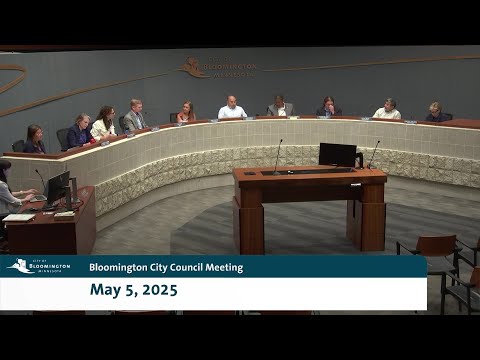
City planning staff on Monday presented a study of office vacancy and strategies to encourage conversions of underused office properties to residential and other uses, and the Bloomington City Council signaled broad, cautious support for staff recommendations and outreach to property owners.
The presentation, led by Thomas Randler Olson of city planning staff, summarized regional vacancy trends, practical and regulatory barriers to conversions and recommended a set of regulatory, logistical and financial tools the city could use to encourage reuse of office buildings. Olson told the council that a healthy office market typically has 5%–10% vacancy and that Bloomington’s vacancy has improved by about 2 percentage points from 2023 to 2024.
The nut graf: The study identified physical constraints (mechanical, plumbing and floor‑plate issues), parking and zoning rules and the city’s Opportunity Housing requirements as common obstacles. Staff recommended targeted zoning changes to allow multifamily in several office/commercial districts, educational resources for property owners, a dedicated staff contact to shepherd conversions and a survey of office building conditions before broader code changes.
Staff said regional peers have taken a range of steps: Minneapolis streamlined approvals and paused some inclusionary requirements for conversions; other suburbs have used planned unit developments, fee waivers, or limited financial assistance. Olson noted the city had not inspected every building and estimated that “52 office properties are in districts that don’t allow multifamily residential,” while other slides showed about 55 properties in districts that do allow multifamily.
Council members asked detailed questions about parking, market drivers and long‑term vision. Mayor Tim Bussey observed that many Bloomington office sites already have abundant parking and asked whether loosening parking rules would help; staff replied that some residential conversions require covered parking per unit and that shared‑parking or proximity to transit can be used to reduce required parking.
Council member Mary Lohmann, reflecting concerns about preserving a healthy office stock, asked “what is the proper amount of office in the city of Bloomington?” and urged care to avoid overshooting and losing office capacity the city may later need. Council member Maria Moore raised quality‑of‑life and business‑location concerns, asking how conversions would affect the attractiveness of remaining office nodes for corporate tenants.
Several council members favored a measured approach focused on outreach. Council member Rob Carter said he supported the planning commission and staff recommendations and called the proposal “a very, very measured approach.” Council member Nelson urged staff to be ready to work directly with developers who come forward rather than launching a large study effort.
Action and next steps: Council did not vote to change code at the meeting. Instead councilmembers generally agreed to staff recommendations: prepare educational resources, identify a staff point of contact, and “hang out the shingle” to signal that the city is open to conversions. Olson said code amendments and public hearings would be scheduled later in the year if council directs formal changes.
Why it matters: Office vacancy affects economic activity, property tax base and housing supply; the council’s direction keeps options open while delaying immediate ordinance changes. Staff cautioned that physical building constraints mean not all vacant offices are viable conversion candidates and recommended a building‑level survey as a next logistical step.
Council comments and concluding direction tapered the discussion: staff should prepare outreach materials, offer a point person to field conversion inquiries, and return with any recommended code amendments and public hearing dates if and when the council requests them.