Get Full Government Meeting Transcripts, Videos, & Alerts Forever!
Get email alerts on the Housing Master Plan topic
No spam. Unsubscribe anytime.
Planning Board begins housing chapter work; consultants advise broad engagement and policy options
Summary
Consultant Judy Barrett and board members discussed goals for a Housing chapter and how it should feed into a full master-plan update, focusing on missing-middle housing, downtown options, parking management, and community engagement.
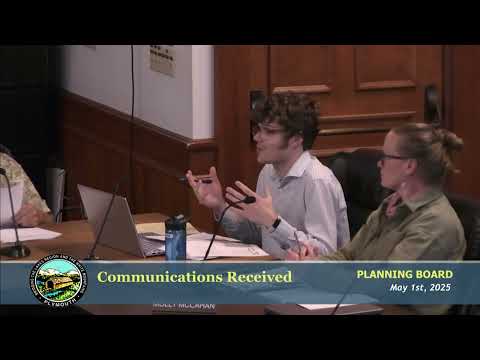
The Plymouth Planning Board held an extended discussion with consultant Judy Barrett of Barrett Planning Group about a housing chapter that will feed into a future master-plan update. Barrett asked board members what they want the housing chapter to accomplish; board members and the consultant then discussed a range of options including “missing middle” housing, accessory dwelling units, downtown redevelopment, parking management, and tools other than zoning such as land trusts or local housing trusts.
Multiple board members said the town lacks housing for a range of incomes and ages. One planning board member argued the town needs “young people…young professionals…families,” and said housing options affect school enrollment and local economic vitality. The discussion emphasized housing types beyond single-family detached homes, including cottage courts, mixed-use buildings with apartments above first-floor commercial space, and conversion of underused downtown buildings to smaller units.
Members debated parking constraints downtown and possible responses: municipal parking management, shared-use arrangements with institutions, curb/time management, or new parking facilities. A planning board member said prior studies showed more downtown parking exists if people are willing to walk “more than a block,” and another noted that improved crosswalks, lighting and walkability could encourage use of more distant spaces.
Barrett recommended beginning with a broad “barometer” community engagement event (similar to previous HOP work) and follow up with targeted focus sessions. The board discussed online engagement tools; staff and the consultant recommended using an interactive platform (SocialPinpoint) and visual tools such as story maps or mural-style boards to help people visualize development scenarios. Barrett and staff said they would craft a community engagement plan to submit to funders and the board.
Board members also revisited unfinished items from prior master-plan work, including a proposed Fairgrounds Road overlay and a Tenney Mountain overlay. Some members said those topics had been well-vetted previously and should be put to voters; others asked for a careful re-evaluation, noting that late-hour edits during prior hearings had changed the proposals and eroded public trust.
No zoning changes were adopted at the meeting. Barrett said the housing chapter could also identify non‑zoning actions — for example, formation of a housing trust, partnerships with land trusts, or targeted grants for rehabilitation — that would support housing goals while zoning work and master-plan updates proceed.