Get Full Government Meeting Transcripts, Videos, & Alerts Forever!
Get email alerts on the Municipal Finance topic
No spam. Unsubscribe anytime.
Loxahatchee Groves advisory committee flags recurring budget overruns, backs travel controls and CFO search
Summary
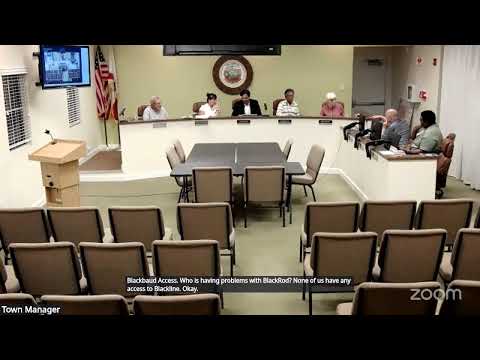
At a recent meeting of the Town of Loxahatchee Groves Financial Advisory Committee (FACT), members reviewed the 2024 audit and 2025 year-to-date finances, identified repeated over-budget spending in several categories and voted to recommend a travel/expense policy and a targeted chief financial officer hire to the town council.
The Financial Advisory Committee (FACT) of the Town of Loxahatchee Groves reviewed the town's 2024 audit and 2025 year-to-date financial reports and voted to recommend a formal travel-and-expense policy and the selection of a CFO with a cost‑reduction focus.
Committee Chairperson Manish Sood told the committee that while some revenues exceeded expectations in 2024, recurring expense overshoots and the budget's continued reliance on reserves pose a risk to the town's cash flow and capital program. "Ten percent of our operating budget is going towards legal," Sood said, urging clearer budget controls and documentation of large items such as legal invoices and capital purchases.
Sood's presentation identified specific categories with significant variances: legal fees, capital equipment leases, engineering, machinery maintenance and subscriptions. He told the committee that legal fees were roughly $130,000 over budget; a capital equipment lease for a utility vehicle was recorded at about $239,346; bank merchant fees and office-supply categories also exceeded their budgets. Sood said that the 2025 year-to-date picture (through March) showed weaker revenue collections and ongoing overspending in the same categories, producing an estimated general‑fund gap of $250,000–$500,000 if trends continue.
Auditor David Fairman, who participated by Zoom, said the auditors perform sampling and walk‑throughs to form an opinion on the town's financial statements and independence: "We are independent of the town," Fairman told the committee, describing the audit scope and noting that budget-to-actual variances are reported in the notes and required supplementary information of the financial statements.
Committee members raised concerns about travel, training and credit-card expenditures and voted to recommend a tighter travel-and-expense policy. The committee also voted to forward the analysis of 2024 and 2025 observations and to recommend that the council prioritize hiring a CFO with explicit responsibilities for cash-flow management, procurement compliance and cost controls. Motions carried by voice vote with recorded outcomes of 4–0 in each case.
Members stressed that pending reimbursements and grants — cited during the presentation as pending FEMA and other reimbursements — do not remove the need for stronger internal controls and monthly budget reviews. Sood urged formal policies on intra‑fund transfers and clearer procurement authorizations for capital expenditures to avoid repeating the pattern of using one fund to plug gaps in another.
The committee asked staff and the auditors for follow-up details: line‑by‑line backup for the large overages (legal, capital purchases), evidence of pre‑audit communications with the auditors, and a fund‑flow (cash‑flow) statement showing how operating results fund capital projects. The committee voted to send its presentation and recommendations to the town council for consideration and directed staff to supply the requested documentation in advance of the council review.
Next steps: FACT will deliver its report and recommendations to the council. Committee members asked town management for monthly budget variance reports, more granular backup for large expense categories and confirmation of reimbursements expected from FEMA and other external sources.