Get Full Government Meeting Transcripts, Videos, & Alerts Forever!
Get email alerts on the Property Tax Assessments topic
No spam. Unsubscribe anytime.
Public commenters urge study of tax impacts on low‑priced Detroit homes and better realtor notices
Summary
At a Detroit Budget, Finance and Audit committee meeting that lacked a quorum, public commenters urged the city to study tax impacts on low‑priced homes, require realtor notifications, and consider phasing in tax increases on inherited property.
Public commenters at the Detroit Budget, Finance and Audit standing committee meeting urged the city to study how property tax assessments and notifications affect lower‑priced homes and to consider phasing in tax increases when property transfers occur.
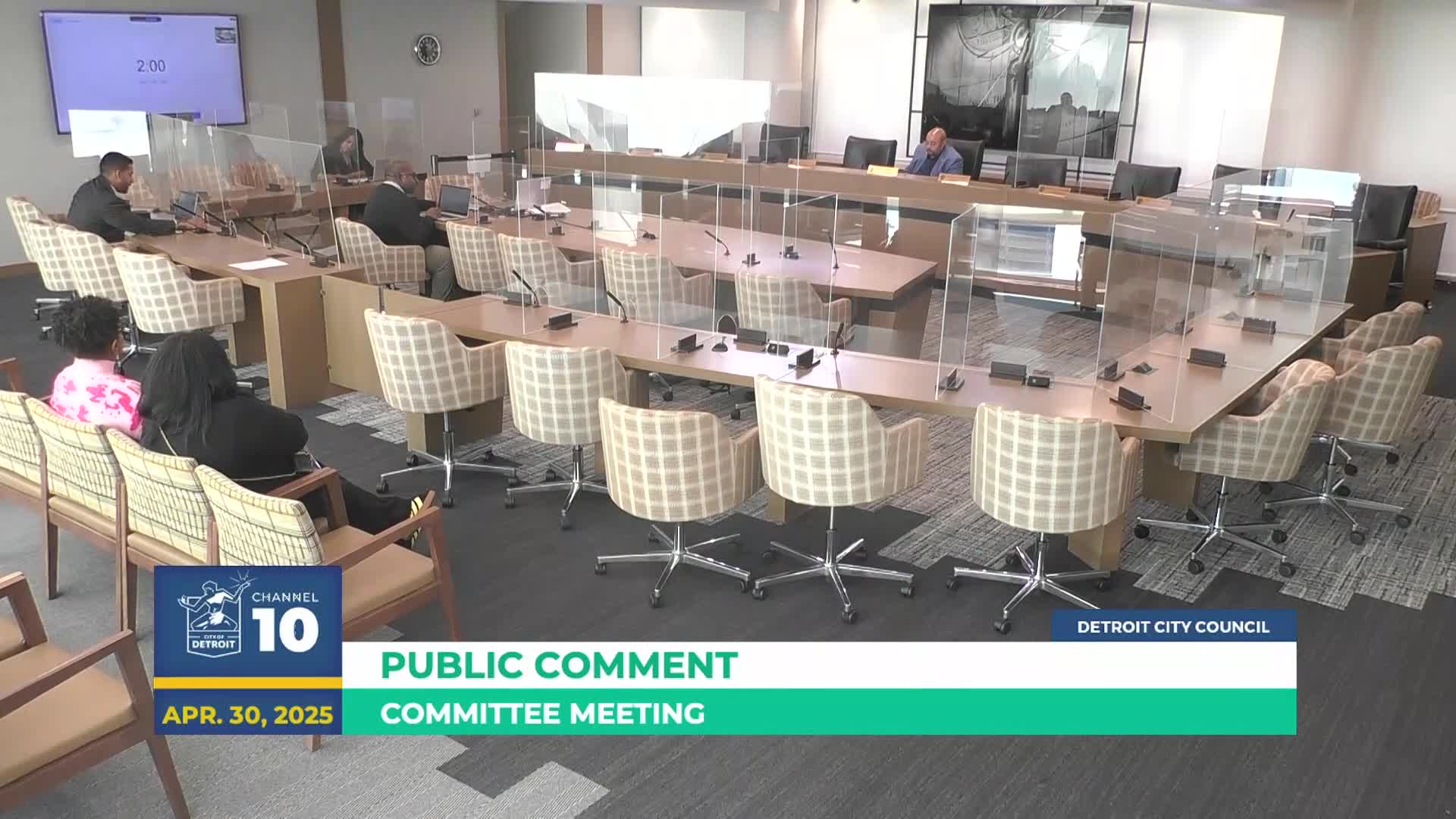
The speakers’ concerns emerged during public comment at the committee meeting, which did not achieve a quorum and therefore took no formal action; the committee chair said the agenda items would be carried to next week’s meeting.
“Item 6.1, and I think that that report the study needs to also look at more so at some of the lower priced homes like this under $40,000 because it seems like they are indeed over taxed,” William M. Davis, a public commenter, said. Davis also asked that the city improve notifications to realtors about property tax rates and proposed phasing in tax increases on transfers to prevent immediate large tax jumps for inheritors. “I could see a possibly a way if y’all could phase in the increases over a 5 year period,” he told the committee.
Another public commenter, Sterling Hughes, called a draft report “scathing,” saying the findings suggested widespread problems with how property transactions and deeds are being handled and asked for a hearing and additional transparency. “It says that 20% of the houses … are done properly. 76% are done unproperly costing taxpayers revenue,” Hughes said, urging the committee to examine assessor processes and follow established procedures.
Both speakers tied their comments to agenda items identified in the meeting as 6.1 and 6.3, which the committee chair said would be considered when the meeting reconvenes. No committee votes or directives were recorded during the session because there was no quorum.
The comments address three distinct concerns voiced by residents: (1) apparent assessment or transaction errors affecting low‑value homes, (2) insufficient notice to buyers and realtors about property tax rates, and (3) the immediate tax increases that can occur when property transfers from older to younger relatives.
Committee staff did not take formal action at the session; the chair said staff would follow up with individual commenters after adjournment.
For further review, the commenters asked the committee to convene a public hearing, increase transparency in assessor procedures, and analyze possible phased approaches to tax increases to reduce displacement risk for inheriting family members.