Get Full Government Meeting Transcripts, Videos, & Alerts Forever!
Get email alerts on the Housing Solar Demolition topic
No spam. Unsubscribe anytime.
Residents say solar buyback, demolition notices led to inconsistent treatment and denied rights
Summary
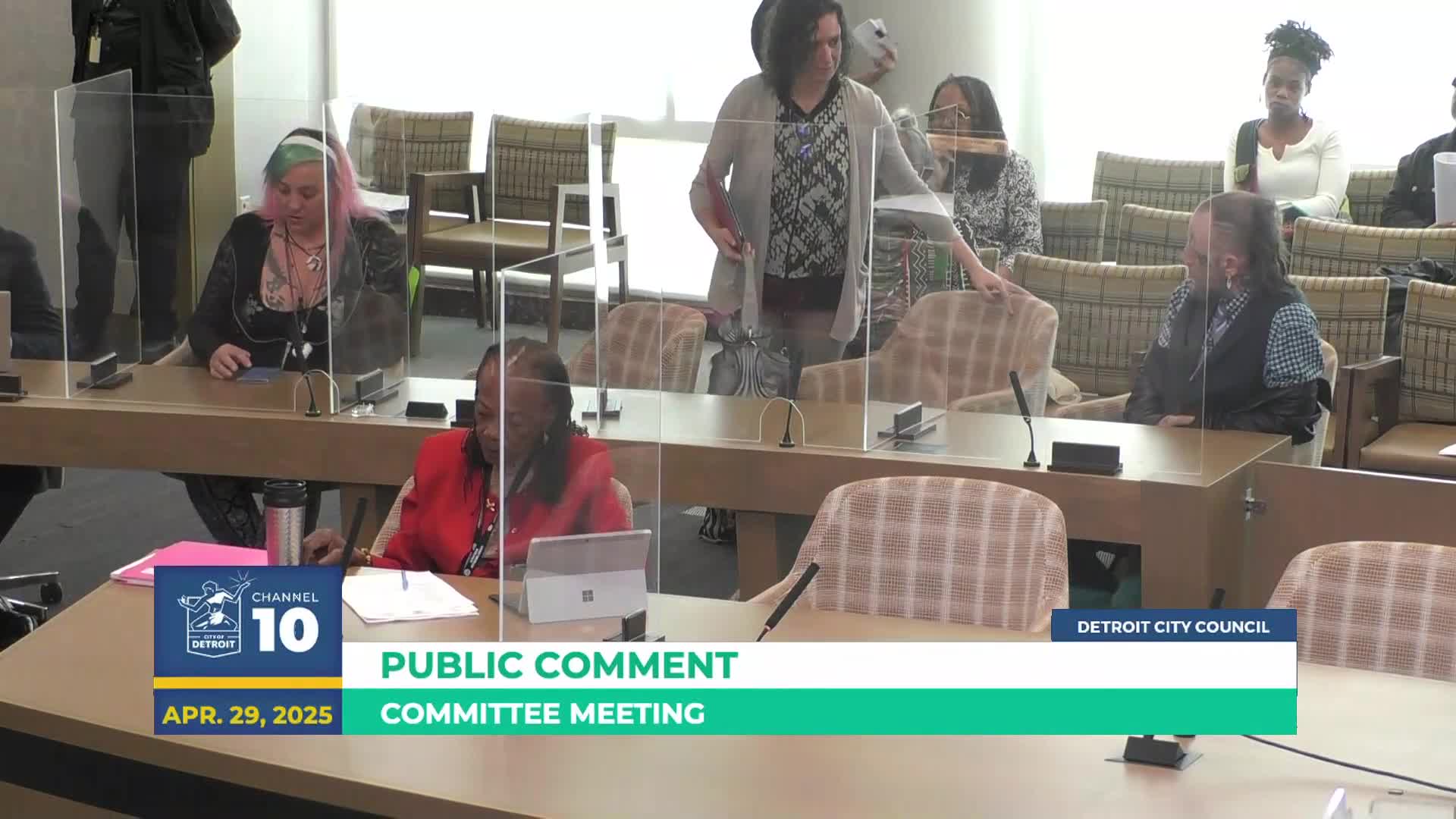
Public commenters told the Detroit City Council they faced inconsistent enforcement and denied legal protections tied to the city’s solar program, alleging wrongful denial of a buyback, improper vacate procedures and opaque relocation offers.
Danielle Mertes, a resident, told the Detroit City Council during public comment that she faced what she called unfair treatment by the city related to its solar program and subsequent property actions. She said she was ruled ineligible for the program’s buyback, was not served an eviction notice, and was denied a six-month redemption period she believes she should have received.
The issue matters, residents said, because they believe the city’s handling of buyback and vacate notices affects property owners’ due-process rights and the equitable treatment of people displaced by demolition or redevelopment. Speakers urged clearer procedures and consistent enforcement.
Mertes said: "I was told I wasn't eligible for the buyback program. I never was served an eviction notice. I should have been eligible for a 6 month redemption period and was denied that also." She said the house remained standing nearly four months after the city used demolition as a reason for not following other procedures, and that city staff could not confirm demolition timelines.
David Pianoski, another commenter who described losing his family’s home, connected the property actions to broader harms, including disrupted family arrangements. He said his son now sees him only three times a week for three hours and that his household spent months addressing alleged blight violations. Pianoski described efforts to repair properties and disputed notices for lots he said his family did not own.
Darren McCluskey, who offered a legal update during public comment, said there has been significant litigation tied to takings and land-use issues and cautioned against using eminent domain or flexible approaches for projects he described as "solar." He said, "If this project is so approved, why are there a 46 lawsuits related to this project?" and suggested council focus on core services instead of creating new programs to address symptoms.
Speakers pressed for clearer timelines, consistent notice requirements, and transparent relocation or compensation offers. Mertes said she was previously offered $90,000 but was not given that amount after choosing to cure violations and pay back taxes; she also alleged that other individuals were offered smaller relocation payments, which she described as unequal treatment.
No council action was taken because the meeting lacked a quorum; council staff said public comment would be received as a courtesy and added to the record. Because no formal agenda items were considered, the public comments did not result in motions, votes, or directives recorded at this session.
Members of the public who spoke requested follow-up from the clerk’s office and staff: Mertes said she had texted a contact on a demolition sign and was told no demolitions were scheduled near 19212 Danbury, which she cited as evidence of inconsistent implementation.
With the council unable to act at the session, commenters urged the body to clarify procedures and to review whether the city followed its own vacate and buyback policies when properties are subject to solar-related programs or demolition.
The council adjourned and is scheduled to reconvene next Tuesday; speakers said they will pursue formal filings and follow-up with council staff and the clerk’s office.