Get Full Government Meeting Transcripts, Videos, & Alerts Forever!
Get email alerts on the Education Budget topic
No spam. Unsubscribe anytime.
Chelsea Public Schools presents balanced FY26 spending plan after $1.3M in central-office cuts
Summary
Dr. Almi Albeda, superintendent of Chelsea Public Schools, presented the district’s proposed fiscal 2026 budget to the Chelsea City Council and school committee and said the district balanced a $152 million plan after city contributions and roughly $1.3 million in central-office cuts.
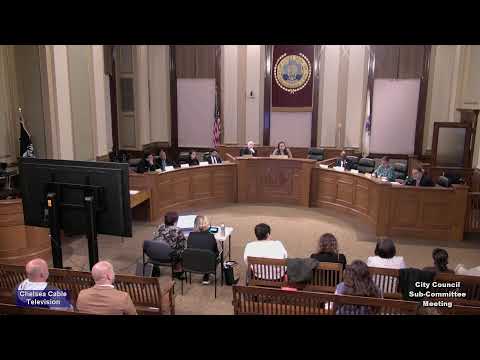
Dr. Almi Albeda, superintendent of Chelsea Public Schools, presented the district’s fiscal 2026 budget to a joint meeting of the Chelsea City Council and school committee, saying the district reached a balanced $152,000,000 budget after a multi-step process that included city funding and central-office reductions. “I am so grateful to live in Chelsea, where people understand the importance of education and supporting... with finances,” Albeda said during the presentation.
The budget presentation and follow-up questions by councilors and school committee members focused on revenue drivers, enrollment changes, program cuts and additions, and risks from expiring federal and state grant sources. Billie Joe Turner, the district’s new chief financial officer, told the meeting the district had to make “very critical decisions this year and balance the budget and make cuts” after federal ESSER funds and other grants declined.
Why it matters: Chelsea’s budget relies on a mix of state Chapter 70 aid, the city contribution, revolving fund activity (athletics, food service) and grants. The district reported roughly $11.5 million in new baseline cost pressures — including about $7.8 million for negotiated salary increases, roughly $2.5 million for higher special-education tuition for students placed out of district, and increases to transportation and utilities — which produced a projected gap before city actions. After accounting for state aid, the district’s October 1 enrollment report and the city’s additional contribution, Albeda and Turner said the district reduced an initial shortfall so the budget balances for FY26.
Major figures and choices - Total proposed FY26 budget: $152,000,000. - Estimated baseline cost increase ("cowboy math"): about $11,500,000 (salaries/benefits, special-education tuition, transportation, utilities). Turner cited $7,800,000 for raises, about $2,500,000 for special-education tuition, $255,000 for transportation and $102,000 for utilities. - Enrollment effects: districtwide enrollment fell by 60 students compared with the prior October 1 count; Superintendent Albeda said that drop reduced revenues by about $1 million. The district reported an increase of 95 multilingual learners (MLEs) and a loss of 47 students in the low-income category. - Gap and reductions: the budget process produced an initial budget gap of roughly $3.4 million; district leaders and the city manager worked to secure additional revenue and the district implemented about $1.3 million in reductions at central office and some targeted school-level adjustments.
Reductions and protections Albeda emphasized the district’s priority to protect staff who work directly with students. Cuts described at the meeting included scaled-back professional-development contracts (a reduced equity contract called DEEP and a smaller SchoolWorks contract), a pause on a private tutoring vendor after that vendor ceased operations, reductions of two equity mediation specialists, elimination of two unfilled special-education translator positions, a special-education clerk position at Webster, a reduction in contracted braille services where there is currently no need, and a $300,000 reduction in “extraordinary maintenance” projects.
Albeda was explicit about one personnel change at extended learning: the REACH program itself will continue, she said, but the vacant REACH director position (vacant for six months) was eliminated. “I just want to be very clear. We are not cutting the REACH program, but we did cut the REACH director,” she said.
Additions and program investments District leaders also added positions and services based on school requests and identified needs: two special-education teachers at the Early Learning Center (ELC), conversion of a physical-education position at the ELC to a science specialist, a special-education inclusion coach at Hooks, multiple multilingual educator (MLE) teacher conversions and one additional MLE teacher at Clark Avenue, expanded ESY therapy services, stipends for navigators and wellness office professional development, consumable curriculum materials, and stipends for new athletic coaches. Albeda noted that roughly 57% of students are multilingual learners and that investments reflected those demographics.
Tutoring and student supports A contracted after-school tutoring vendor that served middle grades abruptly went out of business; Turner and Albeda said the district had been transitioning to a model that would provide high-dosage tutoring during the school day for middle grades and would pursue any available one-time funds to pilot daytime tutoring. A line-item cut of about $145,000 for the tutoring contract was discussed. The district is also adding social workers and continuing to contract with telehealth mental-health providers (CartwheelCare) and alongside mobile apps for Tier 1 interventions.
Federal and state funding risks Speakers repeatedly raised the risk of reduced federal and state grant dollars. Albeda and Turner said ESSER and some federal Title programs are stepping down; state-level funding from the Student Opportunity Act (SOA) is being constrained by a statutory cap tied to a 4.5% inflation limit, which councilors described as leaving Chelsea roughly $7.5 million short relative to actual inflationary costs in recent years. Turner and Albeda said IDEA funding for special education appears likely to be level-funded, Title I appears flat, and Title II and Title IV may be at risk, with Title IV in particular supporting extended-learning summer staff and some curriculum/materials.
Other policy and facility items The district noted a recent property purchase (26 County Road) that will be used to move the intergenerational literacy program and free classroom space to expand pre-K and possibly pursue full-day pre-K in future years once renovations are complete. The district also described ongoing work on a high-school redesign funded in part by a Barr Foundation grant, with student and family surveys planned that will include questions about school safety measures such as metal detectors.
Partnerships and program changes Albeda said the five-district partnership (regional collaboration among nearby districts formed about a decade ago) is being dissolved after partners withdrew because of budget constraints; funds formerly used for the partnership will be reallocated to a central-office position that had previously been cut.
What remains unresolved District leaders warned that if state or federal grants decline further next year, deeper cuts at the school level would be necessary and “that will be very painful.” They said that while central-office reductions avoided immediate classroom layoffs this year, further reductions would likely affect school-level positions and supports.
Questions and next steps Councilors and committee members asked about the scope of reduced services, translation and special-education support, pre-K expansion possibilities, and student mental-health services. Albeda and Turner said the district will continue to engage school communities, and they described a history of multiple public budget conversations and school-site reviews between January and March. The district plans follow-up discussions with councilors and continued community engagement as the FY26 plan moves into implementation.
Ending Superintendent Albeda closed by thanking council and committee members and by noting that future funding decisions at the state and federal level will determine whether the district must shift from targeted central-office reductions to more disruptive school-level cuts. “If we lose some of our Title funds… it’s going to be a difficult budget year for us next year,” she said.