Lifetime Citizen Portal Access — AI Briefings, Alerts & Unlimited Follows
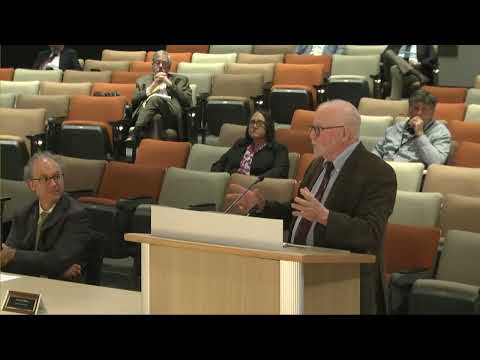
Experts and advocates at BOE hearing urge reworking property tax to free land for housing
Loading...
Summary
At an informational hearing of the State Board of Equalization on April 24, three outside experts told board members that Californias property-tax system, shaped by Proposition 13, contributes to high housing costs by rewarding long-held property and underassessing commercial land.
At an informational hearing of the State Board of Equalization on April 24, three outside experts told board members that Californias property-tax system, shaped by Proposition 13, contributes to high housing costs by rewarding long-held property and underassessing commercial land.
The panel included Lenny Goldberg, executive director of the California Tax Reform Association; Darien Shanske, professor of law at UC Davis; and Devon Gray, president of Ending Poverty in California (EPIC). They described a set of policy options aimed at increasing housing production and creating new local revenue while protecting homeowners.
Why it matters: Panelists said current tax rules help push up land prices and keep underused commercial parcels and vacant lots off the market, worsening Californias housing shortage. That shortage, they said, both raises rents statewide and reduces economic mobility for low- and middle-income households.
Goldberg argued that Californias system "is the worst possible tax system for good land use," and proposed a suite of changes he called a "smart roll": reassess commercial land to market value and shift annual taxes away from new business investment (business personal property) toward land value. He said reassessing commercial land alone could produce roughly $12 billion to $18 billion in ongoing revenue, which could finance affordable housing and infrastructure. He also urged the Board to reconvene a task force to revisit change-of-ownership rules that let ownership structures avoid reassessment.
Professor Darien Shanske described property taxes as a "benefit tax" that traditionally links local spending to local revenue and argued Californias 1978 restrictions broke that link. He suggested policy steps that can be taken by statute, including a circuit-breaker program tied to income to protect long-time, low-income homeowners while moving to a more market-value-based system over time. Shanske also said a parcel tax on undeveloped square footage could be used by local governments to finance infrastructure and encourage development.
Devon Gray framed the tax debate around poverty, saying "the state of poverty in California is dire" and noting the uneven incidence of tax benefits: wealthier homeowners capture much of the gains from Prop 13. Gray urged reforms that focus on commercial land and protections for low-income households to preserve voter trust for future ballot measures.
Speakers and public commenters from both sides addressed politics and implementation. Rob Gutierrez of CalTax and Scott Kaufman of the Howard Jarvis Taxpayers Association said changes to property-tax valuation and assessment practice belong to the Legislature and to voters; Kaufman pointed out that in 1978 voters rejected a split-roll amendment and approved Proposition 13. Both warned of higher costs to homeowners and implementation burdens for county assessors. Board members asked presenters about implementation details, rural effects, and safeguards for senior and low-income homeowners.
What was proposed (high level): - Reassess commercial land to market value while exempting or taxing new business investment in the year of purchase (shift tax incidence from investment to land rents). - Use reassessment revenue to create permanent funding for affordable-housing programs and local infrastructure. - Create clearer rules for change-of-ownership and cumulative ownership thresholds (a 50% cumulative turnover test was discussed) to reduce avoidance via complex ownership structures. - Implement targeted circuit-breakers or tax credits tied to income to protect long-term, low-income homeowners.
No board action was taken; the session was informational. Several presenters called for legislative or ballot action; Goldberg suggested the BOE re-examine the 1979 task force rules for change-of-ownership. Board members and assessors signaled interest in continuing the discussion and underscored concerns about administrative complexity and the political obstacles to statutory or constitutional change.
Ending note: Panelists emphasized trade-offs rather than one-size solutions: several recommended statutory measures that could be paired with homeowner protections while acknowledging that significant reforms would require political consensus or voter approval.