Get Full Government Meeting Transcripts, Videos, & Alerts Forever!
Get email alerts on the Legislation Governance topic
No spam. Unsubscribe anytime.
Board of Equalization adopts rules requiring memo for bill support, drops per-member bill limit
Summary
The Board of Equalization on April 20 approved new guidelines requiring any board member who asks the board to support or oppose legislation to submit a memorandum explaining how the measure is within the board's jurisdiction, the policy issue it addresses, fiscal and administrative impacts, and links to the bill text and any available committee analyses.
The Board of Equalization on April 20 approved new guidelines requiring any board member who asks the board to support or oppose legislation to submit a memorandum explaining how the measure is within the board's jurisdiction, the policy issue it addresses, fiscal and administrative impacts, and links to the bill text and any available committee analyses.
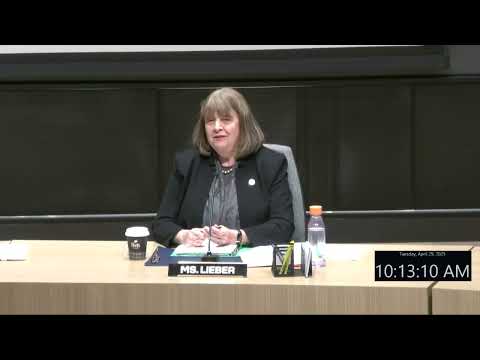
The change, proposed by Vice Chair Susan Lieber and approved after debate, is intended to give the board more information and limit consideration to measures that are germane to the agency's property-tax and related constitutional responsibilities. Vice Chair Lieber said, "what you have before you is a proposed, addition to our governance policy that would, foster a system by which each request for action on legislation would include a memorandum submitted by the board member requesting the action." The board also agreed that "Spot bills should not be included for Board support or opposition."
Board members said the written memorandum requirement should help the board evaluate fiscal effects and administrative burdens before weighing in. The memorandum must address how the bill is within the BOE's jurisdiction, the policy issue, the fiscal impact if known, administrative impacts at the state and local level if known, a link to the bill text, and a link to the most recent bill analysis if available. Vice Chair Lieber's motion removed an earlier proposed cap on the number of bills a single member may present at a meeting; members said limits could hamper quick responses to disasters.
Executive Director Yvette Stowers told the board that when the board votes to take a position the office prepares and submits the support or opposition letter under the chair's letterhead. Stowers said: "If the bill is later amended, even if amended on the floor, we are not tracking that. ... It is upon the members and their staff'to track and make a decision on whether or not they want to continue to support it." Ted Angelo, legislative director, described existing tracking: for bills that affect the board's programs he provides a weekly update with the latest amended version and bill analyses.
Members debated how to handle amendments between board meetings. Several members asked the executive director to alert the board when a bill that the board has supported is later substantially amended; Stowers agreed to notify members by email when she believes changes are significant. Legal limitations were noted: Stowers cautioned that board members should not direct staff and referenced Government Code 15600 (as discussed during the meeting) in the context of who may direct agency staff work.
Board member Imran (Deputy Controller) proposed establishing a two-member board work group to monitor and study legislative proposals between meetings; Stowers said she would agendize a placeholder for a work group at a future meeting and that members could limit the work group to two members to avoid Bagley-Keene issues. Vice Chair Lieber made the motion to adopt the governance language (including deletion of the per-member bill limit and the spot-bill exclusion); Member Schaffer seconded. The roll call vote was Aye: Chairman Gaines, Vice Chair Lieber, Member Vasquez, Member Schaffer, Deputy Controller Amaron. The chair declared the motion passed and the policy effective immediately; the online governance document will be updated later.
The board asked staff to circulate the finalized policy language and to place a board work-group item on a future agenda so members can decide whether to form a two-member committee to review bills between meetings.
The change aims to increase transparency and ensure board support or opposition rests on a clear record of jurisdictional and fiscal analysis. The board did not adopt new staff duties that would require staff to track non-germane bills; members and their staff remain responsible for following bills that fall outside BOE program areas.
The executive director will continue to provide the existing Friday legislative update; she agreed to send additional notifications to members when she determines a supported bill is substantially amended.