Get Full Government Meeting Transcripts, Videos, & Alerts Forever!
Get email alerts on the Technology E Filing topic
No spam. Unsubscribe anytime.
Fragmented e‑filing systems and signature rules slow county tax administration
Summary
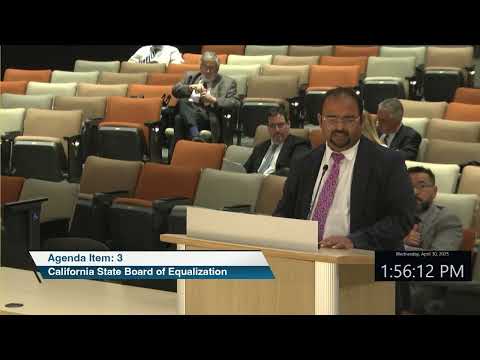
County assessors and tax practitioners told the Board of Equalization work group that multiple, nonstandard e-filing platforms and inconsistent acceptance of electronic signatures force many filers back to paper, raising costs and creating penalties for taxpayers who e-file without a wet signature in some counties.
County assessors, technical representatives and tax lawyers told a Board of Equalization work group that fragmentation across multiple electronic filing platforms — together with uneven rules about digital signatures — is creating administrative burden that disproportionately affects smaller counties and the taxpayers who file there.
Practitioners described three practical problems: (1) multiple incompatible filing systems, (2) uncertainty about whether and how counties will accept e‑signatures, and (3) out-of-pocket costs or penalties tied to signature method.
Paul Waldman of the Ryan Group explained that personal-property returns and bulk filings are handled through several different systems. "You have this SDR system that is statewide, but counties can either opt in or not," he said. In testimony to the panel Waldman summarized adoption counts shared with the work group: roughly 37 counties had adopted the SDR batch filing system, about 21 accepted single-record online filing (E‑SDR), and approximately 21 counties used a vendor known as Megabyte for online filing; a few very small counties reportedly had no electronic option. "So they need to file some on SDR, some on ESDR, some on Megabyte, some by paper. It's not worth it. So they do it all by paper," Waldman said.
Waldman and other witnesses also described uneven acceptance of electronic signatures. The legislature passed AB 1879 to require counties to accept an electronic signature when a document is e-filed, witnesses said, but many filers still face wet-signature rules in practice because they must use county-specific portals or counties have verification concerns. A 10 percent penalty for lack of a wet signature on certain personal property filings was reported in testimony as a real cost in some counties; practitioners said penalties could sometimes be abated on appeal but were onerous for some taxpayers.
Digital-signature verification is the core technical concern, witnesses said. Common commercial solutions (for example, DocuSign) can verify identity but incur per-signature or account fees; witnesses reported that DocuSign costs could be roughly $5 per signature for very small counties and less for medium and large counties. That cost is typically borne by the county if the county hosts the signing link; witnesses suggested counties could either absorb the cost, pass it through as a processing fee, or maintain a wet‑signature option for no extra charge.
Smaller counties emphasized limited budgets. Humboldt County Assessor Howard Laahee told the panel his clerk of the board considered an assessment-appeals module that would have cost about $30,000 per year in maintenance and setup, an amount his budget could not support while the county faces a multi-million dollar shortfall.
Witnesses proposed practical steps: compile a statewide inventory of which counties accept which filing systems and signature types; encourage or subsidize county adoption of a single statewide portal for appeals filing (which could include Prop 19 functions); permit a one-time signature card on file to reduce repeated wet signatures; and provide clear guidance and outreach to tax professionals to increase e-filing uptake.
No formal decisions were reached at the work group. Staff said they would include the testimony and suggested next steps in the meeting minutes and recommendations for the board.
Ending: Work group members asked staff for an inventory of county filing systems and signature acceptance; stakeholders encouraged further study and outreach to reduce the current mix of systems and the resulting reliance on paper.