Get Full Government Meeting Transcripts, Videos, & Alerts Forever!
Get email alerts on the Small County Resourcing topic
No spam. Unsubscribe anytime.
Small counties say limited staffing and costly software keep appeals on spreadsheets
Summary
Clerks and small‑county officials told the BOE work group that many counties run assessment appeals with less than one full‑time equivalent, rely on Excel for case tracking, and lack funds to buy or integrate case management systems; they urged grants, shared solutions and temporary sharing of hearing officers.
Clerks representing small and rural counties told the Board of Equalization work group that limited staffing, budget constraints and the cost of bespoke software force many counties to manage appeals on spreadsheets and create heavy seasonal workloads.
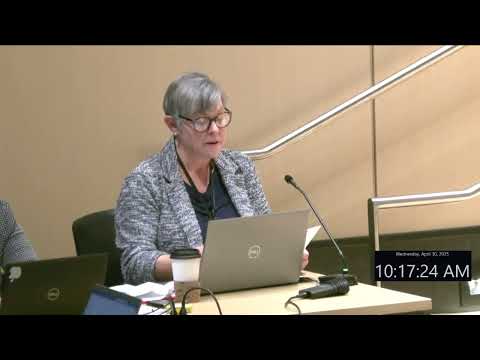
Bridal Velhakis, lead assessment appeals clerk for Ventura County and chair of the California Clerk of the Board of Supervisors Association’s Assessment Appeals Subcommittee, said a majority of counties have less than one full‑time‑equivalent employee dedicated to appeals work and cautioned that process changes must be accompanied by funding for staff and software. “Any efforts to change processes and procedures in the assessment appeal process must carefully consider the fiscal impacts on county budgets and be accompanied with funding opportunities,” Velhakis said.
Melissa Kits, assistant clerk of the board for Butte County, described a near‑entirely manual workflow in some counties: “My system, my data management system is an Excel spreadsheet. So I manually enter everything into Excel. It is extremely time consuming.” Butte County receives roughly 200 applications annually and Kits said she lacks resources to buy or maintain a modern system; she cited vendor project costs “around $200,000” as unrealistic for small counties.
Speakers urged the BOE to consider grant programs or shared, state‑supported systems that counties could adopt and to allow temporary cross‑jurisdictional sharing of assessment appeals board members to fill panels where single counties can’t recruit enough qualified appointees. Velhakis also recommended revising appointment rules to let former assessor employees serve sooner in some counties and pursuing statewide training resources for clerks and board members.
Panelists stressed scalability: practices that work in Los Angeles are not realistic for counties with limited staff and a few hundred appeals a year. Several small‑county witnesses said loaned hearing officers or shared software licenses could yield big efficiency gains if the BOE or the state provided seed funding or a grant program.