Get Full Government Meeting Transcripts, Videos, & Alerts Forever!
Get email alerts on the Zoning Industry topic
No spam. Unsubscribe anytime.
Commissioners deny rezoning for concrete block plant after widespread neighborhood opposition
Summary
The Madison County Board of Commissioners denied a request to rezone 12.64 acres on Highway 29 for a concrete block manufacturing facility after residents and the planning commission raised concerns about compatibility with the county comprehensive plan, traffic, dust, noise and drainage.
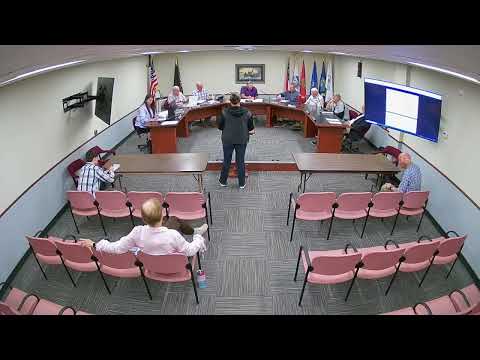
The Madison County Board of Commissioners voted to deny a rezoning request for a proposed concrete block manufacturing facility on U.S. Highway 29 after lengthy public comment and a unanimous recommendation for denial by the Planning and Zoning Commission.
Brian Kimsey, a civil engineer with Carter Engineering, presented the proposal on behalf of the applicant and described a mostly enclosed, light‑industrial operation that would include a roughly 24,000‑square‑foot production building, a 3,000‑square‑foot storage building, a paved parking lot with 16 regular and 2 handicap spaces, and a stormwater detention pond. Kimsey said the site footprint would be buffered with an approximately 50‑foot vegetated zone and a six‑foot landscape berm and that the operation would employ a maximum of about 10 people.
“It's an enclosed building. The noise of the operation is inside the building,” Kimsey said in response to resident concerns.
Opponents, including David Carey speaking for the Bryce Landing Phase 2 Homeowners Association, urged denial and cited the county’s comprehensive plan, traffic safety on Highway 29, potential dust and particulate exposure and the proximity of the parcel to existing subdivisions and a church. “This is not an appropriate site for industrial zoning,” Carey said, urging the board to follow the comprehensive‑plan guidance for the Dodgeboro area.
Several other residents described recurring water‑runoff problems in nearby neighborhoods, concerns about trucks turning onto the four‑lane highway and worry about particulate matter and noise. Caitlin McDonald, who lives in Windsor Heights, told the board that the comprehensive plan designates the area primarily for commercial retail and pedestrian‑oriented uses, not industrial manufacturing, and said rezoning could signal further industrial encroachment.
The Planning and Zoning Commission voted 5–0 to recommend denial. On May 5 the Board of Commissioners then moved to deny the rezoning; after debate the motion to deny carried.
Key details presented by the applicant included an estimated $9 million in construction costs, an anticipated daily water use figure of about 2,000 gallons, and a projection of roughly 40 trips per day that the applicant later characterized as a total trips figure that would include staff arrivals rather than 40 heavy‑truck movements. The applicant said typical truck traffic would be far fewer than 40 heavy deliveries per day and that many anticipated commercial uses allowed in the existing business zone could generate as much or more traffic than the proposed manufacturing use.
Ending: The board’s denial leaves the property in its existing business zone; commissioners said the county is reviewing its zoning code and encouraged applicants and neighbors to continue dialogue about suitable industrial locations outside established residential and commercial retail corridors.