Get Full Government Meeting Transcripts, Videos, & Alerts Forever!
Get email alerts on the Septic Variance Eagle Lake topic
No spam. Unsubscribe anytime.
PCBOA approves Variance for Versba septic in shoreland setback; vote 3–1
Summary
Hubbard County PCBOA approved a variance allowing a septic drain field within the 150-foot ordinary high watermark setback for Mary and Gerald Versba at Eagle Lake; commissioners noted alternate upland sites but accepted the applicant’s preference to locate the system lakeward.
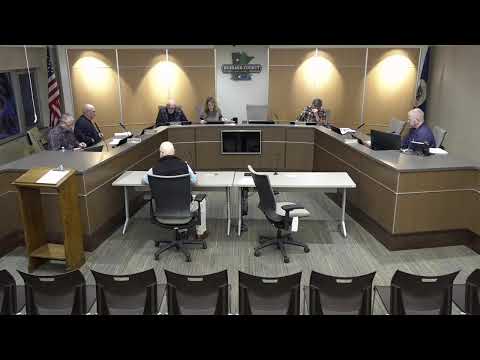
Hubbard County’s Planning Commission and Board of Adjustment voted 3–1 to approve a variance requested by Mary and Gerald Versba to place a septic drain field inside the county’s 150‑foot ordinary‑high‑water (OHW) setback at Eagle Lake.
The applicants said they want a permanent year‑round home on the lake side of their lot and asked for a county variance because the parcel’s shape, wetlands and the location of the private road limit upland building and drain field locations. Commissioners reviewed aerial imagery and staff reports during a site‑view discussion. Board members noted there is upland area west of the road that could serve as an alternate drain‑field site but that pumping effluent 300 feet under the road and through wetland to reach that upland area would be impractical.
Tim moved to approve the variance and adopt staff findings with no additional conditions; Ken seconded. The roll-call-style vote recorded Timothy (aye), Larry (nay), Ken (aye) and Veronica (aye); the motion passed 3–1. Veronica confirmed that the existing holding tank on the property would be abandoned (filled in) and removed from service as part of the permitting process and that Environmental Services will issue the decision letter with next steps.
During public comment several neighbors appeared and some written comments were submitted; the board considered the lake association’s submitted remarks and staff analysis before voting. The board’s approval recognized the parcel’s topography and the practical constraints of routing effluent to the alternate upland area.