Get Full Government Meeting Transcripts, Videos, & Alerts Forever!
Get email alerts on the Concussion Return To Learn topic
No spam. Unsubscribe anytime.
Senate committee backs new immediate-accommodations plan for students after concussion
Summary
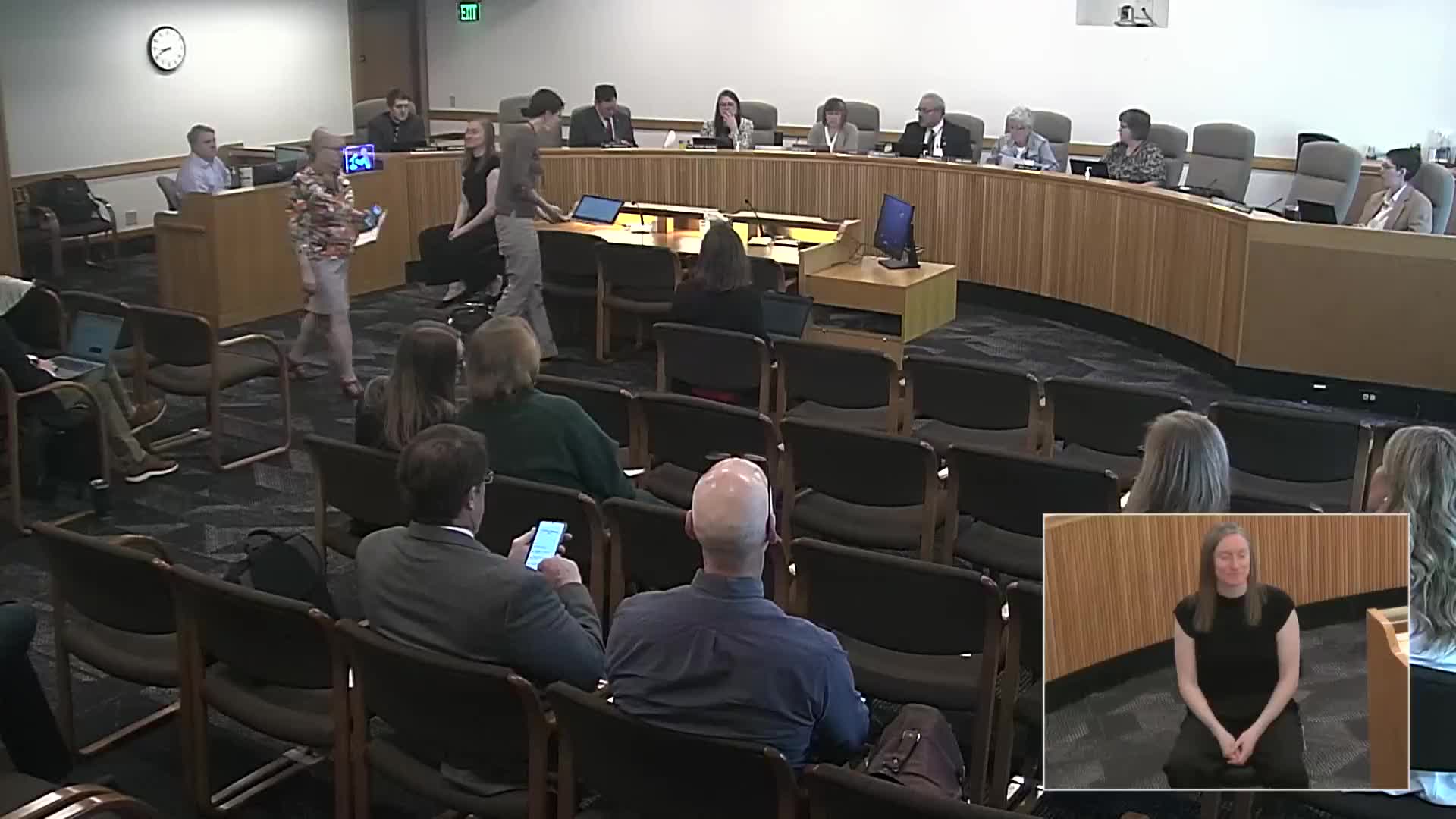
The Senate Education Committee on April 5 heard testimony supporting House Bill 3007A, which would require the Oregon Department of Education to develop a procedure and sample form to create an Immediate Temporary Accommodations Plan (ITAP) for students diagnosed with concussions or other brain injuries.
The Senate Education Committee on April 5 heard testimony supporting House Bill 3007A, which would require the Oregon Department of Education to develop a procedure and sample form to create an Immediate Temporary Accommodations Plan (ITAP) for students diagnosed with concussions or other brain injuries.
State Representative Courtney Neuron, sponsor, described the bill as the product of an 18‑month task force convened by the Oregon Health Authority and said the A‑4 amendment clarified that required accommodations must be in place within 10 school days. “This bill requires the Oregon Department of Education to develop a procedure and sample form … to guide public education providers in creating an immediate and temporary accommodations plan,” Neuron said.
The bill would require schools to initiate the ITAP process on written notification from a parent or guardian that a student has been diagnosed with a brain injury and accommodations are requested. The plan must address academic, behavioral and social-emotional accommodations, and it mandates an immediate assessment of whether physical-activity restrictions are necessary to reduce reinjury risk (for example limiting PE or unstructured play). The A‑4 amendment changed the deadline reference to 10 school days rather than 10 calendar days.
Family testimony was a central element of the hearing. Gwendolyn Lancaster, who said she sustained five concussions in high school, told the committee she received no timely accommodations and that delayed support contributed to long-term academic, social and scholarship consequences. “If the school district had been required to make the accommodations my specialist and I knew I needed, my life might be very different today,” she testified.
Brandina Lancaster, who identified herself as the student’s mother, said teachers implemented suggested accommodations unevenly when they were offered informally and that a statutory requirement would ensure fidelity. “We may think the difference between something being suggested and required is not a big deal. But for some children, like my daughter, it is the difference between success and failure,” she said.
Medical and education experts also supported the bill. Dr. Andrew Ellis, a clinical psychologist specializing in rehabilitation, said HB 3007A “levels the playing field for all students faced with returning to school following concussion” and emphasized the need for coordinated academic accommodations alongside medical care. Melissa McCart, director of the University of Oregon Center on Brain Injury Research and Training, cited national estimates of pediatric traumatic brain injury and said ad-hoc accommodations often arrive too late without a formalized process.
Several senators raised implementation questions for small and rural districts and asked whether athletic trainers and existing concussion-management teams would be incorporated. Neuron and witnesses said athletic trainers and existing school concussion teams had participated in drafting the bill and that the ITAP is intended to be flexible and short-term, updated as recovery progresses. Committee members also discussed whether the 10‑school‑day standard was intended as a maximum; sponsors said the goal is to act as quickly as possible and that the 10‑school‑day window reflects administrative realities.
David Kracke noted the bill includes an immediate requirement to stop physical activity when there is a risk of reinjury and praised the coalition of legislators and advocates that advanced the bill through the House. Several witnesses asked the committee to advance the measure and to help ensure guidance and training accompany implementation.
Ending: Committee did not take a final vote during the hearing; sponsors and advocates urged passage with attention to implementation supports for districts and educators.