Get Full Government Meeting Transcripts, Videos, & Alerts Forever!
Get email alerts on the Renewable Energy Ordinance topic
No spam. Unsubscribe anytime.
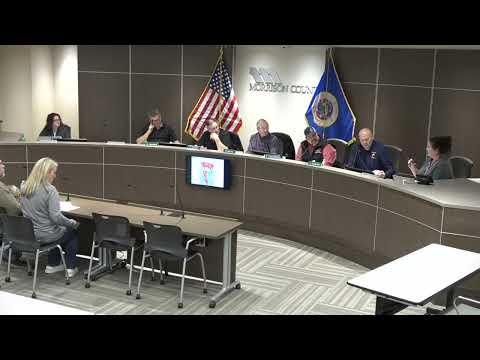
Planning commission backs ordinance changes to allow on‑site manure biofuel plants as interim use in agricultural zoning
Summary
Morrison County’s planning commission unanimously recommended ordinance amendments to allow on‑site manure biofuel plants as an interim use in the Agriculture Zoning District, subject to performance standards and a permitting process.
The Morrison County Planning Commission voted unanimously to recommend county ordinance amendments that would allow manure‑only biofuel plants (anaerobic digesters) as an interim use in the Agriculture Zoning District, subject to performance standards and permitting requirements.
Amy, Land Services staff, told commissioners the ordinance change is focused on “manure processing from a feedlot into solid, liquid, or gaseous fuels” and would allow only digesters that serve the registered feedlot on which they are sited; acceptance or processing of manure from other feedlots would be prohibited under the proposed language. Amy said most proposed facilities are sited on or adjacent to the producing feedlot and that permitting would require applicants to demonstrate compliance with applicable federal and state law, provide an operations plan, emergency and fire response plan, manure storage plan, security and lighting plan, pipeline interconnection agreement, and an updated manure management plan that accounts for digestate nutrient values.
The draft performance standards included minimum setbacks to non‑feedlot residences and sensitive features: 1,000 feet to non‑feedlot residences from the facility boundary, 200 feet from rights‑of‑way, 200 feet from protected waters, 300 feet from wetlands, and 50 feet for other wetland types as proposed in the draft. The draft also requires that a biofuel plant be capable of connecting to an existing pipeline; staff said trucking of fuel to off‑site hubs is not permitted in the current draft because it raises additional regulatory and technical issues the county is not ready to address without further study.
Commissioners asked several technical questions about feedstocks, trucking, pipeline interconnections and setbacks. Brent moved to forward the draft ordinance amendments to the County Board “as is”; the motion was seconded and carried unanimously. Commissioners and staff described this as an initial, narrowly scoped step to allow straightforward manure‑to‑gas projects now while county staff develops broader renewable energy and solid waste rules that would address co‑digestion, mixed organic feedstocks and other biofuel facility designs.
Amy noted the county’s proposed wetland setback change — standardizing a 25‑foot separation for structures and septic systems from all wetland types (with 75 feet for protected wetlands) — was developed in consultation with the Soil and Water Conservation District to improve administrability. Commissioners discussed that additional regulatory work is needed before the county can safely allow digesters that accept off‑site or mixed feedstocks.
No formal public comment was recorded during the ordinance amendment discussion. The planning commission’s recommendation will be forwarded to the County Board of Commissioners for consideration at its next meeting.