Get Full Government Meeting Transcripts, Videos, & Alerts Forever!
Get email alerts on the Land Use Subdivision topic
No spam. Unsubscribe anytime.
Appeals court hears challenge to Fairhaven planning board’s denial of subdivision amid Board of Health timing dispute
Summary
A developer appealed a summary-judgment affirmance of a planning-board denial, arguing the planning board closed the hearing and denied the application before the Board of Health completed a review and before the board properly considered the applicant’s responses to peer-review comments.
The Appeals Court heard arguments May 5 in a land‑use appeal by Robert Rodriguez challenging the Fairhaven planning board’s denial of a definitive subdivision plan and the Superior Court’s grant of summary judgment in favor of the town’s boards.
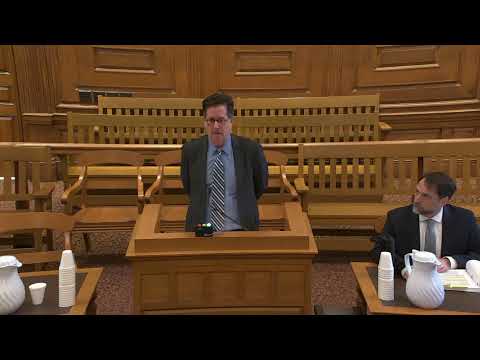
Jonathan Silverstein, representing Rodriguez, told the panel that the planning board closed the public hearing and voted to deny on Jan. 14, 2020, without reviewing the applicant’s engineer’s responses to final peer‑review comments (submitted that same day) and while a scheduled Board of Health meeting to review the plans remained pending. Silverstein argued the Board of Health had repeatedly told the planning board earlier that it had no comment because the property was on public sewer, and he said the planning board’s denial therefore could not properly rest on a later agent letter that the board itself rescinded and that prompted the board-of-health agent’s employment termination. He urged the court to reverse summary judgment and remand for trial so disputed material facts—especially whether the planning board had a reasonable basis to find noncompliance—could be resolved de novo.
Michael Terry, appearing for the town, said Rodriguez bore the burden to show full compliance with applicable bylaws and regulations and to secure Board of Health approval. Terry said the planning board’s decision cited multiple, substantial problems—wetlands, steep slopes, proximity to a wastewater treatment plant and wind turbines—and that the record contained a peer-review consultant’s comments the planning board reasonably relied on in denying the application. Terry also said the planning board’s regulations permit the board to decline to accept material submitted at the last minute and that, on the record presented, the Superior Court correctly concluded summary judgment was appropriate.
The panel questioned whether the planning board’s closing of the hearing before the Board of Health’s contemporaneous review was procedurally fair, whether the applicant had waived relevant procedural deadlines, and whether the Superior Court erred by treating post‑decision submissions as irrelevant. Counsel disputed whether the applicable zoning or bylaw provisions (including a local wind‑turbine setback provision) were applicable or waiverable. The case was submitted following argument.