Get Full Government Meeting Transcripts, Videos, & Alerts Forever!
Get email alerts on the Legal Ethics Attorney Fees topic
No spam. Unsubscribe anytime.
Appeals court hears dispute over fee allocation and successor-counsel obligations after $800,000 settlement
Summary
A self-represented litigant and law firms argued May 5 over whether withdrawing counsel and failures to provide a 20‑day post-termination accounting justify reducing attorneys’ fees or remanding to the trial court for factfinding after an $800,000 settlement.
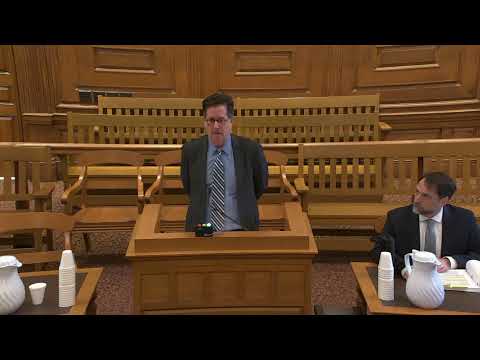
The panel heard a contested appeal May 5 in which Steven Cass, representing himself, sought relief from a Superior Court ruling that awarded a law firm (Torres, Scammon, Hinks & Day — TSHD) $190,006.34 from settlement escrow after multiple counsel changes and a contested fee allocation.
Cass said he was pressured to waive findings and that successor counsel and prior counsel failed to give him a clear, timely accounting as required by Rule 1.5, leaving him unaware of his actual end-of-case financial obligation. Cass told the court he expected to owe successor counsel 25% and a prior lien of $45,000 and that succeeding negotiations and counsel changes produced inconsistent arrangements that ultimately reduced his recovery and created attorney‑fee disputes. He described a series of events he said cost him his career and finances and asked the panel to limit prior counsel’s recovery and to remand for detailed findings.
Benjamin Hinks, representing TSHD, urged the court to affirm the trial judge’s factual findings and the award. Hinks argued the trial record supported finding that TSHD rendered substantial, beneficial work, that withdrawal was justified by conflict concerns, and that the firm’s fair-value award was supported by documentary evidence, testimony (including that successor counsel found the inherited work product helpful), and the parties’ negotiations. Hinks also argued that any technical Rule 1.5 disclosure lapse did not warrant the draconian remedy of denying the firm’s fee or forcing a full reallocation.
Counsel debated the operation and remedial scope of Rule 1.5, the standards for fair-value recovery or quantum meruit after withdrawal, and whether technical noncompliance (such as not providing an itemized accounting within 20 days) should lead to forfeiture of a fee. The record shows an $800,000 settlement, a TSHD claim to $190,006.34 held in escrow, an Adler Pollock & Sheehan (APS) payment of $150,000, and multiple counsel agreements. The panel took the matter under submission after argument.