Get Full Government Meeting Transcripts, Videos, & Alerts Forever!
Get email alerts on the Criminal Pleas Ineffective Assistance topic
No spam. Unsubscribe anytime.
Appeals court weighs whether Najjar error voids guilty plea in homicide case
Summary
Counsel and the Commonwealth clashed May 5 before an appeals panel over whether a defendant’s erroneous advice about parole eligibility or “good time” requires vacation of a guilty plea under Najjar and related precedent.
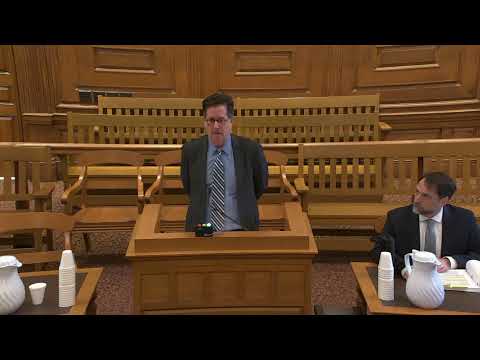
An Appeals Court panel heard arguments on May 5 over whether a guilty plea should be withdrawn because the defendant was allegedly given incorrect advice about parole eligibility and the effect of “good time” credit. Suzanne Renaud, representing the appellant David Delbertis, urged the panel to follow Najjar, which the defense said treats certain misinformation about mandatory-minimum consequences as voiding a plea.
Renaud told the court the key question is whether plea counsel and the record left the defendant with a reasonable and incorrect belief that the parole-eligibility date could be reduced by good-time credits; she argued the trial record and affidavits show that misinformation and asked the court to remand for relief. Renaud said Najjar treats misinformation about mandatory, non‑reducible consequences as a special class that can render a plea unknowing even without a full prejudice analysis.
Justices pressed counsel about procedural posture and the weight to give competing affidavits. The panel asked how the court should treat affidavits accepting the trial record as true and whether a later assertion that a defendant would have pleaded differently required an evidentiary hearing. Renaud argued that Najjar’s line of cases requires less probing on prejudice when misinformation concerns a mandatory minimum that cannot be reduced by good time or parole.
Laurie Levinson, for the Commonwealth, said the plea colloquy and the judge’s on‑the‑record admonitions cured any misimpression. Levinson argued that parole and good-time are contingent consequences, historically not required to be explained in full in plea colloquies, and that Najjar’s limited rule should not be read to require vacatur here. She told the panel that the defendant was repeatedly warned during the colloquy that he “may not get out within your lifetime,” and that the record did not show the defendant knowingly relied on erroneous advice to his prejudice.
The justices questioned both sides about the scope of Najjar, whether the alleged misinformation was material and whether an evidentiary remand was necessary to resolve disputed factual assertions in competing affidavits. The panel took the case under submission after argument; no decision was announced from the bench.
The argument turned on whether the misinformation here (about parole eligibility/good time) falls within Najjar’s protected class of direct consequences and whether affidavits in the record should be credited without an evidentiary hearing.