Get Full Government Meeting Transcripts, Videos, & Alerts Forever!
Get email alerts on the Economic Development topic
No spam. Unsubscribe anytime.
Santa Fe’s economic development plans target small‑business navigation, broadband and workforce supports
Summary
The Office of Economic Development outlined FY26 priorities including a small‑business navigator program, expanded business finance fairs, industry convenings, a Wi‑Fi/broadband access plan and ARPA‑funded grant programs to support startups, workforce training and downtown coordination.
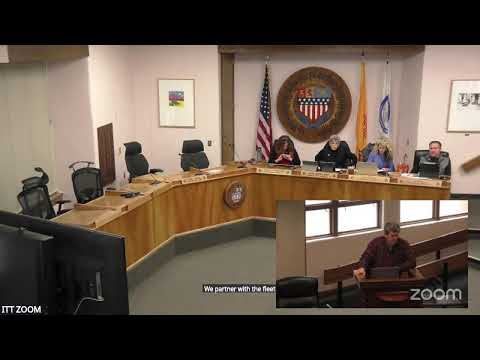
Santa Fe’s Office of Economic Development told the Finance Committee on Tuesday it will use ARPA and local funds to expand business support, workforce training and digital‑access programs aimed at helping local businesses scale.
Johanna Nelson, director of the Office of Economic Development, presented a strategic overview and said the office encumbered about $3 million in ARPA funds for workforce development, Wi‑Fi access and small‑business programs. “The purpose and the mission of our office is to create the conditions that our community can allow for our residents to have economic opportunity to thrive,” Nelson said.
What the office will do
Major FY26 goals described by staff include launching a small‑business navigator program (run with New Mexico State University’s Arrowhead program), reinstating an entrepreneurial resource map, running quarterly business finance fairs and industry convenings (film and media, bioscience, outdoor rec), funding small business grants, expanding downtown and South Side business coordination, and completing a Wi‑Fi accessibility and broadband‑infrastructure implementation plan.
Nelson said staff are building “office hours” and in‑person outreach in target corridors, hosting bilingual Santa Fe Business 101 workshops with land‑use staff and producing two business resource newsletters monthly and a general community newsletter each month. The office also plans a “Libraries as Launchpads” program to deploy laptops and hotspots and turn library locations into business support hubs.
Funding and staffing
Nelson said the office currently has nine funded positions plus one vacant, one‑time‑funded South Side coordinator funded by governing‑body appropriation and ARPA‑funded roles (downtown coordinator and contracts administrator). The office plans to use a mix of ARPA and local economic development funds to seed small‑business grants (staff called the initiative “SPUR”), and Nelson said early work will align workforce training and industry needs through partnerships with Santa Fe Community College and UNM’s Center for Responsible Entrepreneurship.
Why it matters: businesses cited barriers
Nelson summarized the most common barriers reported by the business community: limited awareness and navigation of existing resources, access to capital, workforce and housing shortages, permitting and licensing complexity, fragmented stakeholder coordination and retail saturation. Councilors pressed staff on fee‑in‑lieu and inclusionary zoning issues while praising initiatives to streamline permitting and to provide face‑to‑face resource navigation.
Next steps
Staff asked councilors to expect a forthcoming RFP for the economic development strategic plan’s community‑engagement phase and to anticipate a Quality of Life presentation on Wi‑Fi planning. Nelson said the small‑business grant program (with county partners) and the Arrowhead navigator work would roll out over the coming months.
Committee action
The Finance Committee voted to preliminarily approve the economic development budget. The committee recorded yes votes from Councilors Cassatt, Lindell, Faulkner, Lee Garcia and Chair Romero Worth.
Ending note
Nelson said the office will continue to emphasize direct, visible services for businesses — in‑person outreach, bilingual workshops and a single “navigator” intake to direct entrepreneurs to capital, training and permitting support — and that ARPA investments are time‑limited and intended to create sustainable programs.