Get Full Government Meeting Transcripts, Videos, & Alerts Forever!
Get email alerts on the Affordable Housing Trust Fund topic
No spam. Unsubscribe anytime.
Santa Fe officials pledge $3 million to Affordable Housing Trust Fund, outline shift toward unit production
Summary
City staff and councilors reviewed the Office of Affordable Housing’s FY26 priorities, confirmed a $3 million transfer into the Affordable Housing Trust Fund from FY24 one‑time revenue, and described a policy shift to emphasize production of affordable units while addressing administrative bottlenecks and program design issues.
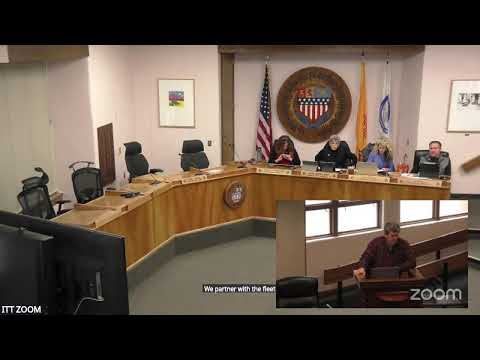
Santa Fe city leaders told the Finance Committee on Tuesday that the city will transfer $3 million into the Affordable Housing Trust Fund for fiscal 2026 and that staff are reorganizing grant rounds and application language to emphasize producing affordable housing units.
The announcement came as Alisa Montoya, community development director, introduced Johanna Nelson, interim director of the Office of Affordable Housing, who summarized the office’s 2025 accomplishments and FY26 goals. “The Office of Affordable Housing managed and deployed housing funds to increase affordable housing supply, preserved existing homes, and expanded access to homeownership and rental assistance through strategic investments, partnerships, and support programs,” Nelson said.
The $3 million contribution appears in the proposed FY26 budget as a transfer from one‑time FY24 unanticipated revenue, Christina Martinez, senior budget analyst, confirmed during the meeting. Martinez directed councilors to page 25 of the budget book, where the transfer is shown under “transfers out.” The City Manager said staff recommended using one‑time funds because recurring general‑fund dollars are limited this year and because the city is awaiting the outcome of litigation over a 3% excise tax on high‑end home sales that, if upheld, would create a recurring revenue stream for housing.
Why it matters: Councilors and the mayor said they want the Trust Fund to move toward directly producing units rather than primarily funding services such as rental assistance and homelessness prevention. Mayor [last name not stated in transcript] described a Venn diagram analysis by a city analyst showing most prior Trust Fund dollars went to emergency housing services and homelessness prevention, with relatively little directly tied to unit production. The mayor said the city plans to rewrite the next request for proposals to prioritize production so local builders and nonprofit developers know what projects the city will support.
Key program details and constraints
- Funding sources and limits: The Office of Affordable Housing receives about $600,000 annually from HUD Community Development Block Grant (CDBG) funding, Nelson said. CDBG funds are federally restricted and make up a small fraction of the office’s contractual budget. The $3 million Trust Fund contribution for FY26 was budgeted from FY24 one‑time unanticipated revenue, not recurring general‑fund dollars, Martinez confirmed. The City Manager said the city had previously funded the trust fund with recurring general‑fund money in other years.
- Program administration and timing: Nelson said the office has recently filled a program manager position to oversee HUD, CDBG and Trust Fund contracts and is recruiting to refill a long‑vacant housing planner post. Nelson and other staff acknowledged the award‑to‑expenditure pipeline can be slow: staff estimated some grants take roughly three to six months from award to contract execution, and expenditures vary widely by project type. Nelson said many FY25 awards were encumbered and that partners expected to expend roughly half of their contract amounts by June 30.
- Procurement and RFP changes: The office paused and revised a recent Affordable Housing Trust Fund RFP after receiving procurement‑method comments from applicants. Nelson said staff are rewriting the RFP to weight production and unit creation within the constraints of the Trust Fund ordinance.
- Santa Fe Homes and fee in lieu: Councilors and staff discussed inclusionary zoning and the city’s Santa Fe Homes program. Councilor Faulkner and others pressed staff to review the “fee in lieu” calculations used when developers pay a fee instead of building on‑site affordable rentals; staff said the fee applies only to rental developments (not for‑sale units) and that the fee, affordability period (currently 10 years) and other terms were intended to be reviewed again now that recent escalators have reached their caps.
- Match and leveraging: Mayor and councilors noted Trust Fund grants often leverage other funding; the mayor stated that Trust Fund allocations can be leveraged roughly three times when combined with outside sources and matching dollars.
Next steps and oversight
Councilors asked for a public, retrospective review of Trust Fund awards and encumbrances. Nelson said the city engaged Roots Policy to update housing statistics and prepare a funding “retro” picture and that the consultant will help the office prepare an implementation plan based on the previously adopted housing strategy. Councilor Cassatt and others requested a deeper presentation to the Quality of Life committee showing where Trust Fund dollars have been awarded, who the recipients are, what amounts remain encumbered, and the average time between award and community expenditure.
The Finance Committee voted to preliminarily approve the budget containing the $3 million transfer; the vote was recorded in committee roll call as affirmative for Councilors Cassatt, Faulkner, Lee Garcia and Chair Romero Worth.
Ending note
Nelson said the office will continue to press on organizational efficiencies, update public communications about how the Santa Fe Homes and Trust Fund programs operate, and work with economic development and land‑use staff to align housing production with workforce needs, pending the hiring of a permanent director for the Office of Affordable Housing.