Get Full Government Meeting Transcripts, Videos, & Alerts Forever!
Get email alerts on the Economic Development topic
No spam. Unsubscribe anytime.
Move Illinois study: 29457 interchange linked to about $500 million in development and roughly 6,000 jobs
Summary
At an April 17, 2025 Planning and Development Oversight Committee meeting, staff reported that the Move Illinois-funded 29457 interchange—a two‑phase project completed in 2014 and 2022—coincided with millions of square feet of new industrial and logistics development, higher assessed values and reduced travel times in the Chicago Southland.
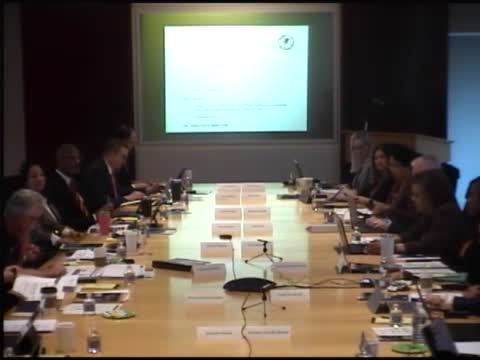
The Planning and Development Oversight Committee of the Toll Highway Authority, Illinois State heard on April 17, 2025 that a study of the 29457 interchange—part of the agency's Move Illinois program—correlated the project with substantial regional development and job growth.
Cassandra Sweeney, executive director, introduced the report and said, "this morning, we are so pleased to bring to the board, at this meeting a report on just the economic impacts that our Move Illinois program has provided to the region." Committee staff said the study was carried out by consultant SB Friedman to quantify the economic effects of a $719,000,000 investment in the interchange.
The committee was told the interchange was completed in two phases: initial phase work finished in 2014 with local road improvements on 147th Street, and a final phase completed in 2022 that opened new ramps and expanded regional access. Staff said that, when compared with a surrounding South Triad assessment area in Cook County, the 29457 study area captured a disproportionate share of recent development.
The consultant's findings, as presented to the committee, included: approximately 3,750,000 square feet of development since 2020 valued at more than $500,000,000; roughly 590,000 square feet currently under construction or proposed; about 2,500,000 square feet attributable to logistics and distribution facilities; and an increase in employment estimated at more than 6,000 jobs. The presenters also said assessed values in the study area rose faster than inflation and the South Triad overall since 2017 and that the nonresidential share of assessed value increased, which "reduces the tax burden on residential homeowners in the area," according to staff comments.
The presenter explained the methodology: SB Friedman compared preconstruction conditions to 2024 outcomes and used the South Triad assessment area to avoid attributing wider regional growth to the interchange alone. Staff noted economic benefits can lag infrastructure investments and the consultant observed that it can take up to 10 years to fully realize those effects.
Committee members stressed communicating the study's results to stakeholders and system users. One committee member said the findings should be summarized for legislators, local elected officials, chambers of commerce and the tollway's users so the public can see the benefits beyond construction activity. Sweeney and staff said a detailed economic impact report would be posted on the tollway website and shared with local communities, and that the authority plans to analyze additional Move Illinois corridors and eventually aggregate systemwide impacts.
The report cited specific local changes—reduced travel times, increased market reach for businesses and more traffic carried on interstates rather than local roads—but staff stressed the study compared the study area with nearby areas to control for broader regional trends. The presenters said they will identify the next corridor for similar study and return to the committee with additional findings.
The committee discussion that followed raised the typical lag between capital investment and development, the role of truck traffic in corridor commerce, and the need for short, user-facing materials summarizing the technical report.