Navajo County telecommunicators describe Next Generation 911 upgrades, staffing and resilience
Loading...
Summary
On the podcast "Shooting Straight," Navajo County Sheriff David Klaus and County Attorney Brad Carlisle spoke with Caitlin Montoya, Navajo County Sheriff's communications supervisor and PSAP state administrator, about Next Generation 911 features, staffing levels, training, and measures to keep 911 services running during outages.
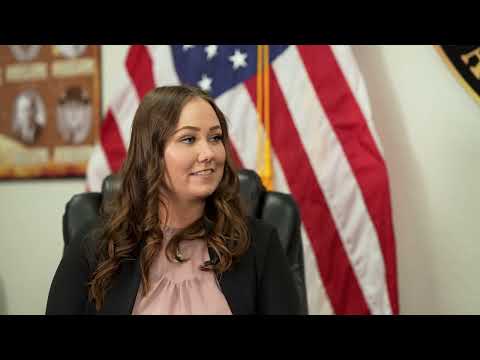
On the podcast Shooting Straight, Navajo County Sheriff David Klaus and County Attorney Brad Carlisle interviewed Caitlin Montoya, communications supervisor and PSAP state administrator for Navajo and Apache counties, about Next Generation 911 upgrades, staffing and training for the county dispatch centers and steps taken to maintain service during outages.
Montoya said the county now uses Next Generation 911, which provides a caller's location and allows dispatchers to receive multimedia such as text messages and pictures. "We actually have Next Generation 911, which will provide the caller's location," Montoya said. "You are... also able to receive multimedia, so being text messaging or pictures, the dispatchers are able to receive that into the center." The technology, she added, reduces response times when callers cannot speak or are otherwise unable to describe their location.
The discussion matters because rural counties face unique communications challenges: incomplete cellular coverage, dependence on single internet or phone links, and multiagency jurisdictional handoffs. Montoya described how calls are routed by tower location and how the county coordinates with the Show Low Communications Center, Holbrook, Winslow, Snowflake-Taylor and other partners to route incidents and transfer calls when appropriate.
Montoya said dispatchers handle 911 and nonemergency lines, enter misdemeanor and felony warrants that originate in the county and support animal control and medical examiner duties. She described current staffing as "two to three at all times" now that the center is fully staffed; previously overnight staffing had been as low as one dispatcher. The nonemergency number she provided is (928) 524-4050. She said training for new dispatchers lasts about six months and the county is implementing APCO's standardized call-taking protocols to guide questions and responses for law enforcement, fire and medical calls.
On medical calls, Montoya noted dispatchers receive Advanced Emergency Medical Dispatch (EMD) training and certification so they can provide medical direction over the phone, from animal bites to cardiac arrest. She described use of text-to-911 both as an ADA accommodation and as an option when callers cannot safely speak: "We do ask call if you can, text if you can't," she said, and advised callers to text 911 with clear location details and avoid emojis or abbreviations.
Sheriff David Klaus said he and others routinely discuss outcomes of critical calls with dispatchers to support their wellness and to learn from incidents. Klaus noted dispatchers now join critical-incident stress management debriefings alongside police, deputies and fire personnel. "Those really big, critical incident types of calls — the dispatchers are starting to go to the critical incident stress management debriefings after these types of calls," Montoya said.
Speakers also discussed resilience and redundancy. Montoya said the state has created a redundant path for the county's 911 system so that outages in internet or phone lines do not knock out 911, though administrative and nonemergency lines can still be disrupted and sometimes must be routed to backups such as a county cell phone. The sheriff and Montoya recalled previous outages in 2019–2020 and described ongoing county efforts to improve middle‑mile and provider reliability in rural areas.
The podcast included an example of the technology in use: a years‑earlier interstate incident where text‑to‑911 helped locate a vehicle on Interstate 40 and led to an arrest in Winslow. The group also mentioned a bipartisan bill before Congress that would designate dispatchers as first responders; they said part of the motivation is better recognition of dispatchers' exposure to traumatic incidents and access to related benefits.
No formal actions or votes were taken during the podcast; the segment was informational. Participants said the county will continue working with state 911 officials, telecommunications providers and partner agencies to expand redundancy and standardize protocols across PSAPs.
The county's public safety telecommunicators were recognized during National Public Safety Telecommunicators Week; speakers closed by thanking dispatch staff for 24/7 service and recent improvements in staffing and technology.