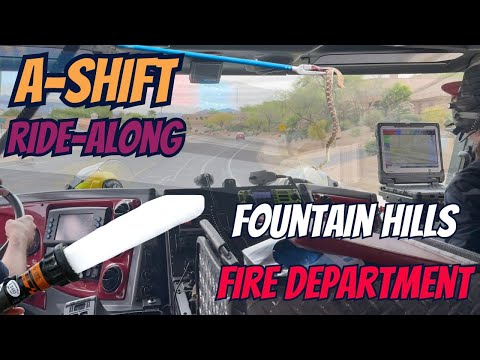
Firefighters describe 48/96 shifts, routine checks and common calls including medicals, vehicle crashes and snake removals
Get AI-powered insights, summaries, and transcripts
SubscribeSummary
On-scene firefighters described daily equipment checks, a 48/96 shift rotation and the types of emergency calls they most often respond to, saying medical emergencies make up the bulk of work and that crews also handle vehicle crashes, fires and wildlife calls.
Firefighters speaking during a community presentation in Fountain Hills described routine equipment checks, a 48/96 shift schedule and the types of calls they most often respond to, saying medical incidents account for most of their daily work.
The details matter to residents because they outline how quickly and with what resources firefighters respond. Speakers described pre-shift checks of personal protective gear and apparatus, the drugs and supplies carried on trucks and recurring community hazards that prompt calls for help.
David Guerrero, a firefighter and paramedic, said crews "work a 48 96, so 2 days on, a 4 days off. So we have 3 shifts, a, b, and c." He described routine checks before shift changes: "make sure I got my mask, my helmet, my pants, and my boots. Get in, check my air pack. Turn it on here. Put my gear on the truck, go to my drug box, make sure I have all my drugs for the day. We have Narcan. We have IV needles." Guerrero said medical responses — "hearts, hips, and falls" — comprise a large share of calls.
Troy Mule, a firefighter with 10 years on the job, described the response tempo when alarms sound: "When tones go off, it's... It's kinda like that go time. Yeah. Everything just kinda gets into action." Speakers also listed vehicle accidents and brush fires among common incidents and noted occasional nonmedical calls, including wildlife encounters. One speaker said crews handled "probably 10 or 12 snakes yesterday," and described efforts to move snakes into washes without harming them.
Crew training and apparatus operations were also discussed. A firefighter described driver training that covers pump and friction-loss calculations, noting a pump specification as stated: "It holds a 50 gallons every minute at a hundred PSI." The presentation emphasized that faster response times improve outcomes and that firefighters must be prepared for varied, time-sensitive incidents.
The presentation combined operational detail and on-the-job descriptions rather than policy or budget decisions. No formal actions or directives were announced during the remarks; the session described routine practices, equipment checks and common local hazards residents should expect.
For residents, speakers offered a glimpse into daily operations and public-safety priorities: regular gear and apparatus checks, reliance on a rotating 48/96 shift schedule, and a mix of medical, crash, fire and wildlife calls that shape crews' work.