Get Full Government Meeting Transcripts, Videos, & Alerts Forever!
Get email alerts on the Housing Safety Condemnation topic
No spam. Unsubscribe anytime.
Hearing held on Stamford condemnation order for lower-level unit at 309 Thunderhill Drive
Summary
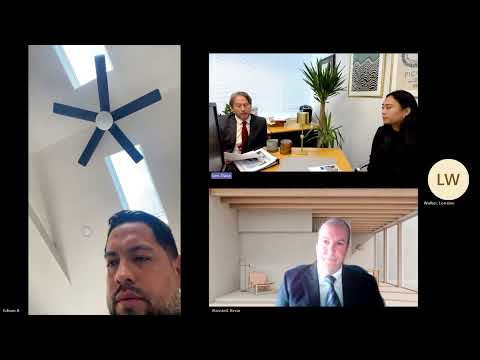
An administrative hearing on April 22, 2025, reviewed the Stamford Department of Health and Human Services’ condemnation order for a lower-level living space at 309 Thunderhill Drive, docket number 241029EN.
An administrative hearing on April 22, 2025, reviewed the Stamford Department of Health and Human Services’ condemnation order for a lower-level living space at 309 Thunderhill Drive, docket number 241029EN. The city offered exhibits and the department’s housing inspector testified the unit fails light, ventilation and egress requirements and that short-term rental listings showed the space was being offered for rent.
Pamela Solis, an inspector II for the Stamford Department of Health and Human Services, testified that she inspected the property on Sept. 30, 2024, and that the room subject to the order is ‘‘underground. It’s more than 50% underground,’’ which under the city and state housing codes classifies the space as a cellar rather than a basement. Solis said she found no windows, no vents to the outside and no second means of egress that leads directly outdoors for the bedroom area. When asked whether the space complies with housing codes, she answered, ‘‘No.’’ When asked whether the city’s condemnation order was justified, she replied, ‘‘Yes.’’
Why this matters: The hearing determines whether the department may legally condemn the space as unfit for habitation. Condemnation affects the property owner’s ability to rent the space and could require structural or code-compliant changes to reestablish lawful occupancy.
Solis described the residence as a two-story single-family house with an unfinished basement on the assessor’s field card and said the house was ‘‘built into a hill,’’ with the entrance to the disputed unit at the rear of the building. Photographs admitted into evidence show the rear deck, the exterior entrances and interior views of the lower-level space; Solis testified the interior photos show the kitchen area at ground level and the bedroom/living area below ground level with no windows in the bedroom area.
Solis told the hearing she also reviewed public short-term rental listings as part of her follow-up. She identified listings on platforms she described as similar to Airbnb (she referenced a site she identified as Gites) and on VRBO and Airbnb. Solis testified the VRBO listing she captured showed the host name as Edison and listed a nightly fee of $90; she said the listing included photos matching those she had taken and at least one user review dated September 2024 that described the stay as ‘‘affordable, clean, and spacious.’’ Solis said she observed evidence of occupancy during the inspection — shoes, clothing and kitchen appliances — and concluded the space was functioning as a separate dwelling without the required multi‑family licensing or code-compliant egress and ventilation.
Appellant Edison Andrade, identified himself as the homeowner and said he lives in the house. Andrade disputed that the lower-level space qualifies as a separate, illegal dwelling, saying the house was purchased and used as a single-family home and that the lower-level area had historically served as a main entrance and living space when the house was built. Andrade said the house was constructed in 1946 (as shown on the assessor’s field card) and that certain features predate current code and were ‘‘grandfathered’’ when he bought the home. He said the area contains only a coffee maker as an appliance and no full kitchen stove when occupied by his son, who occasionally lists the space when away at college.
On egress, Solis explained the department’s interpretation: a second legal means of egress for a sleeping room must lead directly to the outside. She said an interior doorway that connects the lower-level space to other interior rooms does not meet the requirement for a second means of egress to the exterior. During argument, the hearing officer asked whether removing an interior door to create an open five-foot opening would change compliance; Solis agreed that a direct, ground-level opening leading outside would satisfy the second- means-of-egress requirement.
The city offered exhibits 1–10 (including the condemnation order dated Oct. 22, 2024; the appeal filed Oct. 25, 2024; assessor field card; inspection photographs; and screenshots of short-term rental listings). The hearing officer admitted exhibit 10 and then admitted exhibits 1 through 10 as full exhibits on the department’s behalf. The record closed at the end of the hearing; the hearing officer said a written decision would be issued within 90 days.
No final ruling was issued at the hearing. The record and testimony will be reviewed before the hearing officer issues the written decision.
Clarifying details captured at hearing: inspector Solis’s in-person inspection date was Sept. 30, 2024; photographs were taken Feb. 10 (year stated during testimony); the condemnation order cited by the department is dated Oct. 22, 2024; the appeal was filed Oct. 25, 2024; assessor field card lists the house as built in 1946, two stories, two bedrooms with an unfinished basement; Solis testified the VRBO listing showed the host name ‘‘Edison’’ and a nightly fee of $90 and included one review dated September 2024; Solis reported observing shoes, clothing and small kitchen appliances in the unit; Solis characterized the space as a cellar (more than 50% underground) with no exterior windows or vents in the bedroom area and no second means of egress to the outside.
Speakers explicitly quoted or relied on in this report are limited to those who testified or spoke on the record at the hearing.
The hearing officer indicated a written decision will be issued within 90 days and closed the record on April 22, 2025.