Sun City West proposes $28 (4.9%) dues increase to cover rising labor, insurance and utility costs
Get AI-powered insights, summaries, and transcripts
SubscribeSummary
Sun City West managers presented a balanced fiscal-year budget that would raise annual member dues by $28 (4.9%) and increase several user fees to cover higher wages, insurance and utility costs while continuing reserve funding and capital spending.
Sun City West general manager Steven Erno and CFO Cliff Swan presented a proposed fiscal-year operating budget that would raise annual member dues by $28 — a 4.9% increase — to cover rising personnel, insurance and utility costs and to keep annual reserve allocations intact. The operating budget, as presented, also assumes a $200 increase to APF (assessed property fee) and other user-fee adjustments in golf, bowling and snack services.
Why it matters: The association funds daily operations and long-term capital work from member dues, APF receipts and reserve allocations. Managers said the budget aims to preserve service levels across 53 buildings and seven golf courses while funding a $5.6 million capital program and maintaining a healthy reserve fund.
Cliff Swan, the association’s chief financial officer, said labor and utilities together account for roughly 74% of the association’s expense base — 64% for wages and benefits and 10% for utilities — and that recent inflation and minimum-wage changes are primary drivers of higher costs. “The main goal of our budget is to do that,” Swan said, referring to keeping facilities maintained and services running.
Swan described the association’s workforce and hours: roughly 490 employees (about 200 full-time and 290 part-time/seasonal), approximately 624,000 hours of labor annually and roughly 300 full-time-equivalent positions in the budget. He said divisions include recreation, administrative, sports pavilion and golf, and he noted golf accounts for a large portion of labor hours.
Managers outlined specific cost pressures included in the proposed budget: a 4% bucket for cost-of-living and merit adjustments; three additional FTEs; a projected 20% increase in workers’ compensation insurance; an 8% rise in health insurance; and an 8% increase in property insurance. Swan also pointed to a $55,000 utility increase offset in part by an $80,000 phone-system savings realized after moving to an internet-based system.
To balance projected expense increases, the proposed revenue changes include the $28 dues increase, a $200 APF increase (based on 1,100 transfers), modest golf-rate adjustments (including $1 increases for member peak-season greens fees and larger increases for nonmember rates), and fee changes at the bowling center (25¢–50¢ per game adjustments and other small rental changes). Swan estimated the operating budget increases will produce a roughly 4% overall revenue rise to match the 4% expense increase.
On reserves and cashflow, managers said the budget sets aside 7.5% of dues for the reserve fund and assumes APF inflows of approximately $5.9 million, a reserve allocation from dues of about $1.2 million, and roughly $981,000 in projected reserve investment income, producing roughly $8.1 million in reserve-related inflows. After funding an approximately $5.6 million capital program, the association projects about $2.6 million of positive cash flow into reserves for the year.
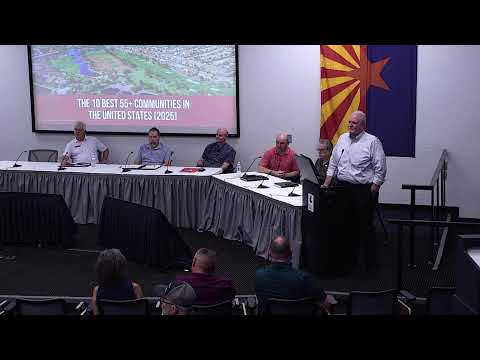
Erno emphasized the budget’s purpose: “Your dues reinvest and make sure that we continue to have the ability to keep on top of this list” of top-10 55-plus communities, and he said managers weighed cost-management measures before proposing increases.
Next steps: Managers said a budget-and-finance committee presentation and additional documents (detailed expense lines, headcount and reserve-study detail) will be posted to the association website and discussed in the committee meeting scheduled for May 20.