Get Full Government Meeting Transcripts, Videos, & Alerts Forever!
Get email alerts on the Molst Training And Form Updates topic
No spam. Unsubscribe anytime.
DPH workgroup finalizes MOLST slide decks, flags legal review and digital-first rollout
Summary
A Department of Public Health education subgroup reviewed and refined slide decks and the 2025 MOLST form, agreed to web-based/digital-first distribution, flagged several legal-language items for attorney review, and set follow-ups including confirming past meeting decisions from recordings and circulating an updated 2025 form.
Members of a Department of Public Health education subgroup met to finalize a uniform slide deck and related training materials for the state’s MOLST (Medical Orders for Life-Sustaining Treatment) form.
The group focused on three delivery items: standardizing titles and slide formatting across overview and provider decks, ensuring training materials match revisions to the 2025 MOLST form, and adopting a "digital-first" approach so a fillable PDF can be uploaded to a patient’s record. The committee agreed the slide decks will be paired — an overview for all audiences followed by a provider-specific section — and that the presentation should direct viewers to the MOLST resource web page once links are updated.
Why it mattered: the workgroup said the slides and the form must be consistent with statutory language and the program’s policies before broader release. Multiple participants urged a formal legal review to resolve precise statutory terms (for example, how to describe the role and standard for a legally authorized representative) and to confirm wording changed at prior meetings.
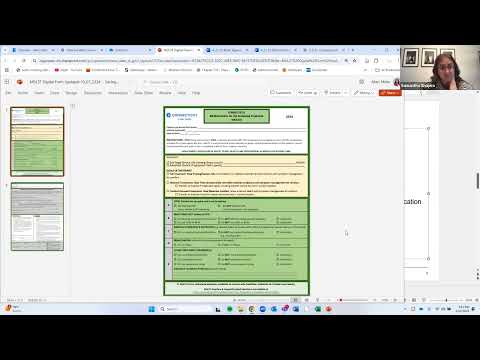
Key decisions and next steps - Finalize overview slides and proceed to provider slides; pair the overview with the provider deck so viewers can see both sequences. - Keep the revised 2025 MOLST form text that replaces the prior instructions box with a "purpose" statement; the group recorded the new language describing the MOLST form as a set of medical orders intended to guide treatment and noting that completing a MOLST form is voluntary. - Adopt a digital-first posture: the committee agreed the MOLST form should be valid in digital or paper form and that a fillable PDF hosted on the program website would allow upload into medical records; participants also flagged the need for associated policies on live forms and version control. - Legal review required: attorneys will review language distinguishing the obligations of a health care representative (fulfilling a patient’s expressed wishes) versus a "best interest" standard for guardians or parents; participants agreed to pull statutory language directly into the slides where possible and to have multiple legal offices (including legislative or attorney-general review) sign off once the text is stable. - Record and confirm prior meeting decisions: staff were asked to re-listen to the recording to confirm whether specific phrase edits (for example, the deletion of the words "potentially reversible" under selective treatments) were previously approved, and to email the confirmed decisions to the group. - Resources and external training materials: the group compiled a short list of external resources to list on slides (Serious Illness Conversation Project/Ariadne Labs, Conversation Project, VitalTalk) and noted that the 5 Wishes document was previously advised against for use in Connecticut by Attorney General Blumenthal and therefore should not be promoted as state guidance. - Slide and design changes: several cosmetic and accessibility edits were requested, including uniform capitalization of headings, larger, readable font sizes for form images, removing or replacing an unclear stock photo, and adding a bullet to remind presenters to document interpreter information.
Discussion details and outstanding items Participants debated whether to label training slides for "eligible providers" (the subset permitted to sign MOLST orders) or to use the broader statutory term "health care provider." The group noted that the program’s policies and procedures define the specific eligible clinicians who may complete orders and recommended the presentation use the training-appropriate label ("eligible providers") while retaining statutory language when quoting the law.
The group also discussed form content edits that may change legal meaning, such as whether the health care representative section should commit the representative to act "in accordance with the patient's expressed wishes" rather than "in the patient’s best interest." Several participants urged the slides to use statutory wording where possible and to flag edits for attorney review.
Implementation context and scheduling The subgroup asked staff to circulate the updated 2025 form and to highlight all places where form language and slide language must match. Members agreed to continue work at a follow-up meeting and set a tentative next meeting date.
Ending The committee concluded by assigning several action items to staff — review the prior meeting recording to confirm earlier edits, send an updated 2025 form to the education leads, incorporate attorney feedback when available, and prepare the paired overview/provider slide package for a final review and legal sign-off before broader dissemination.