Get Full Government Meeting Transcripts, Videos, & Alerts Forever!
Get email alerts on the Military Family Supports topic
No spam. Unsubscribe anytime.
Defense State Liaison Office briefs committee on military-family supports, licensure compacts and child-care MOU
Summary
Tammy Perot of the Defense State Liaison Office outlined a list of policy priorities for states to support military families, highlighted a new memorandum of understanding on family child care with F. E. Warren Air Force Base and urged consideration of multistate occupational licensure compacts to help military spouses and health-care workforce.
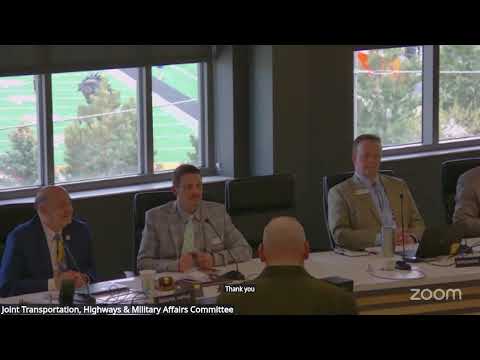
Tammy Perot, regional staff for the Department of Defense’s Defense State Liaison Office, briefed the committee on a slate of policy priorities her office encourages states to adopt to support military families.
Perot told the committee that the office’s vision is “thriving military families” and that many of the ideas her office recommends have been pilot-tested in other states. She noted the Defense Office’s work is coordinated with military services, veteran service organizations and the Council of State Governments. Perot said the office recommended policies that range from improving state licensure information for military spouses to expanding hiring preferences and adopting occupational licensure compacts.
Perot highlighted several concrete items: - A new memorandum of understanding between the state Department of Family Services and F. E. Warren Air Force Base (she said it was signed April 18). Per the MOU, the base may now provide oversight for family child-care homes that specifically provide care for military children; Perot praised the MOU as a model for other states. - Concurrent jurisdiction language the state previously adopted is a model; Perot said additional work remains for the Air Force to finalize the transfer of jurisdiction. - Occupational licensure compacts: Perot urged the state to consider additional compacts (physician assistant, dental professions, respiratory therapists, social workers and others) and explained compacts are state-to-state agreements designed to maintain state authority while allowing multistate portability. She said Wyoming is currently a member of seven licensure compacts and urged the committee to consider further compact adoption to reduce barriers for military spouses and mobile health-care providers. - Special education and mobility: Perot said 31% of military families with children with disabilities experienced more than 60 days without services after a move; she recommended considering expanded advanced enrollment policies and clearer parental-consent rules to speed service continuity for children who move between states.
Committee members asked procedural questions about why some states (California, New York) have not joined compacts and how compacts handle differing state standards; Perot and other panelists described the compact-development process and common safeguards. Perot emphasized compacts preserve state regulatory authority and typically require participating states to have comparable standards before joining.
Ending: Perot asked the committee to consider the listed policy options and offered the Defense State Liaison Office as a resource for drafting and stakeholder engagement; she said the office has staff available to consult with committees and state agencies on implementation.