
SRP details watershed restoration, funding partnerships and Good Neighbor Authority projects
Get AI-powered insights, summaries, and transcripts
Subscribe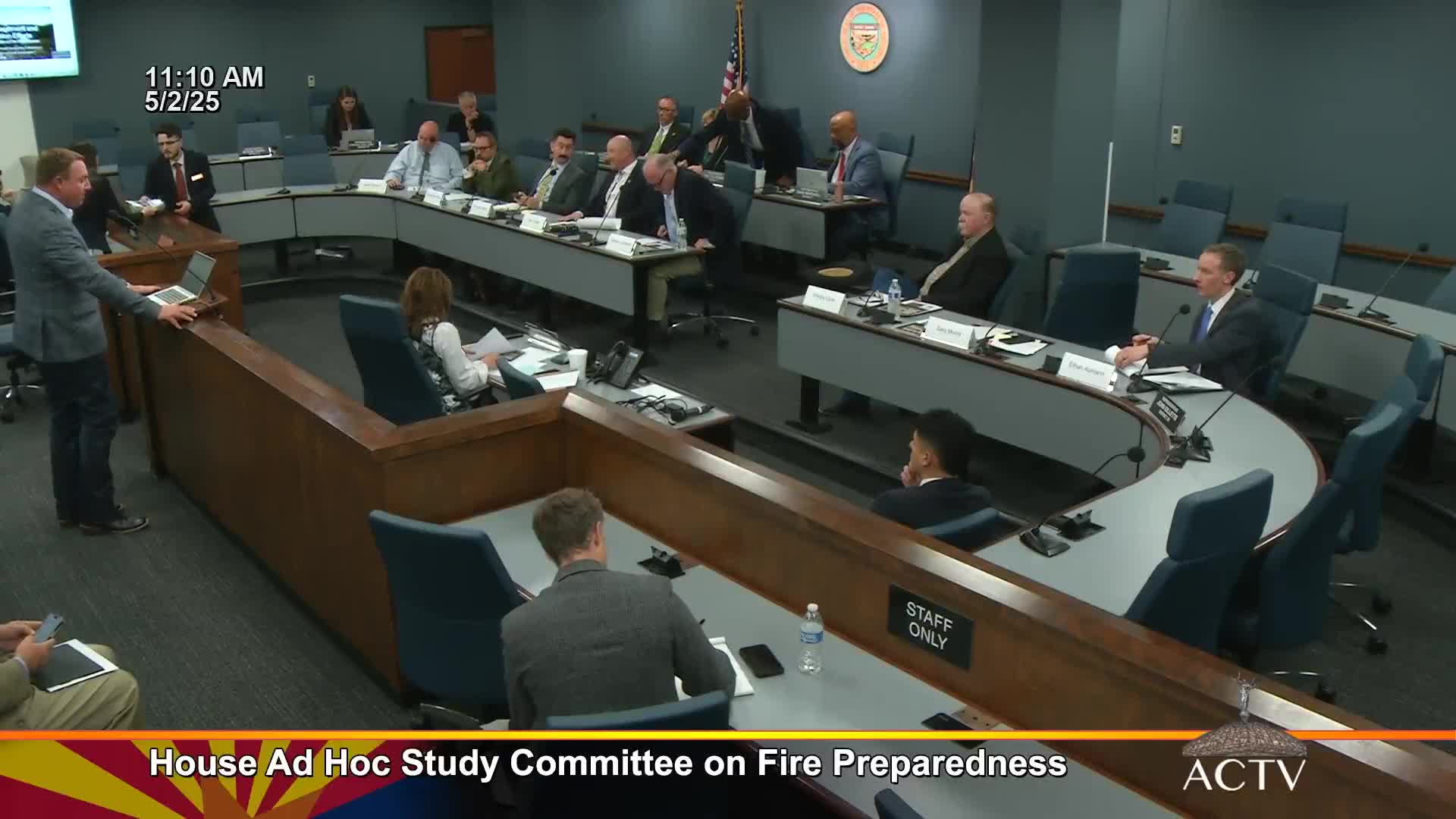
Summary
Salt River Project told the committee it has committed funding and partners to scale thinning and restoration in Tonto, Coconino and Prescott National Forests and that private investment and federal cooperation are key to expanding work.
Salt River Project officials told the House ad hoc committee SRP has invested in landscape‑scale restoration to protect watershed infrastructure and water supplies for Phoenix-area customers and to reduce wildfire risk.
“Starting in 2019 we approved a forest‑health goal to help thin 800,000 acres by 2035,” said Elvie Barton, SRP’s restoration program lead. She described SRP’s funding partnerships with federal agencies, counties, nonprofits and corporate donors (Google, Meta, Apple, PepsiCo, Coca‑Cola and others) to scale work on National Forest System lands.
Barton said SRP and partners have leveraged about $21 million in partner funding over four years and implemented 62,000 acres of restoration commitments across the Tonto, Coconino and Prescott National Forests, with 19,000 acres completed to date and more acreage under contract. She told the committee SRP expects another 54,000 committed acres over the next ten years and is pursuing an additional 100,000 acres of work beyond that.
SRP and DFFM have used Good Neighbor Authority agreements to implement treatments on federal lands, Barton said; those agreements let state or local entities oversee contracts and accelerate work in collaboration with the U.S. Forest Service. SRP also described partnering with nongovernmental and private funders to underwrite projects and to create a more predictable supply of treated timber for private industry.
Committee members asked whether the state or federal governments could do more to sustain investment. Barton highlighted a federal bill (referred to in testimony as the Fix Our Forests Act) that would, among other provisions, extend Good Neighbor‑type authorities and allow timber receipts to be reinvested in landscape projects; Barton said continued federal funding in infrastructure bills and appropriations would leverage additional private dollars in Arizona.
SRP representatives said restoring forest density also provides measurable water benefits by reducing evapotranspiration and increasing soil moisture and runoff in treated areas — a benefit SRP models with academic partners to quantify the water yield improvements for the Phoenix metropolitan area.
SRP officials and committee members noted the work helps create demand that supports private mills and contractors. Several witnesses encouraged policies and incentives to build more processing and biomass capacity statewide so that thinning can scale without prohibitive transport costs.