Get Full Government Meeting Transcripts, Videos, & Alerts Forever!
Get email alerts on the Wydot Funding topic
No spam. Unsubscribe anytime.
WYDOT warns federal strings and inflation have reduced buying power; HB303 raised state share
Summary
Wyoming Department of Transportation told lawmakers federal funding increases have been offset by inflation and federal requirements that make projects costlier; the department said House Bill 303 increases state revenue but buying power remains constrained.
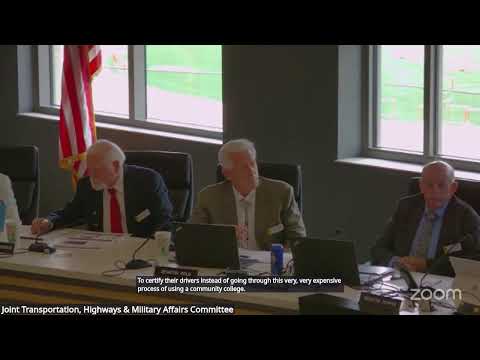
Wyoming Department of Transportation officials told the Joint Transportation Highways Military Affairs Committee on May 1 that total revenue has not kept pace with inflation and that federal rules and project requirements reduce the effective buying power of funds.
Director Darren Westby and WYDOT staff outlined long‑term trends: federal aid has increased, with a one‑time boost tied to the Infrastructure Investment and Jobs Act (IIJA), but inflation and materials cost increases have eaten into what those dollars can purchase. The department said it saw an extra roughly $100 million per year from IIJA for the first years and a $30 million drop most recently; staff said the IIJA temporary increase ends in 2026.
WYDOT briefed the committee on the difference between federal and state funds. Officials said projects using federal funds must follow federal procurement, contracting and environmental requirements, including the National Environmental Policy Act (NEPA), and that those requirements can add cost and time. Committee members and WYDOT staff told lawmakers that using federal funds on state roads can add an “approximately 10%” process and cost premium compared with state‑only funding, a factor the department said reduces buying power.
WYDOT presented a fiscal snapshot of revenue streams: the department reported fuel tax revenue of about $116 million, registration fees comprising roughly 11% of state revenue, driver’s license fees about $6.3 million and severance fees about $6.7 million. Officials also noted a small carry of approximately $4.3 million annually from the “Wild Link” account and said federal funds make up just over half of total agency revenues. Westby told the committee that passage of House Bill 303 changes the split and moves the agency from roughly a 70/30 federal/state ratio to about 60/40 in WYDOT’s outlook once the new revenue is distributed in fiscal 2027.
Committee members asked for a post‑session recalculation of WYDOT’s anticipated income under recent legislation; the director agreed to provide updated fiscal estimates before the August meeting so the committee could assess the budgetary impact in time for programming decisions.
WYDOT staff cautioned lawmakers that federal reauthorization in 2026 could reduce or change federal formula funding and that the department is working with the congressional delegation and authorizing committees in Washington to protect rural funding.
Ending: WYDOT said it will send updated revenue and buying‑power calculations to the committee between meetings and emphasized that federal rules, inflation and materials costs are the central drivers of constrained buying power.