Get Full Government Meeting Transcripts, Videos, & Alerts Forever!
Get email alerts on the Voting Rights Proof Of Citizenship topic
No spam. Unsubscribe anytime.
Michigan House rejects proposed constitutional amendment requiring proof-of-citizenship to register to vote
Summary
House Joint Resolution B, which would have required proof of U.S. citizenship when registering to vote and authorized free state-issued IDs for those who could not afford them, failed to win the two-thirds majority required for adoption.
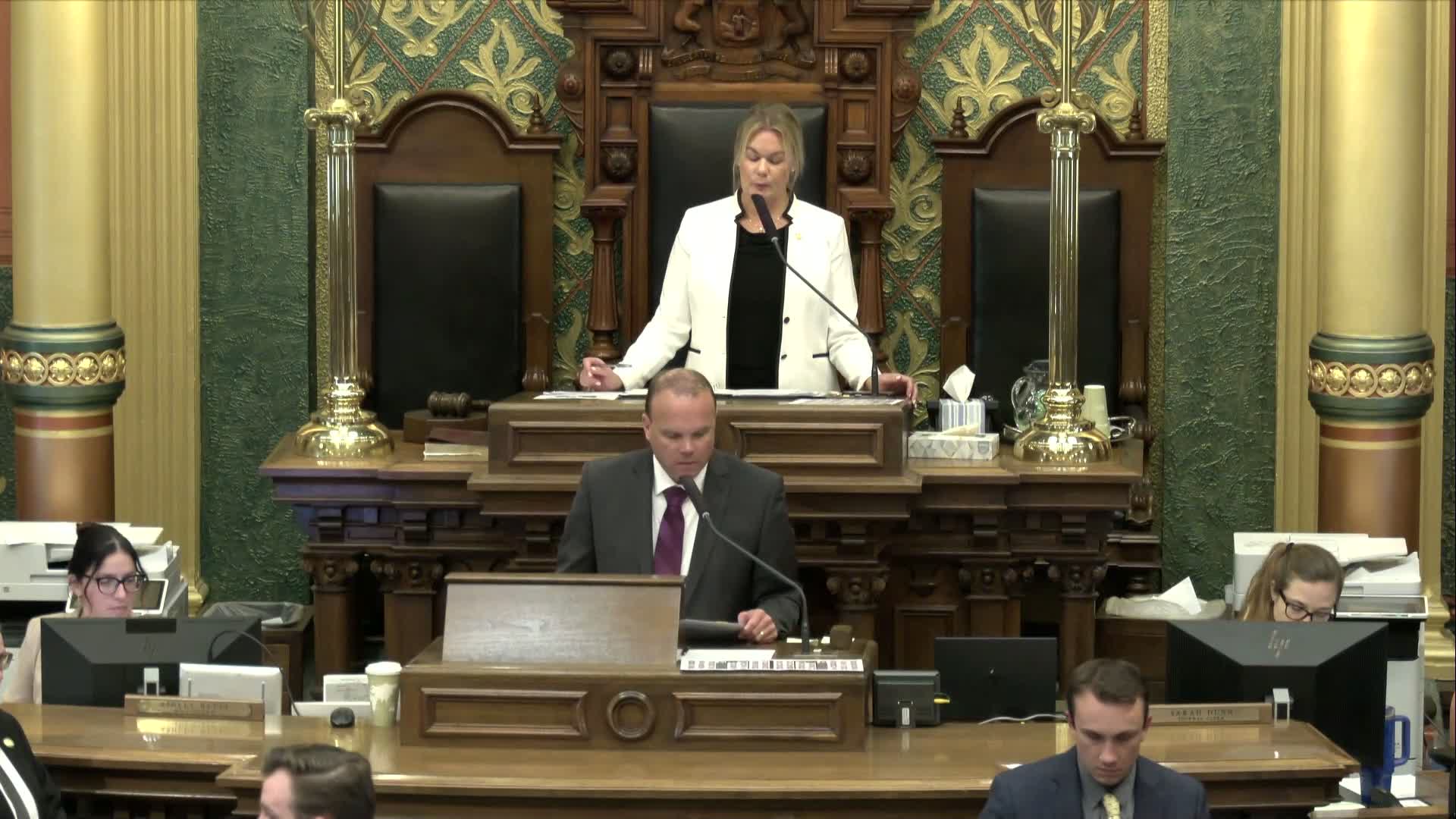
LANSING — The Michigan House voted to reject — for lack of a two-thirds majority — a proposed constitutional amendment that would have required proof of U.S. citizenship at voter registration and required identification to cast a ballot.
House Joint Resolution B (HJRB) drew extended debate on the House floor, with supporters arguing it secures elections and opponents saying it would disenfranchise eligible voters. “This resolution will disproportionately burden our senior citizens,” Representative Zong said on the floor, adding the proposal would “especially disenfranchise more than 2,000,000 married women in Michigan.”
Supporters said state processes such as Real ID implementation and Secretary of State records provide tools to make proof-of-citizenship verification feasible and that the amendment would give Michigan voters the choice to require added safeguards. “This legislation would give the people of Michigan the choice to amend our state constitution to ensure that only US citizens can vote in our elections,” a floor sponsor said.
Opponents cited experiences in other states and court challenges, arguing the proposals often block legal citizens from registering and can amount to a poll tax if citizens must pay for documents. “This poll tax will specifically prevent working families and married or recently divorced women from voting,” Representative Colazar said.
When the roll was called on the adoption, there were 58 aye votes and 48 nay votes. Because a constitutional amendment required a two-thirds majority of members elected and serving, the resolution was not adopted. The majority floor leader later moved to reconsider the vote; the motion to reconsider was agreed to and the matter was passed for the day for further consideration.
The floor record shows vigorous debate about implementation details, the availability of identification through the Secretary of State, and the potential for unintended disenfranchisement. No final change to state law occurred because the joint resolution failed to meet the constitutional threshold for adoption in this vote.
—
Details from the House session: House Joint Resolution B failed adoption (58–48); motion to reconsider was filed and the vote was reconsidered.