Get Full Government Meeting Transcripts, Videos, & Alerts Forever!
Get email alerts on the Wildlife Feeding Baiting topic
No spam. Unsubscribe anytime.
Testifier urges lawmakers to pass bill allowing limited backyard wildlife feeding; lawmakers press on pests and enforcement
Summary
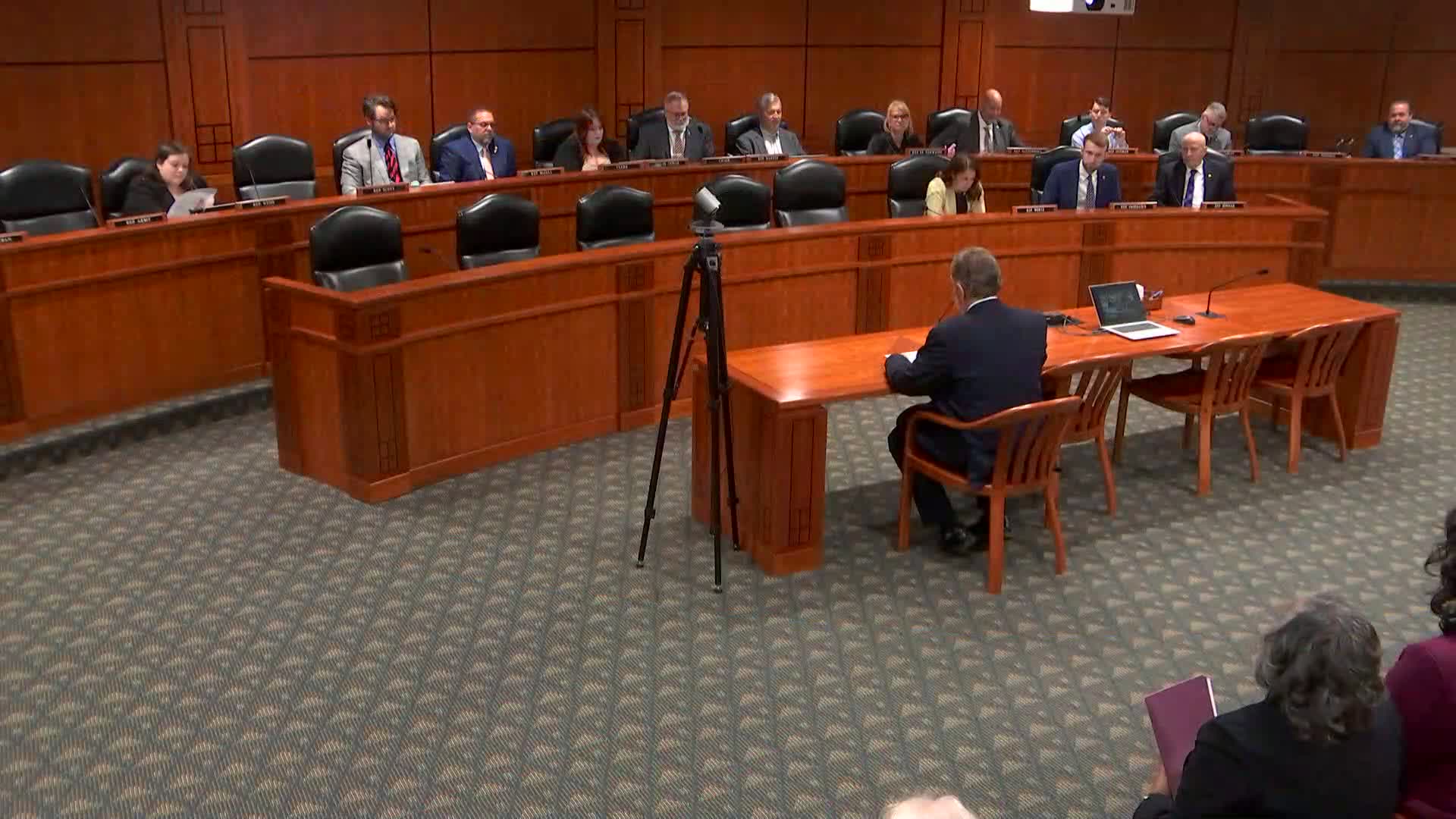
A state representative urged committee members to pass a proposal that would limit criminal baiting enforcement on residents who feed birds and small mammals near homes; lawmakers asked whether the measure would affect pest ordinances and how officers would measure scattered feed.
A state representative urged a committee to pass legislation intended to stop enforcement actions against people who place small amounts of wildlife food near homes, saying continued conservation department citations had driven the speaker to run for office.
"Please consider passing my bill and let grandma feed her wildlife in peace," the representative said during testimony, summarizing the measure as narrowly written to allow small, clearly residential feeding.
The bill as described would allow residents to provide up to 2 gallons of feed per day for birds and small mammals, and would limit the protected feeding to locations within 300 feet of a residence, the sponsor said. The draft includes no height restriction for feeders and permits food placed in feeders or scattered on the ground, so long as the daily total does not exceed 2 gallons.
Lawmakers pressed several enforcement and public‑health questions. Representative Weiss asked whether areas with documented pest problems, such as rat infestations, would be affected; the sponsor replied the bill is meant to prevent baiting prosecutions and is not intended to override local ordinances aimed at deterring pests.
Several members asked about measurement and enforcement when feed is scattered on the ground. The sponsor said conservation officers would use discretion and look for the difference between spilled seed from a feeder and large deliberate deposits, and that officers are typically able to distinguish the two without measuring every spill.
Representative Preston pointed to enforcement practice in the Upper Peninsula, where baiting allowances of up to 2 gallons spread over a specified area are already applied, and said conservation officers there use their investigative training to enforce rules.
The committee record included a resident question about whether scattering feed outside a container could be reliably measured; the sponsor acknowledged the concern and emphasized officer discretion and the bill’s modest numeric limit as safeguards.
No formal vote on the bill was recorded in the transcript excerpt. Testimony and question‑and‑answer took place before the committee moved on to other agenda items.