Get Full Government Meeting Transcripts, Videos, & Alerts Forever!
Get email alerts on the Maternal Health topic
No spam. Unsubscribe anytime.
Michigan maternal-child council urges sustaining Medicaid, highlights record-low infant mortality
Summary
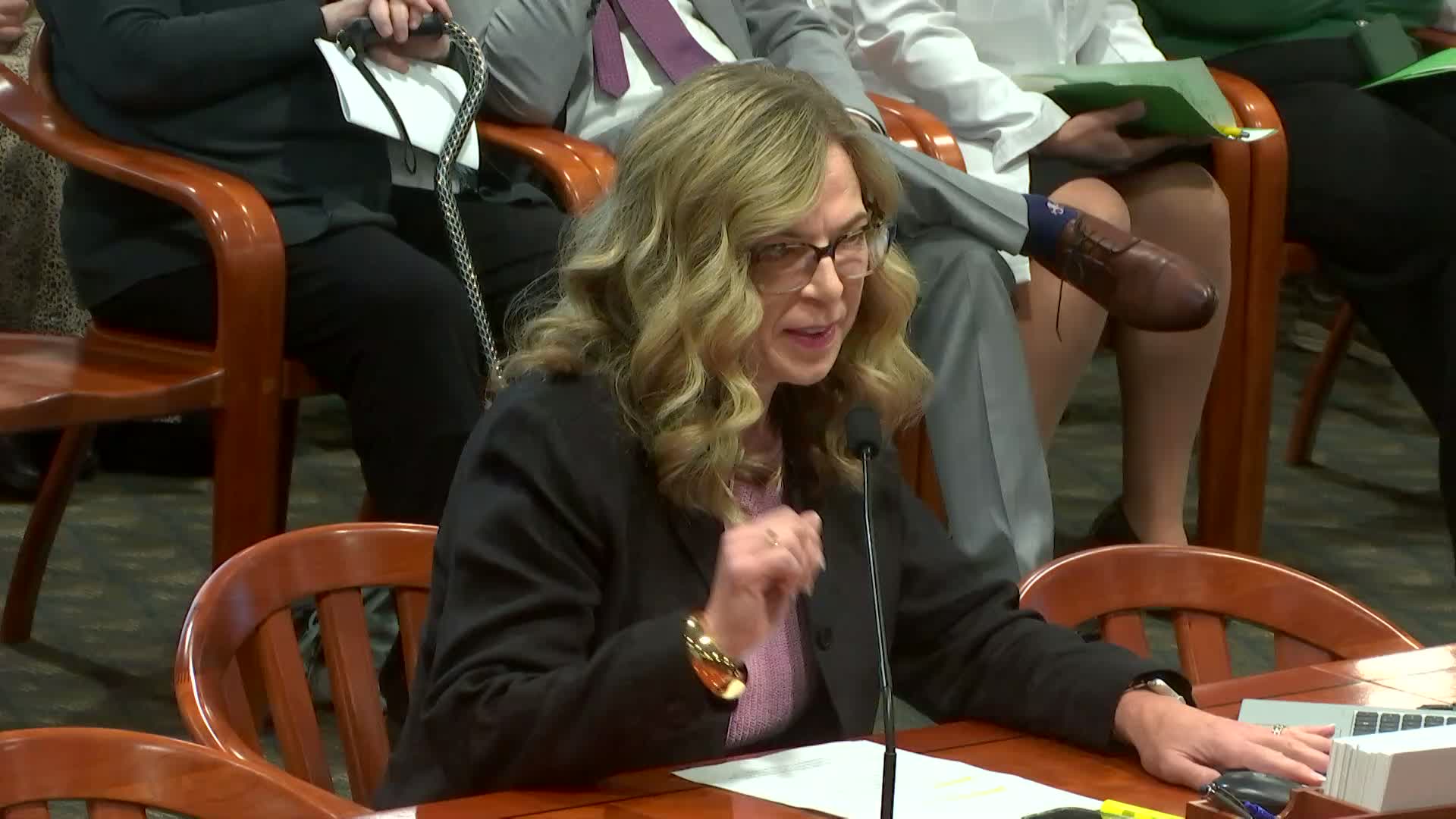
Amy Zegman of the Michigan Council of Maternal and Child Health told the House Health Policy Committee the state should sustain recent maternal‑health investments, citing a record-low infant mortality rate of 6.1 per 1,000 live births and warning about risks from potential federal Medicaid changes.
Amy Zegman, executive director of the Michigan Council of Maternal and Child Health, told the Michigan House Health Policy Committee that sustained investment is essential to preserve recent gains in maternal and infant health. Zegman said Michigan’s infant mortality rate is “at the lowest on record, 6.1,” and urged lawmakers to continue support for programs that reduce downstream costs and improve outcomes.
Zegman said the council, a nonprofit that brings together clinicians and public‑health professionals, has focused in recent years on behavioral health, maternal health and perinatal quality collaboratives. “We have 9 regional perinatal quality collaboratives,” she said, describing them as local networks that meet regularly to review regional data and coordinate clinical and community responses.
The council highlighted several program areas: expansion of behavioral‑health supports for children and adolescents, improved access to school‑based mental‑health services, immunization outreach during a multi‑state measles outbreak, and supports for families enrolled in Children’s Special Health Care Services. Zegman told the committee the program covers about 2,700 medical diagnoses and “about 55,000 enrollees,” and that roughly 70 percent of those children are dually enrolled in Medicaid.
Zegman also warned the committee about the consequences of federal Medicaid changes. “Medicaid covers over a million children in Michigan. Over 40 percent of our births in Michigan are covered by Medicaid,” she said, adding that recent additions to Medicaid—doulas and centering‑pregnancy programs—would be at risk if eligibility or funding is reduced. The council expects to publish a phase‑two birth equity education project in the fall and offered to work with legislators on policy, statute and appropriation options.
Representative Thompson asked about cesarean and induction practices and their downstream effects on breastfeeding and outcomes; Zegman declined to give clinical advice but agreed hypertension control and supports that reduce avoidable interventions are important. Zegman also said the council works with WIC and the Michigan Breastfeeding Network to expand breastfeeding support, including hospital‑grade pumps and peer counseling at the local level.
The council left contact information and offered to coordinate further briefings for legislators and staff.