Get Full Government Meeting Transcripts, Videos, & Alerts Forever!
Get email alerts on the Vr Xr Career Exploration topic
No spam. Unsubscribe anytime.
Mobile XR visits, state‑funded pilot touted as broadening career exploration; scaling and ROI questions remain
Summary
Emerge told the subcommittee it has reached thousands of Michigan students with virtual and mixed reality career‑exploration simulations funded under a FY23 state project, but officials said some districts declined dedicated sites and lawmakers pressed for outcomes and return on investment.
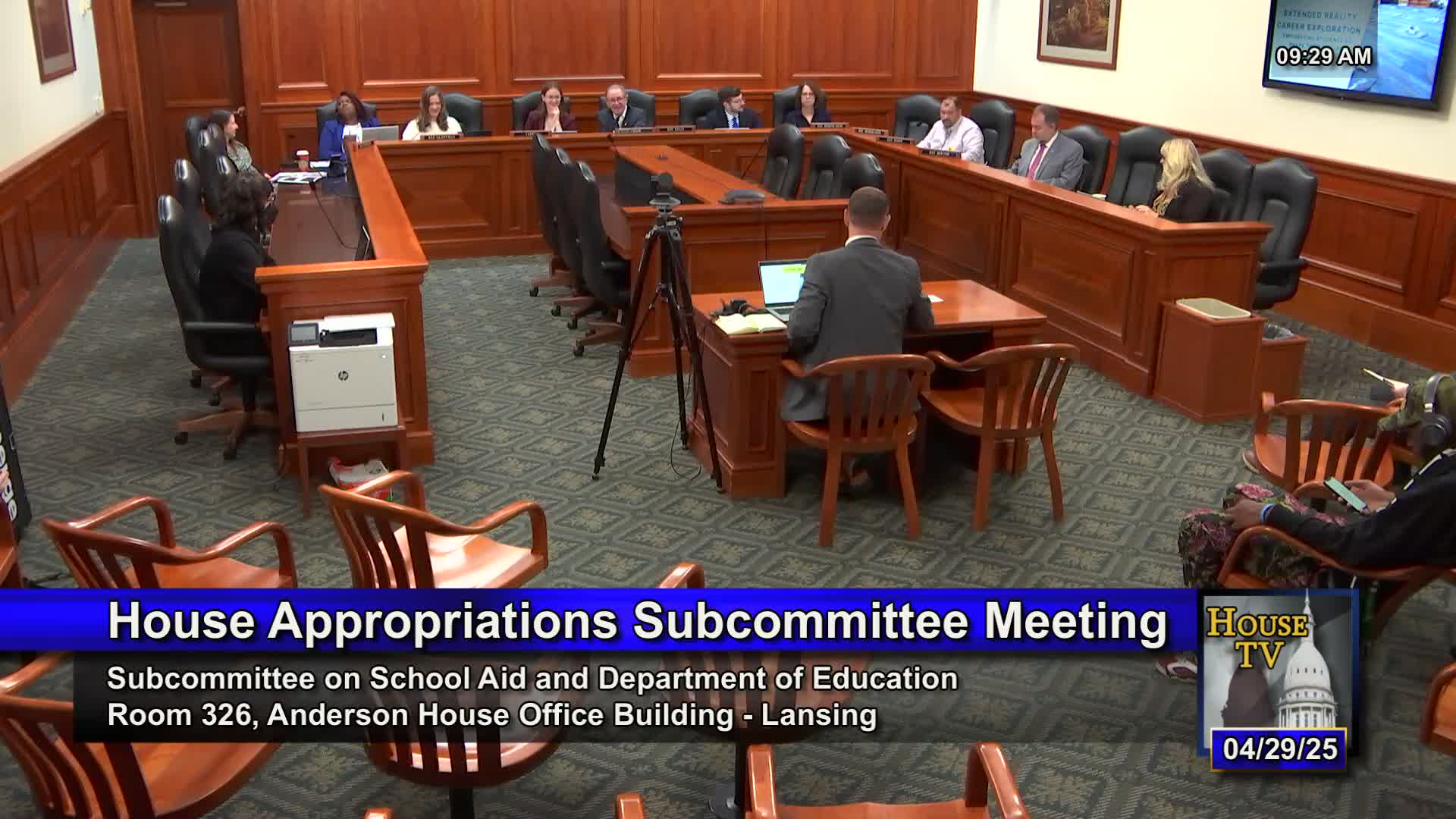
Emerge, a Metro‑Detroit consulting firm, briefed the House Appropriations Subcommittee on School Aid and Education on April 22 about its use of virtual and mixed reality (XR) to provide career exploration and skills simulations to K–12 students.
Joe Bamberger, founder and managing partner of Emerge, said the company’s mobile XR sites have visited 60 schools in 23 counties, reached about 8,000 students and have another 40 school visits scheduled this school year. He said the work was funded by the state through fiscal year 2023 and that demand has outpaced capacity: “we are in schools 5 days a week and having to turn schools down because of the demand,” he said.
Why it matters: Bamberger told lawmakers XR can let students sample dozens of careers through short simulations (for career exploration) and longer modules for skills development, and that simulations can be used where real‑world experiences are unsafe, expensive or otherwise impractical for classrooms. He said XR helps students narrow career choices and can connect them to job‑shadowing, internships and apprenticeships through a job‑connection platform Emerge operates.
Scaling and uptake: Bamberger said the FY23 funded project included six dedicated XR sites intended to be based at CTE centers; only three of those sites were accepted by local districts. He described the mobile site model—bringing headsets for half‑ or full‑day events—as “wildly popular,” but several legislators pressed him on whether mobile, one‑day exposures produce measurable returns compared with long‑term investments in counselors or permanent on‑site labs.
Budget and evidence requests: Representative Gencagnaro and others asked for data on outcomes, return on investment and whether XR visits increase CTE enrollment, internships or long‑term placement. Bamberger said Emerge can share introductions and internship counts and said some districts have reported higher CTE enrollment following visits, but he acknowledged more outcome tracking is needed and that many districts avoid permanent sites because of PD and management burdens.
Ending: Emerge offered demonstrations after the hearing and said it will continue mobile visits and pursue partnerships with employers and districts; the subcommittee did not vote on any funding or policy during the session.