Get Full Government Meeting Transcripts, Videos, & Alerts Forever!
Get email alerts on the Egle Budget topic
No spam. Unsubscribe anytime.
EGLE presents $1.04 billion budget, pushes lead service-line work, contaminated-site cleanup and tipping-fee change
Summary
Director Roos told the Appropriations subcommittee that the Michigan Department of Environment, Great Lakes, and Energy (EGLE) seeks new funding for lead service-line removal, brownfield cleanup, a proposed tipping-fee increase and a $39 million records-digitization push as part of the governor’s fiscal 2026 recommendations.
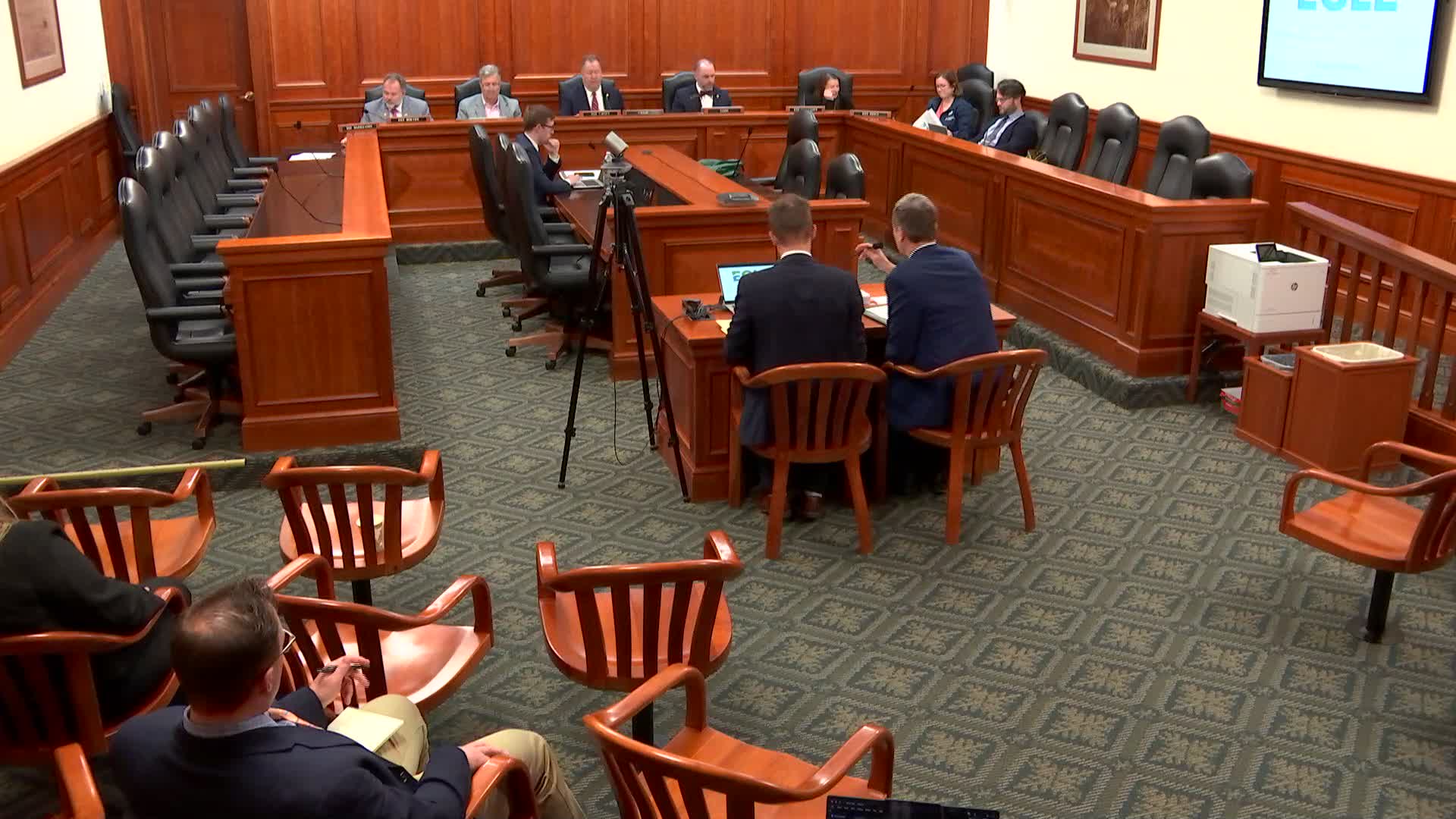
Director Roos, director of the Michigan Department of Environment, Great Lakes, and Energy (EGLE), told the House Appropriations subcommittee on Appropriations — Environment, Great Lakes and Energy that EGLE’s fiscal 2025 budget is $1.04 billion gross and that the governor’s fiscal 2026 recommendation focuses on water infrastructure, contaminated-site cleanup, energy infrastructure and records digitization.
The agency’s budget “has a billion number after it,” Travis Bosco, EGLE deputy director, told the committee, adding that “63% of that is just passing right through us” to local governments, nonprofits, colleges and businesses via grants and loans. Roos framed the department’s priorities around water infrastructure and lead service-line removal, preventing and cleaning up contamination, and “modernizing government” to speed permitting and reduce FOIA burdens.
Why it matters: the proposal targets long-running problems across Michigan — aging drinking‑ and wastewater systems, thousands of known contaminated sites and capacity constraints inside the drinking water division — with a mix of one-time and ongoing state funds intended to leverage federal dollars and speed local projects.
Key proposals and figures
- Current budget: EGLE’s FY25 gross funding is $1,040,000,000 with $261,000,000 from the general fund and 1,652 FTEs authorized, the agency told the committee.
- Water infrastructure and lead service lines: The FY26 request includes $50,000,000 one‑time general fund and $30,000,000 ongoing general fund focused on drinking water and lead service-line work. Roos said the state has invested “$5,300,000,000 in upgrading that infrastructure” in recent years and estimated those projects support roughly 75,000 jobs.
- Contaminated-site cleanup and brownfields: Roos said Michigan has “over 26,000 known contaminated sites in the state, half of which the state is the responsible party,” and described a backlog the department has been addressing. He noted the Brownfield redevelopment program “returns $45 in in private investment for every dollar we put into it.” To expand cleanup capacity, the department proposed raising the solid‑waste surcharge (tipping fee) to $5 and using proceeds to fund waste‑management, prevention and cleanup programs; the plan would return about 45% of the revenue to local units of government.
- One-time supplements: The budget includes $15,000,000 one‑time state‑restricted money from interest on the Clean Michigan Initiative bond fund for brownfield work, $7,000,000 one‑time general fund to build a statewide septic‑code database, and a federal Great Lakes Restoration Initiative award to begin assessments in the Detroit River area of concern.
- Energy and renewables support: The agency asked to spend a previously awarded federal grant for the Renewables Ready Communities pilot (the department said $129,000,000 is available federally) and proposed $10,300,000 for clean fuel and electric-vehicle charging, including $300,000 for the state match on the Lake Michigan circuit.
- Fees and staffing: The proposal would increase several regulatory fees that have not changed in decades, and includes requests for additional FTEs (Roos said the FY26 request would move head count back toward levels seen in the early 2000s). The department described fee increases for hazardous-waste oversight (to fund roughly 17 FTEs to inspect smaller hazardous-waste generators more frequently) and a higher fee for regulation of underground gas storage wells (from $20 to $250) to cover industry regulation rather than subsidize it from other sources.
- Records digitization and customer service: Roos proposed $39,000,000 one‑time to accelerate records digitization and online permitting. The agency said it has digitized a portion of files (estimating roughly 25–35% overall but a larger share in remediation/redevelopment) and that digitization has reduced FOIA workload and will shorten turnaround time for property and permit records.
Questions from legislators
Committee members pressed the agency on details and impacts. Representative Steckloff asked whether school districts would be included in the 45% of tipping-fee revenue returned to local units; Roos responded that local governments typically receive that revenue and “presumably it'd be allocated” among municipal budget lines, but he said the agency had not fully researched every local arrangement. Representative Steckloff also asked how much the state would need to spend to draw down remaining federal lead-service-line funds; EGLE said roughly $70,000,000 in federal lead‑service-line funds are anticipated in the next cycle and estimated that could require about $300,000,000 in total project value when matching broader project costs.
Representative Borden asked how the budget would “cut red tape.” Roos and Bosco pointed to digitization and lean process improvements across permitting as the primary steps to shorten processing times and reduce backlogs.
Representative Price asked about the department’s reliance on federal funding and the effects if federal dollars decline. EGLE described two types of federal funding: core categorical grants that support delegated regulatory functions and larger one‑time federal investments (for example, the bipartisan infrastructure law SRF water funds) that have substantially increased grant and loan flows. The agency warned that many programs have been transformative because of recent federal investments and that a drop in those funds would reduce the department’s ability to support local projects at current scale.
What the committee heard about implementation and limits of authority
Roos repeatedly stressed both capacity constraints and limits on how discretionary funds can be reallocated: Deputy Director Bosco told the panel that roughly “90% of our operating budget from FY 25 is fund sources is that you all have limited ability to change how that is spent,” meaning many dollars are restricted by federal rules or statute. Several fee proposals aim to rebalance who pays for regulation versus relying on general fund support.
Next steps
Roos finished by saying the presentation covered the current FY25 budget and the governor’s FY26 requests and invited committee questions; the subcommittee will consider the requests alongside other budget priorities during the appropriations process.
Ending note: The proposals combine one‑time investments and ongoing staffing requests tied to statutory programs and federal grants; the department stressed that some proposals — notably the tipping fee change and digitization push — are intended to increase cleanup capacity and speed services to residents, but implementation will depend on legislative action and, for some programs, continued federal funding.