Get Full Government Meeting Transcripts, Videos, & Alerts Forever!
Get email alerts on the Court Modernization And Work Projects topic
No spam. Unsubscribe anytime.
State Court Administrative Office outlines court modernization work projects, ARPA backlog effort and statewide case‑management progress
Summary
Trevor Van Dyke, deputy general counsel for the Michigan Supreme Court, summarized current work projects managed by the State Court Administrative Office, including a judicial workload assessment, a statewide case‑management conversion, a court data transparency project and ARPA‑funded backlog work.
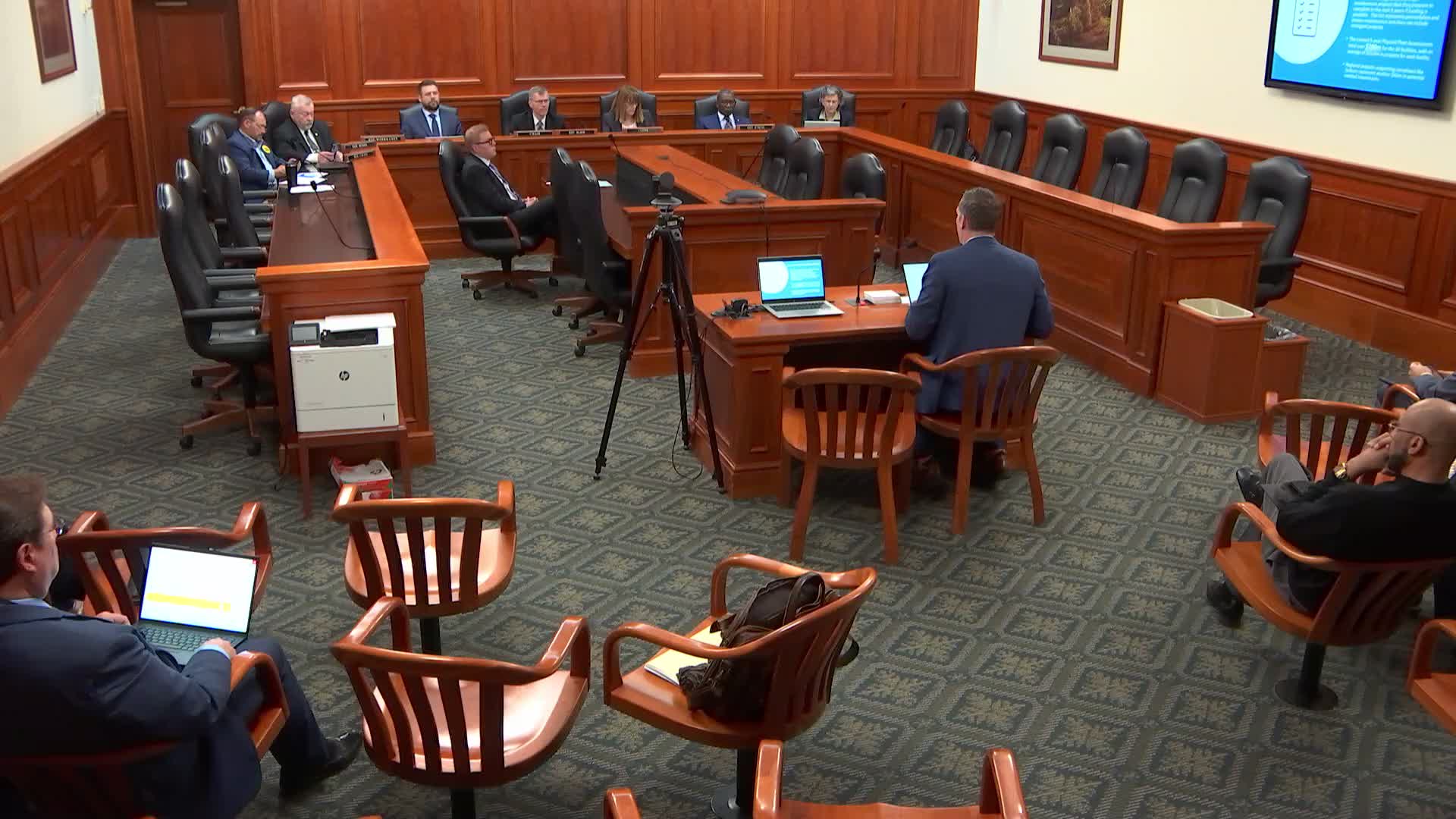
Trevor Van Dyke, deputy general counsel for the Michigan Supreme Court, briefed the Appropriations Subcommittee — Corrections on a list of work projects administered through the State Court Administrative Office (SCAO), including modernization initiatives and timeframes for completion.
Van Dyke said the work projects include a judicial workload assessment using a weighted caseload model (a constitutional responsibility to inform judicial staffing), a three‑year administrative benchbook project for court administrators, an ongoing statewide judicial case‑management system conversion and a Michigan Statewide Court Data Transparency Project scheduled through 09/30/2028.
"Michigan's trial courts previously used 20 different case management systems and 150 different computer systems," Van Dyke said, describing the rationale for a unified case‑management system and estimating that 54 of 319 trial court locations remain to convert. He said the SCAO expects clearer timelines for completion by next year.
Van Dyke described a mix of federally funded and state work projects: an American Rescue Plan Act (ARPA)‑funded virtual backlog response docket to address trial court COVID backlogs (funds required to be obligated by 12/31/2024 and spent by 12/31/2026), a Juvenile Justice Data Management Project (vendor selected and rollout begun, expected complete by 06/30/2026), and a pretrial risk assessment contract executed with the Crime and Justice Institute that is due to end 09/30/2025.
He also summarized funding for expansion of Justice for All self‑help centers (grants disbursed in May–June 2023) and the Juvenile Justice Division work project created to support juvenile justice reform implementation (work‑project end date 09/30/2027). Van Dyke said the Judicial Security personal identifiable information removal service contract with a company called Iron Wall launched on 02/10/2025 and that funds for that service have been obligated and spent.
On facilities for the appellate courts, Van Dyke noted the Court of Appeals Cadillac Place renovation: initial appropriations were made in fiscal 2022, the Court sought additional funds and received them in a fiscal 2024 supplemental. Construction contractors have been selected and he said construction is expected to begin soon and to be completed in the fall (no year specified in his presentation). Van Dyke said the Court of Appeals expects lease savings from consolidated office space will cover the investment in a short time frame.
Committee members asked questions about the number of self‑help centers and other implementation details; Van Dyke offered to provide follow‑up information. Van Dyke said the Judicial Workload Assessment also contains a second request to include court operations staff in the study, which would for the first time produce estimates of staff needs across trial courts.
Ending
Van Dyke closed by saying remaining questions about certain work projects (Judicial Tenure Commission, State Appellate Defender Office, Court of Appeals specifics) would be best addressed by representatives from those entities, and he offered to direct committee questions to the appropriate staff.