
Dunn County facilities panel rejects Vergy energy contract after cost, scope and risk concerns
Get AI-powered insights, summaries, and transcripts
Subscribe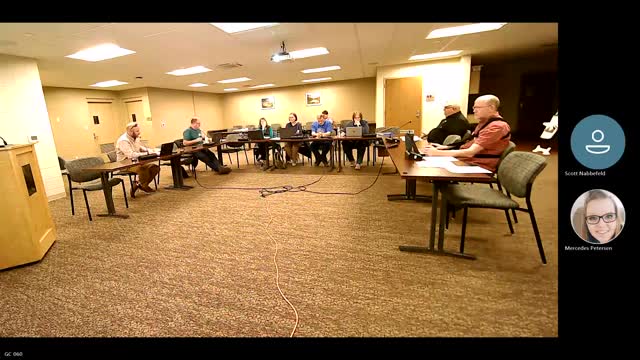
Summary
Dunn County Facilities Committee voted to deny approval of a proposed contract with Vergy for a judicial center HVAC and renewable energy project, citing higher-than-expected costs after additional pipe work, removal of solar from the scope and county risk exposure.
The Dunn County Facilities Committee voted April 30 to deny approval of a proposed contract with Vergy for an HVAC and renewable-energy upgrade at the county judicial center, after staff said the contractor changed scope and the county would absorb substantial financial risk.
Committee members said they were concerned the project’s cost rose after Vergy determined the building’s geothermal piping needed replacement and then removed solar work from the proposal, reducing projected energy savings.
Dan, a facilities staff member who led the briefing, said Vergy originally proposed replacing the HVAC system and expected to keep existing piping in place but later concluded “they did need to replace all of the pipes,” a change that significantly increased the project price and prompted Vergy to cut the solar portion that had been expected to produce the bulk of long-term savings. Dan said the county had capped how much it would spend and that shifting scope left less energy savings for the same outlay.
The committee discussed financial and procurement implications in detail. Supervisor Brocknell moved to deny approval of the contract; Supervisor Larry Bjork seconded the motion. Several members said they were worried about how much risk the county would carry if it accepted the proposal as written. Dan said the county would shoulder most of the implementation risk — “about 70% of the risk,” in his presentation — while Vergy would retain roughly 31% in guaranteed responsibilities, a split some supervisors said was unacceptable.
Committee members and staff reviewed alternative procurement options, including rebidding the HVAC work as a traditional contract, pursuing a phased replacement or keeping the county-funded option without a third‑party performance guarantee. Dan said the work completed so far — design documents and cost estimates — would still be useful if the county put the HVAC job out to competitive bid. He noted the solar component, if sized for a single building, “pays for itself, without the incentive,” and that those figures could inform future bids.
On financing, staff said the county had budgeted borrowing for energy projects but warned there was not an absolute guarantee the projected savings would materialize. Dan summarized the county’s modeling: the project’s debt service would be roughly $100,000 in the first year, about $105,000 the next year and about $110,000 the following year; if energy savings fell short, the county’s general fund, not the levy, would cover the difference.
Supervisor Bjork and others pressed for clearer, lower-risk procurement options and suggested the county pursue bids that compare geothermal-based designs with traditional HVAC replacement so officials could weigh upfront cost against lifecycle savings. Some members said phasing—installing new systems in stages—might reduce disruption and spread cost.
The motion to deny approval carried on a voice vote with no recorded oppositions. Committee members instructed staff to return with procurement options and budget implications at a future meeting, and they discussed placing an HVAC replacement request in next year’s capital improvement plan.
The committee’s next meeting is scheduled for May 28 at 5 p.m.