
House General and Housing committee reviews strike‑all draft of S.127 and aims for quick referral to Ways and Means
Get AI-powered insights, summaries, and transcripts
Subscribe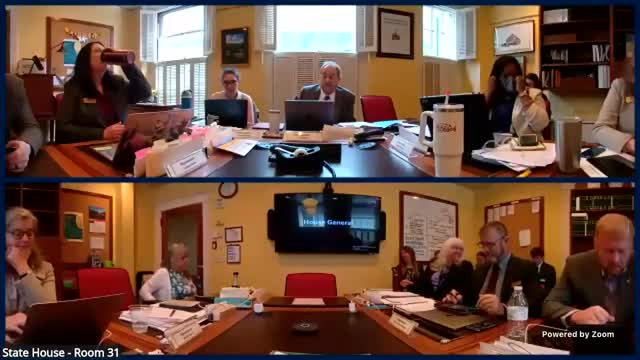
Summary
Committee members reviewed a strike‑all amendment to S.127 on May 2, discussing eligibility for infrastructure financing, permit timing (Act 250), the Vermont Infrastructure Sustainability Fund, universal design committee membership, landlord certificate changes, and timing for referral to Ways and Means.
The House General and Housing Committee met Friday, May 2, to review a strike‑all amendment to S.127 and to try to finalize language so the clerk could refer the measure to the House Ways and Means Committee this week.
Committee leadership said the goal was to “have a coherent bill to vote out today” so the measure could meet Ways and Means scheduling constraints. Committee members and legislative counsel then walked through the draft amendment section by section and discussed specific policy choices that remain unresolved.
Why it matters: The draft replaces the Senate text and bundles a range of housing provisions — from the Vermont Infrastructure Sustainability Fund and a rental revolving loan program to changes in landlord certificates, tenant application requirements, universal design work, and tax‑increment/TIF and CHIP financing language. Committee members emphasized the need to finish drafting quickly to meet downstream referral and hearing schedules.
Major discussion points
Eligibility and “tier” treatment for infrastructure financing: Committee members debated when a project should qualify immediately for the bill’s highest priority financing category (discussed in the draft as “tier 1”). The chair said the committee’s intent was that where financing would pay for sewer or water infrastructure and that financing would make a site eligible for tier 1, “then it should be in now.” Members sought clarity on who decides that eligibility. Options discussed included the municipality applying for tier 1 status and an appeals or review body named in the draft; counsel noted the municipal applicant would know the requirements to make an application.
Act 250 permits and application timing: Several members raised a practical concern that developers often do not have every permit in hand at the time they apply for funding and that, if CHIP funding changes a project’s infrastructure (for example adding wastewater or water supply work), the project might need an Act 250 permit amendment. Ellen of the Office of Legislative Counsel flagged that the draft requires projects to have permits “secured at the time of application,” and she warned that an applicant could later need a permit amendment if the funded changes alter the permitted project.
Vermont Infrastructure Sustainability Fund and Bond Bank flexibility: Counsel reported edits to the Vermont Bond Bank language that remove a previously proposed “community index” and instead require the fund to consider the “relative need and capacity of the community.” The draft also allows the Bond Bank to use the new fund in conjunction with other bank programs; the bond bank’s representative (Michael Vaughan) reviewed and accepted that approach, with the requirement that use of funds be transparent in the bank’s annual reporting.
Housing program and grant details
BHIP subgrant language: Counsel adjusted BHIP (the program that makes subgrants to nonprofits and other entities) to say the department may subgrant funds “to carry out the purposes of the section,” rather than limiting grants to a single subdivision of current law.
Minimum set‑aside and timing: The draft maintains a 30% minimum set‑aside for certain funds and the committee discussed shortening the time those set‑aside funds remain reserved (committee members agreed to shorten one cycle from a year to nine months).
Rental loan program and rent cap: Draft language carried over a 3% cap on annual rent increases for units brought online with the rental revolving loan program, with VHFA requesting authority to approve a different amount in specific circumstances; the committee left that language in the draft.
Universal design study committee: Counsel showed edits to the membership list for a universal design study committee, adding parenthetical language that some designees be “preferably people with lived experience,” and adding one member appointed by the Associated General Contractors of Vermont. The committee discussed keeping the membership manageable while ensuring representation from disability‑focused organizations (for example, the Vermont Center for Independent Living and the Developmental Disabilities Council were named in the draft).
Landlord certificate and rental application provisions: The draft reintroduces and revises a landlord certificate provision that had been repealed the prior year; the committee discussed timing so the repeal and replacement take effect in the proper order. The draft also includes a residential rental application section that would require landlords to accept one of several government identifiers (for example, a government‑issued ID or an individual taxpayer identification number) and to inform applicants about background and credit checks.
Tax increment financing (TIF), CHIP and fiscal questions: Committee members reserved two sections for project‑based TIF language and discussed CHIP financing as part of the broader package. During the meeting one member said available TIF obligations and bond needs have been estimated in the tens of millions; a $60,000,000 bond figure was mentioned in discussion as a possible order of magnitude for particular bond requests, but members did not adopt a specific fiscal projection and described the number as uncertain. One member voiced concern about unknown fiscal effects on the education fund if other related proposals move forward.
Timelines and next steps: Counsel told the committee the draft is a strike‑all amendment (draft 2.1) and that staff would make a few final edits, then release a revised draft for the committee to consider. The committee directed counsel to prepare language for insertion of final CHIP/TIF text when available. Members agreed to reconvene at 2:30 p.m. for a check‑in and to aim for a clerk referral to Ways and Means later the same day.
All attributions above come from committee members and staff during the May 2 House General and Housing Committee meeting.