
Vermont lawmaker urges adding disorderly-conduct language to protect public meetings
Get AI-powered insights, summaries, and transcripts
Subscribe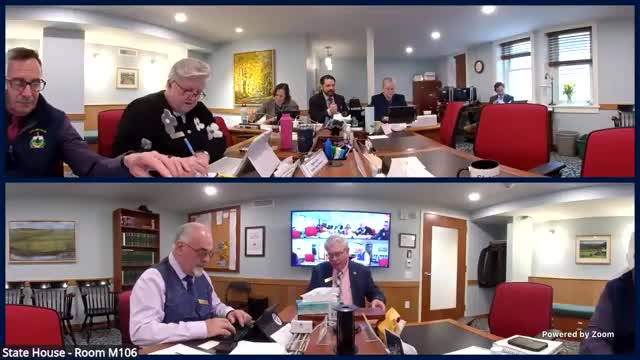
Summary
Representative Jim Harrison, R-Chittenden, asked the House Government Operations & Military Affairs Committee on May 2 to add a sentence to the disorderly-conduct statute so that intentional or reckless behavior that "substantially impairs the effective conduct of a meeting of a public body" could be charged.
Representative Jim Harrison, R-Chittenden, asked the House Government Operations & Military Affairs Committee on May 2 to add a single sentence to the disorderly-conduct statute that would make it a crime when a person’s intentional or reckless behavior “substantially impairs the effective conduct of a meeting of a public body.”
Harrison told the committee he had raised similar language earlier in the session in H.145 and said the added sentence would give municipal volunteers clearer authority to remove disruptive attendees. “Substantially impairs the effective conduct of a meeting public body,” Harrison read from the proposed text.
Tucker Anderson, legislative counsel, told the committee the proposed sentence tracks language from the Vermont Supreme Court’s decision in State v. Colby and would clarify the threshold for charging someone under 13 V.S.A. §1026. Anderson said the court had required that conduct must “substantially impair the effective conduct of the meeting or cause the meeting to stop for a significant duration.” He added the provision is drafted specifically for meetings of public bodies because courts expect government bodies to tolerate a higher level of heckling or shouting than private assemblies.
Committee members described recurring problems in small towns where select board and school board volunteers face sustained harassment and, in some places, resignations. One member said citizens who “get sworn at and threatened” can be deterred from serving; another said chairs need clearer tools to maintain order.
Anderson outlined the bill’s three-part approach in the draft H.145 language: (1) legislative intent describing how courts should balance First Amendment rights and the public’s right to assemble; (2) an explicit open-meeting-law clarification allowing public bodies (not only chairs) to adopt rules on removal of individuals; and (3) the disorderly-conduct sentence that would apply the State v. Colby standard to public-body meetings. He warned that because the amendment affects criminal penalties, judicial committees could seek to review the change as it moves through the Legislature.
Committee members and counsel agreed to seek more practical perspective from law enforcement and to continue refining the language. The committee did not vote on the amendment; members said they would follow up with counsel and invited testimony from sheriff’s offices or deputies to understand enforcement concerns.
The discussion remained framed as policy development rather than a final decision; the committee plans additional work and outreach before deciding whether to adopt or modify the proposed sentence.