
Boston councilors press elections officials after state names designee to assist department
Get AI-powered insights, summaries, and transcripts
Subscribe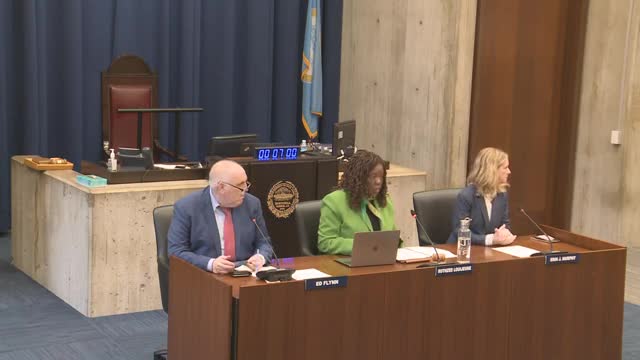
Summary
At a May 2 Boston City Council Committee on the Whole hearing, city and election officials outlined steps after the secretary of the Commonwealth appointed a designee to assist the Boston Elections Department, citing ballot shortages, communications failures and staffing needs during last November's election.
Boston City Council members questioned city and elections officials on May 2 about operational failures during last November's election and about oversight after the secretary of the Commonwealth appointed a designee to assist the Boston Elections Department.
The hearing, convened by Council President Rita Loujian and held as docket 0585, drew council sponsors Councilor Aaron Murphy and Councilor Edward Flynn and a panel that included Adam Seidebaum, corporation counsel; Anita Tavares, commissioner of the Boston Elections Department; Sabino Pamanti, head assistant registrar of voters; and Paul Chung, commissioner of city records and head of the People Operations Cabinet.
"The city is committed to running free, fair, and efficient elections," Commissioner Anita Tavares told the council. She and other officials described several immediate priorities: improving communications with polling locations, expanding training and contingency planning for poll workers, testing proposed technology and phone systems ahead of the municipal cycle, and working with a state designee identified by Secretary William Galvin.
Why it matters: Council members said the November problems — long lines, ballot shortages and unanswered phone calls — undermined public confidence and disproportionately affected seniors, voters with disabilities and immigrant communities. Council sponsors said they want concrete, testable fixes before the preliminary municipal election.
At the hearing, elected officials and staff laid out the central problems identified so far. Tavares told the council the department received roughly 16,000 phone calls during the November election and that many went unanswered. Paul Chung, who oversees the elections department following its move into the People Operations Cabinet, said the city is considering leveraging the 311 system and other city resources to improve call handling and real-time communication between precincts and the department. "We will be testing that. We'll be putting it through its paces, well ahead of the preliminary," Chung said.
Officials said the department has about 30 full-time employees, roughly 54 seasonal positions and that the city drew on about 2,300 volunteers during the last election cycle. The council pushed for clarity on ballot distribution plans; Commissioner Tavares said the secretary's order requires the department to ensure a percentage of ballots are at each precinct at the opening of polls, but the transcript did not specify the exact percentage to be delivered in advance and officials said details remain under development.
The city has also retained outside assistance: Chung said the elections group consultant was procured under a $50,000 contract. "The consultant, we procured under, a $50,000 contract," he said. Councilors asked for a copy of the contract and for line-item details of proposed FY2026 elections funding; one councilor cited an $879,000 appropriation in FY2026 that officials said will support investments but that had not been broken down in detail during the hearing.
Several councilors asked whether the secretary's designee—identified at the hearing as Michael Sullivan—has authority to approve the department's communications and election-day plans. Corporation counsel Adam Seidebaum and other officials repeatedly referred members to the secretary's written order and said the department's communications plan must be provided to and approved by the secretary's office. "In the secretary's order, there are two provisions... that require that the election department shall provide a plan subject to the secretary's approval," Seidebaum said.
Council members raised additional operational concerns: ensuring functioning lighting, restroom access and accessibility at polling sites; guaranteeing sworn volunteers and staff who handle ballots are documented; testing backup communications beyond cell phones; and clarifying how and when the department will central-tab early or mail ballots versus leaving processing to precincts on election night. Officials said they will test procedures, coordinate with other city departments (including police, fire and emergency management) and present the secretary with the department's communications plan.
Public testimony during the hearing echoed those themes: residents and longtime precinct workers asked for better site inspections, clearer escalation procedures for urgent precinct problems, more training, higher pay or incentives for poll workers, and outreach to boost registration and turnout.
What happens next: Officials said the administration will present more detailed budget requests at upcoming hearings, will forward the communications and contingency plans to the secretary of the Commonwealth for approval, and will run tests of new phone and logistical systems ahead of the municipal cycle. Councilors pressed for timely follow-up and asked staff to share the consultant contract and any specific staffing recommendations that emerge from the elections group's review.
The committee adjourned after members urged quick implementation of reforms and closer, documented coordination among the Elections Department, the People Operations Cabinet and the secretary's designee.