
Utah recreation grant committee approves RTP recommendations, advances dozens of local park and trail proposals
Get AI-powered insights, summaries, and transcripts
Subscribe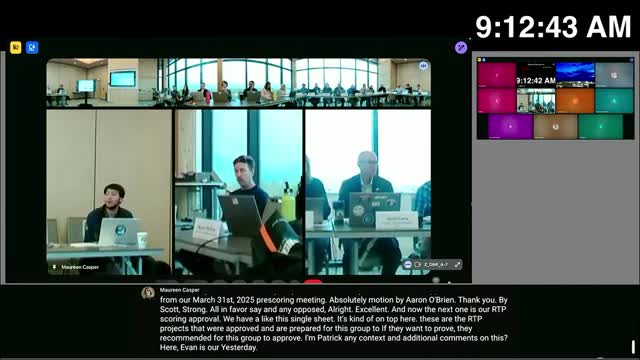
Summary
The Utah Outdoor Recreation Grant Committee voted unanimously to approve the group’s recommended Recreational Trails Program (RTP) awards and moved dozens of local park, trail and small-grant projects forward for further consideration after a full day of scoring and presentations.
The Utah Outdoor Recreation Grant Committee voted unanimously to approve the group’s recommended Recreational Trails Program (RTP) awards and moved dozens of local park, trail and small-grant projects forward for further consideration after a full day of scoring and presentations.
Committee members said they were pleased with the competitive RTP slate and the geographic spread of applicants. Staff also briefed the committee on several new grants created by the 2025 legislative session and introduced a department compliance specialist to improve post-award reporting.
The committee advanced several blocks of mini grants and regional community-park applications after hours of deliberation and roll-call votes. Members debated whether some Community Parks & Recreation (CPR) requests — such as restroom upgrades and playground replacements — represent appropriate state investments or local maintenance responsibilities. Several members said they favored projects that could function as “parks plus,” producing measurable community or regional benefits such as tournament capacity, major connectivity or significant visitor draws.
Committee members heard five regional-asset presentations from local governments and nonprofit partners, including a multi-feature bike park planned at Desert Color in St. George, an all-wheels park proposed by Grantsville, a Midway development to turn the town’s iced rink area into a year-round recreational plaza, Heber City’s Sagebrush Pond and trail restoration concept, and a multi-phase plan to rebuild and reopen the Snowland ski area in Sanpete County. Presenters emphasized economic-development and public-safety benefits, but committee members pushed back with implementation questions — most prominently, whether Snowland can secure long-term liability insurance and the Forest Service approvals required to expand operations.
Several formal votes were taken during the meeting: the committee approved minutes from the March 31 scoring session, unanimously approved the RTP recommended projects, and moved multiple mini-grant and CPR blocks forward for additional review and funding decisions. Staff were directed to return with follow-up budgets and any permit/insurance preconditions that could affect final award decisions.
Committee members and staff said they want clearer budget detail from applicants and stronger documentation of long-term maintenance plans before final awards. Members asked staff to prepare conditional-award language the committee can use so that larger projects recommended for funding can meet specific conditions — for example, evidence of required insurance, confirmed matching funds, or required federal permits — before state funds are released.
The committee will reconvene to continue regional-asset review and finalize funding recommendations. Members emphasized they will weigh geographic balance, evidence of community support, and project readiness when making final awards.