Get Full Government Meeting Transcripts, Videos, & Alerts Forever!
Get email alerts on the Folk Arts Apprenticeship topic
No spam. Unsubscribe anytime.
Wisconsin Arts Board panel advances Folk Arts Apprenticeship cohort; sets funding floor for board consideration
Summary
Panelists reviewed 16 apprenticeship proposals covering a wide range of folk and traditional arts, recommended top applicants and established a recommended scoring floor for board consideration pending available funds.
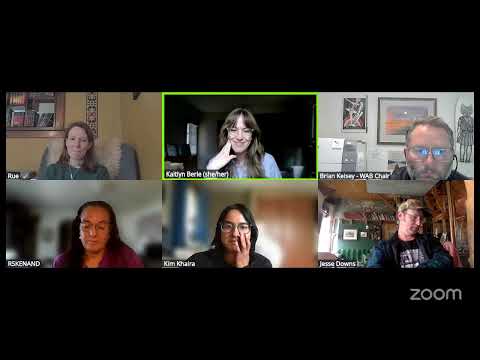
Panelists for the Wisconsin Arts Board’s Folk Arts Apprenticeship review convened via live stream to evaluate apprenticeship proposals across a range of traditional art forms and recommended a ranked list of applicants to the full board.
Why this matters: The Folk Arts Apprenticeship Program offers $3,500 awards intended to support master-apprentice relationships that help preserve community-rooted artistic practices across Wisconsin. Panelists evaluate applications for cultural embeddedness, instructional plan, and urgency for continuity.
What the panel reviewed: The session covered apprenticeships in material culture, basketry, raised beadwork, natural dyeing, paper arts, rooted music and multiple South Asian classical dance and music traditions. Representative applications discussed included:
- Alex Menor & Dana Warrington (Menominee floral designs): mentor will document and teach Menominee floral motifs; panel noted strong cultural embeddedness and requested more detail on specific techniques; proposal estimated 50 instructional hours.
- April Stone (black ash basketry): panelists called the proposal urgent because of threats to ash trees and the specialized harvest and processing needed; reviewers suggested the mentor’s time may be undercompensated and recommended considering a multi-year plan if hourly pay is constrained.
- Aurelia/Aurelie (natural dyeing) and Claudia Gabriela Jimenez (cartonería): reviewers highlighted strong cultural connections but asked for clearer links between mentor practice and the apprentice’s intended teaching or community-sharing plan.
- Eliza Skindor & Shelby Sievers (Oneida raised beadwork): panelists noted mentor expertise and suggested the planned public presentation during Native American Heritage Month would demonstrate cultural continuation.
- Jennifer Jordan (Haudenosaunee beadwork and tufting): reviewers praised high-quality work samples and the pair’s commitment; panelists recommended attention to clearer definitions of tufting methods in the application materials.
- Jorge Alba Huerto (Son Jarocha music and dance) and multiple South Asian classical applicants (Bharatanatyam, Odissi, Carnatic): reviewers stressed strong mentor qualifications and considered the cohort’s different needs — from intergenerational cultural transmission to advanced improvisation and performance goals.
Panel recommendation and funding floor: The panel averaged reviewer scores and discussed natural breaks in rankings. With estimates of typical funding capacity in previous years (roughly enough to fund about 11 apprenticeship awards), the panel set a recommended scoring floor of 92.0 for board consideration: apprentices scoring 92.0 and above would be the priority slate to forward for ratification, with the caveat that awards remain contingent on full-board ratification and actual available funds. Panelists asked staff to forward written comments to applicants to help strengthen future proposals and implementation plans.
Process notes from discussion: Panelists repeatedly asked for clearer work-sample access and plain-language descriptions of technical terms (for example, distinctions among related beadwork or dyeing traditions). Staff and panelists also discussed the program’s three-year funding cadence and the need to balance support for established teachers who run classes with support for apprenticeships that represent urgent transfers of specialized knowledge.
Next steps: Staff will include the apprenticeship rankings, average scores and panel comments in the Wisconsin Arts Board meeting materials. The full board will ratify awards if funds are available. Panel members emphasized that written feedback should help applicants improve documentation and planning regardless of award outcomes.
Speakers quoted in this article are drawn from the review session: Caitlin Burrell (folk and traditional arts coordinator), Brian Kelsey (panel chair), and panelists who raised technical and urgency concerns.